“Logistics are central to military readiness,” ATA Chief Advocacy and Public Affairs Officer Henry Hanscom wrote. (Defense Intelligence Agency Public Affairs)
Key Takeaways
ATA told Secretary of Defense Pete Hegseth that military freight oversight weaknesses could threaten safety, security and supply chain integrity.
ATA said a review of shipments at 12 bill of lading office codes found more than $20 million may have been improperly awarded.
The trade group supports Fiscal Year 2026 NDAA provisions aimed at strengthening compliance and accountability.
Military freight oversight gaps identified
American Trucking Associations is warning the Trump administration about possible weaknesses in the oversight of military freight transportation.
The federation stated in an Aug. 27 letter to Secretary of Defense Pete Hegseth that “highway safety, operational security, and the integrity of the defense supply chain” could be at risk due to a lack of strong guardrails to ensure the integrity of military freight shipments.
In a letter written by Chief Advocacy and Public Affairs Officer Henry Hanscom, ATA said its members have identified “troubling patterns within the military freight transportation system that deserve prompt attention.”
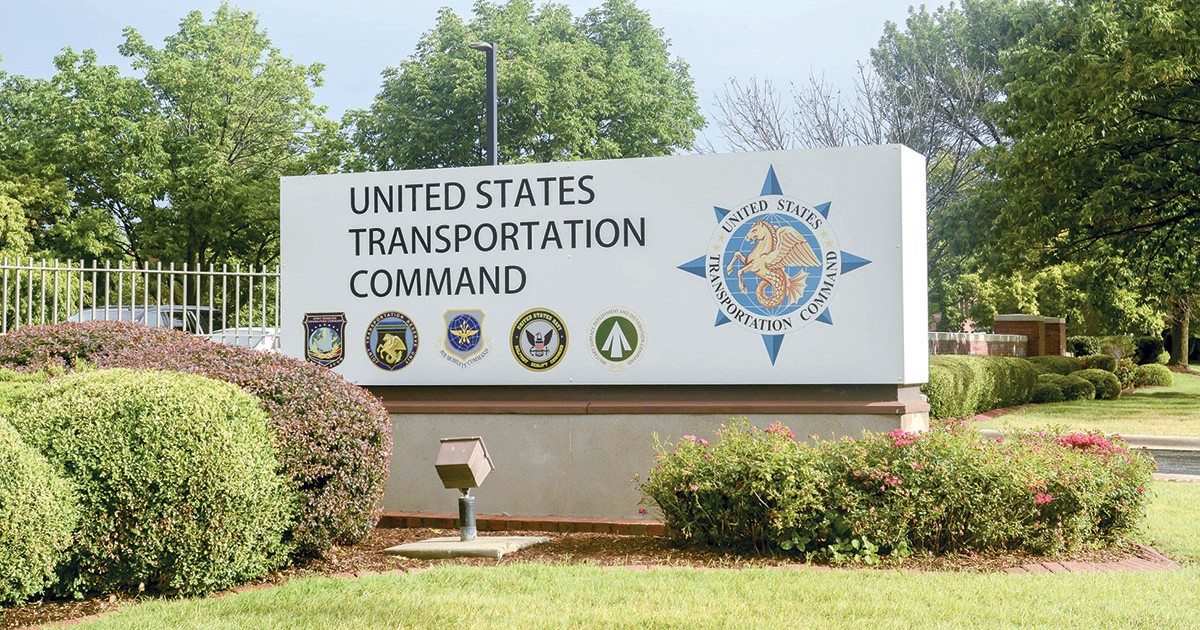
Specifically, Hanscom said members have provided to the U.S. Army Transportation Command (Artrans) verifiable information indicating that some military shipments have been awarded to service providers that lack valid Department of Transportation operating authority and required insurance, or do not appear capable of meeting basic shipment requirements.
He also said ATA has seen instances in which shipments were awarded outside normal competitive processes.
90-day review reveals systemic inconsistencies
In the letter, Hanscom said that during a 90-day period in 2024, ATA members reviewed activity at 12 government bill of lading offices and found that 80% of shipments — valued at more than $20 million — may have been mishandled or awarded in a manner inconsistent with long-standing department policy.
“Logistics are central to military readiness. Every shipment of arms, ammunition, combat vehicles, sensitive cargo and general freight depends on a secure and reliable transportation network,” Hanscom wrote. “When that network is compromised by unqualified carriers, opaque contracting practices or providers that lack proauthority, insurance, equipment, or compliance capability, the consequences extend beyond waste or inefficiency.”
A long-standing problem
Mike Matousek, director of ATA’s government freight conference, told Transport Topics that these types of issues have existed since around 2009. He said ATA delivered a 38-page presentation to Artrans summarizing the problem in October 2024.
Matousek stressed that ATA has regularly communicated with Artrans about how shipments were awarded and handled, but said that if progress has been made on the issue, ATA hasn’t been informed.
“Our approach from the beginning has been to work with Artrans. The lack of cooperation from Artrans just hasn’t been great,” he said. “As recently as last week, they told us they removed service providers but they don’t tell us who or why so the best we can do is piece it together. Have they removed one or two that are bad? Probably, but we have no idea.”
While Artrans is legislatively required to audit these awards, Matousek said it did not seek industry input on how the audit should be conducted, resulting in what he viewed as a bare bones approach.
“They did not look at the number of trucks on file registered with FMCSA. If they did, they would see one truck on file and no brokerage authority and even if they have brokerage authority, these are loads that can’t be brokered,” he said.
Congressional action and ATA’s collaborative stance
In the letter, Hanscom noted that Congress has recognized the need for reform. The Fiscal Year 2026 National Defense Authorization Act included provisions intended to strengthen compliance, create a process for stakeholders to report noncompliance, clarify accountability tools, and educate government and industry participants on the rules.
It also mandated an audit of the Freight Carrier Registration Program, as well as an inspector general review.
“ATA strongly supports these objectives and believes effective implementation will be essential to restoring confidence in the system,” Hanscom wrote in the letter to Hegseth. “ATA’s goal is not simply to identify problems. Our goal is to help solve them. We believe there is a meaningful opportunity to work with your team to improve oversight, close loopholes, protect the defense transportation network, and ensure that taxpayer-funded freight is awarded through fair, transparent, and secure processes.”
Source: Transport Topics
Compiled from international media by the SCI.AI editorial team.