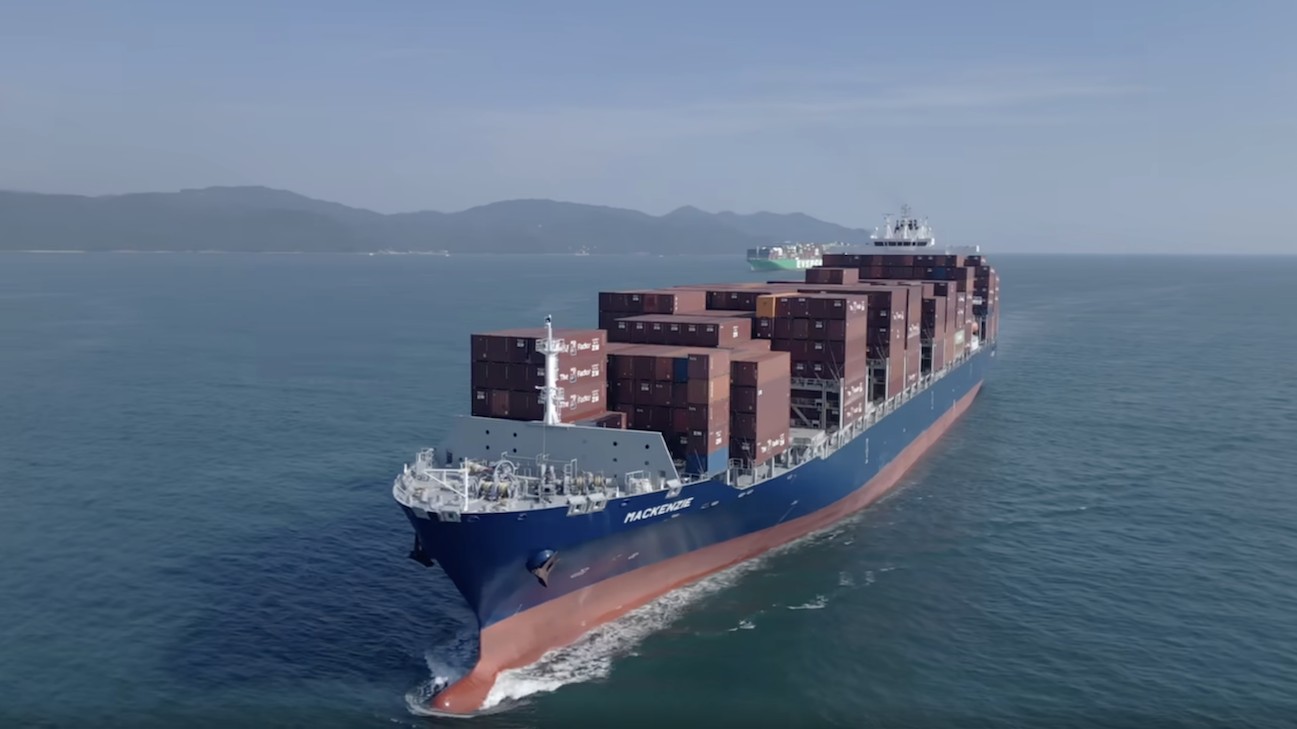
According to www.freightwaves.com, the global containership orderbook stands at approximately 13.1 million twenty foot equivalent units (TEUs) against an operating fleet of about 33.8 million TEUs, yielding an orderbook-to-fleet ratio of 38.7% — meaning vessels on order represent nearly two-fifths of existing capacity.
‘Exceptionally large’ orderbook skewed toward big ships
Global Ship Lease of Athens, using Maritime Strategies International data as of June 30, 2026, estimated the orderbook-to-fleet ratio at 39.1%. More than half — 55.2% — of ordered vessels are 10,000 TEUs and larger, while only 24.7% are smaller vessels. This concentration places the industry’s greatest exposure on large ships serving Asia–Europe, trans-Pacific, and other arterial trades.
The feeder and intermediate sectors face a more balanced supply picture: Q2 2026 ordering included 31.5% of vessels in the 1,000–2,000 TEU range. Yet because the existing small- and medium-sized fleet is aging — with the oldest 25% averaging 21 to 28 years — net growth for sub-10,000-TEU vessels through 2030 would be just 0.7% if vessels older than 25 years were scrapped.
Charter markets for modern feeders remain relatively firm, and MPC Container Ships describes modern feeder tonnage as scarce amid heavy ordering in larger classes and continued aging of the current fleet.
Supply growth may exceed demand
Vessel supply is projected to outpace container demand once deliveries from the orderbook materialize. Container trade growth in 2026 is estimated at 3%–4%, while full-year fleet growth is expected to reach 4.2%. Supply growth could accelerate further in 2027–2029 as delivery volumes rise.
The ongoing avoidance of the Red Sea since 2023 has absorbed more than 2 million TEUs per year by adding miles and voyage days. MPC estimates a return to the Suez route could release effective capacity equivalent to roughly 12% more TEU-miles.
A number of carriers have redeployed scheduled rotations into the Red Sea despite renewed Houthi attacks on merchant shipping from Yemen — illustrating how geopolitical diversions continue to constrain effective capacity even as newbuilds advance.
Fuel and shipyard trends
China dominates newbuilding activity: in Q2 2026, Chinese yards secured most new contracts, while South Korean yards obtained only 10 orders. Although alternative-fuel ships account for about 65% of the existing orderbook by TEU capacity, Clarksons data cited by MPC shows that most Q2 orders were conventionally fueled — with relatively few liquefied natural gas (LNG)-powered vessels.
Owners are exercising caution amid fuel availability constraints, regulatory uncertainty, and evolving technology — shifting momentum away from speculative alternative-fuel commitments and toward pragmatic fleet-renewal strategies.
Who ordered the ships?
The orderbook is driven primarily by liner companies and their affiliated tonnage providers. Global Ship Lease, for example, ordered 15 mid-sized vessels with charters attached, scheduled for delivery from late 2028 through early 2030. The company characterizes these as fleet-renewal investments targeting aging mid-sized tonnage — not speculative bets on the large-vessel cycle.
Larger carriers are ordering vessels to defend or expand market share; independent owners are placing orders for long-term charters to major liners; and some programs function explicitly as renewal initiatives rather than pure capacity expansion.
Source: FreightWaves
Compiled from international media by the SCI.AI editorial team.