Skip to content

Warehousing & Transport

Analysis

India’s Logistics Data Bank Tracks 10-Crore EXIM Containers

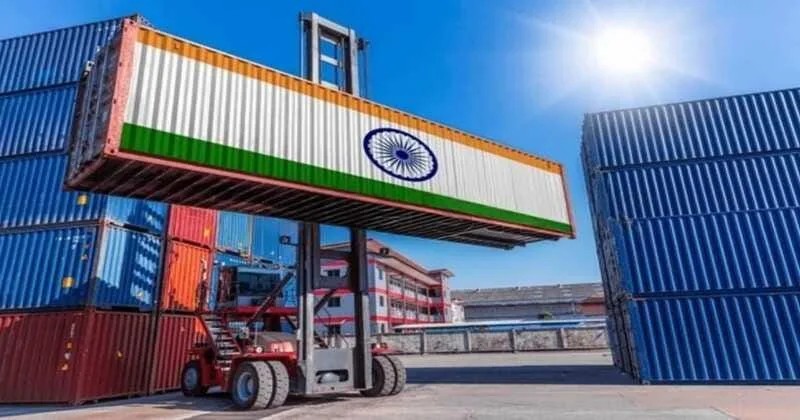
India’s Logistics Data Bank (LDB) has tracked its ten-crore export-import container since launching in 2016. Built by NICDC Logistics Data Services Limited — a joint venture formed on 30 December 2015 between India’s National Industrial Corridor Development and Implementation Trust and NEC Corporation — LDB now covers 19 ports, 32 container terminals, 103 inland depots, and 5,569 railway stations. It handles over 1.5 crore container searches monthly and powers analytics on dwell and transit times. The World Bank’s 2023 Logistics Performance Index ranked India 38th among 139 countries, up from 54th in 2014. LDB 2.0, launched in September 2025, enables high-seas tracking and multimodal visibility.

Original source: Source information pending

India’s Logistics Data Bank Tracks 10-Crore EXIM Containers

According to organiser.org, India’s Logistics Data Bank (LDB) has tracked its ten-crore export-import container since its launch in 2016, marking a milestone in the nation’s digital logistics infrastructure.

From Ancient Ports to Digital Visibility

Union Minister of Commerce and Industry Piyush Goyal called the achievement “

an important milestone in Indian logistics journey

,” emphasizing that technology is making logistics simpler, faster, and more efficient while strengthening India’s manufacturing base and global market presence in line with the Prime Minister’s vision of a Viksit Bharat. The LDB now provides visibility across 19 ports and 32 container terminals, extending deep into inland networks with 103 Inland Container Depots, 439 Container Freight Stations, and 89 manufacturing Special Economic Zones.

Technology Backbone and Institutional Foundation

NICDC Logistics Data Services Limited — a joint venture established on 30 December 2015 between the Government of India’s National Industrial Corridor Development and Implementation Trust and Japan’s NEC Corporation — built and operates the LDB. Its founding objective was narrow but ambitious: to lift logistics efficiency in a sector long seen as opaque and fragmented. The platform uses Radio Frequency Identification tags, IoT, big data, and cloud computing to deliver near real-time location tracking for every EXIM container moving across 5,569 railway stations, 269 toll plazas, and three Integrated Check Posts along India’s land borders.

Expansion, Analytics, and Real-World Impact

LDB 2.0, launched by Piyush Goyal in September 2025, extended tracking beyond Indian shores for the first time — enabling high-seas monitoring of export containers and multimodal shipment visibility across ship, rail, and road. NICDC Managing Director and NLDSL Chairman Rajat Kumar Saini, IAS, described reaching ten crore containers as “

a proud moment in the journey of LDB

.” The system now handles over 1.5 crore container searches monthly, supporting exporters, importers, logistics firms, and government agencies. Dwell time and transit time analytics help identify bottlenecks — such as terminals with unusually long idle periods or rail corridors with erratic schedules — turning anecdote into evidence-based intervention.

Global Benchmarking and Market Trajectory

The World Bank’s Logistics Performance Index (LPI), which recognized LDB’s contribution, ranked India 38th among 139 countries in its 2023 edition — up from 44th in 2018 and 54th in 2014. India’s freight and logistics market is projected to grow from $317 billion in 2024 to nearly $485 billion by 2029, at an annual rate of roughly 8.8 per cent. Tracking and tracing is one of the six core LPI parameters, and India’s improvement aligns closely with LDB’s expansion — underscoring its role as foundational digital public infrastructure rather than a commercial add-on.

Source: organiser.org

Compiled from international media by the SCI.AI editorial team.
Ask SCI.AI Finished reading? Continue with SCI.AI. Explore the related policy, route, company and historical context. Continue asking
Nuevo León Governor pitches $135B investment, 10,000 daily freight crossings
Risk & Resilience

Nuevo León Governor pitches $135B investment, 10,000 daily freight crossings

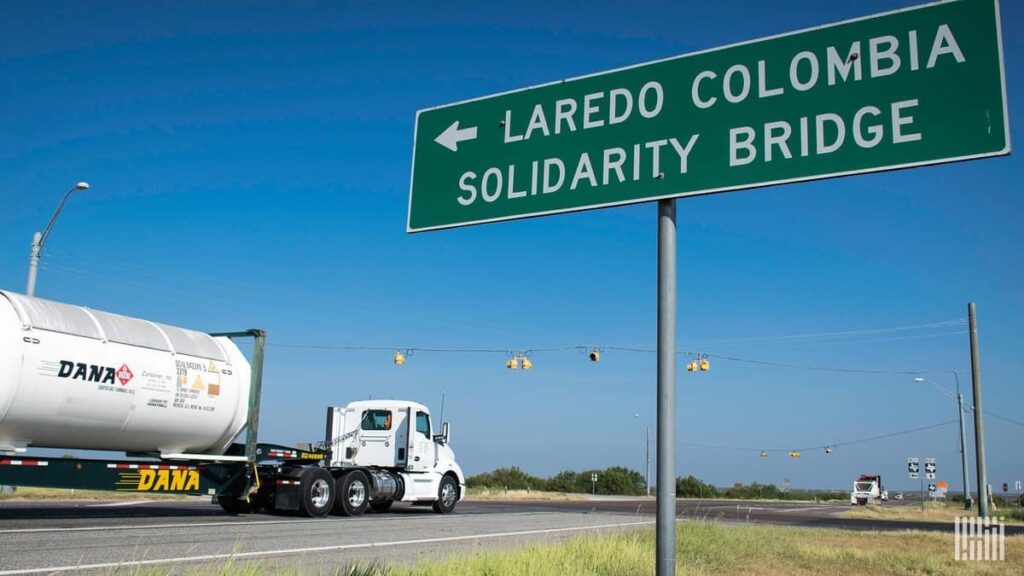
Nuevo León Governor Samuel García unveiled a $135 billion foreign direct investment surge, a tenfold jump in daily freight crossings—from 800 to over 10,000—at the Colombia-Solidarity Bridge since 2022, and $17 billion in planned border infrastructure including Green Corridors. The state is expanding security with 10 helicopters and 200–300 highway officers, launching a 40-hectare border industrial zone and a 988-acre zone in Pesquería hosting 400 auto suppliers. NADBank pledged $164 million for water resilience in the Texas-Mexico border region during its 2026 San Antonio summit.

ATA flags $20M in improper military freight awards at 12 offices
ESG & Regulation

ATA flags $20M in improper military freight awards at 12 offices

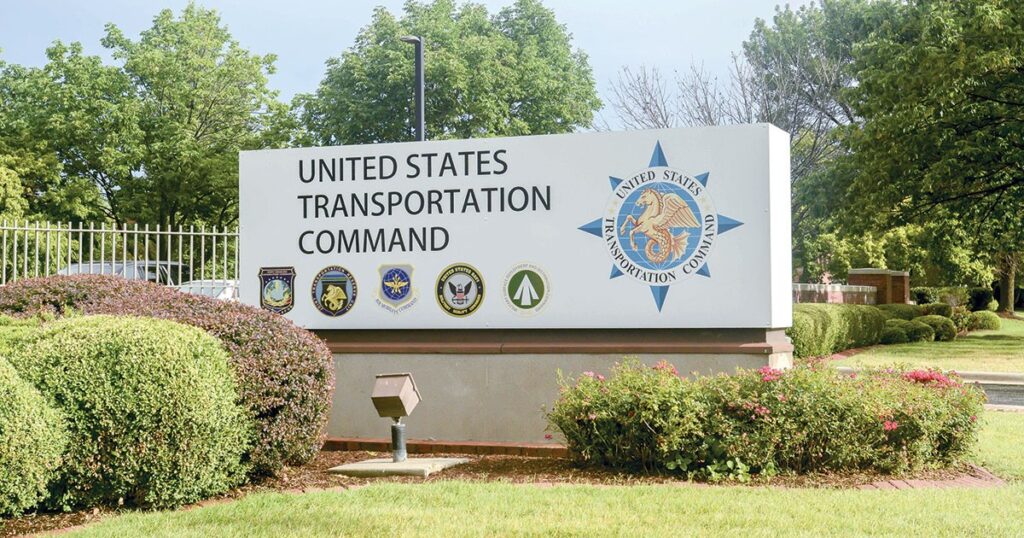
The American Trucking Associations (ATA) warned Secretary of Defense Pete Hegseth in an August 27, 2026 letter that weaknesses in military freight oversight threaten safety, security, and supply chain integrity. A 90-day review in 2024 across 12 bill of lading offices found 80% of shipments—valued at over $20 million—may have been mishandled or awarded inconsistently with policy. ATA cited awards to carriers lacking DOT operating authority, required insurance, or capacity, and noted repeated use of non-competitive processes. Issues date back to 2009, and ATA submitted a 38-page presentation to U.S. Army Transportation Command (Artrans) in October 2024. ATA supports FY2026 NDAA reforms, including mandated audits and inspector general reviews.

Arizona police recover $400K in stolen cargo in 20-minute span
Warehousing & Transport

Arizona police recover $400K in stolen cargo in 20-minute span

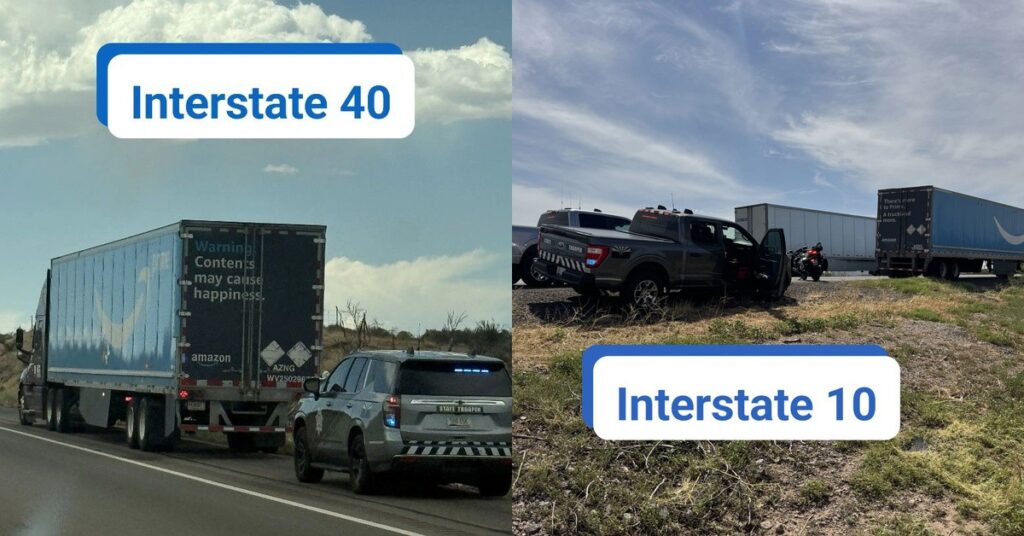
Arizona police recovered $400,000 in stolen cargo during two traffic stops conducted just 20 minutes apart. The first stop occurred at 3:17 p.m., the second at 3:37 p.m. Both drivers were arrested and charged with felony theft and trafficking in stolen property. The stolen goods — high-value electronics and retail merchandise — originated from a logistics facility in Maricopa County and were fully recovered and returned to the owner by August 28, 2026. The operation involved inter-agency coordination between the Arizona Department of Public Safety and local county sheriff’s offices.

Welcome Back!

Login to your account below

Create New Account!

Fill the forms below to register

Retrieve your password

Please enter your username or email address to reset your password.

Scan to share via WeChat

Open WeChat and scan the QR code to share

QR Code

Add New Playlist