According to discoveryalert.com.au, a 48-hour strike at BHP’s Port Hedland iron ore export terminal in Western Australia is set to begin on 8 August 2026, threatening to disrupt global iron ore supply chains and cost the company an estimated A$120 million (US$83 million) per day in lost revenue.
Port Hedland: The World’s Iron Ore Chokepoint
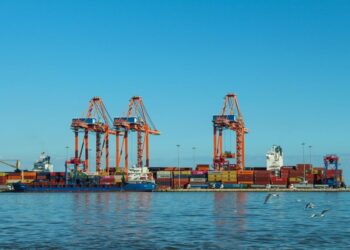
Port Hedland is the world’s largest iron ore export terminal, handling more bulk iron ore than any other port. In the fiscal year ending June 2026, BHP exported 256.9 million tonnes of iron ore from its Pilbara operations, all channeled through this single facility. Unlike Brazil’s Ponta da Madeira, which is part of a broader network including Tubarão and Guaíba Island, Port Hedland has no backup gateway or alternative export corridor for BHP’s Pilbara system.
This concentration makes Port Hedland uniquely vulnerable. A disruption here cannot be absorbed elsewhere in the supply chain, creating a single point of failure for a significant portion of global seaborne iron ore.
The Cost of Every Hour of Downtime
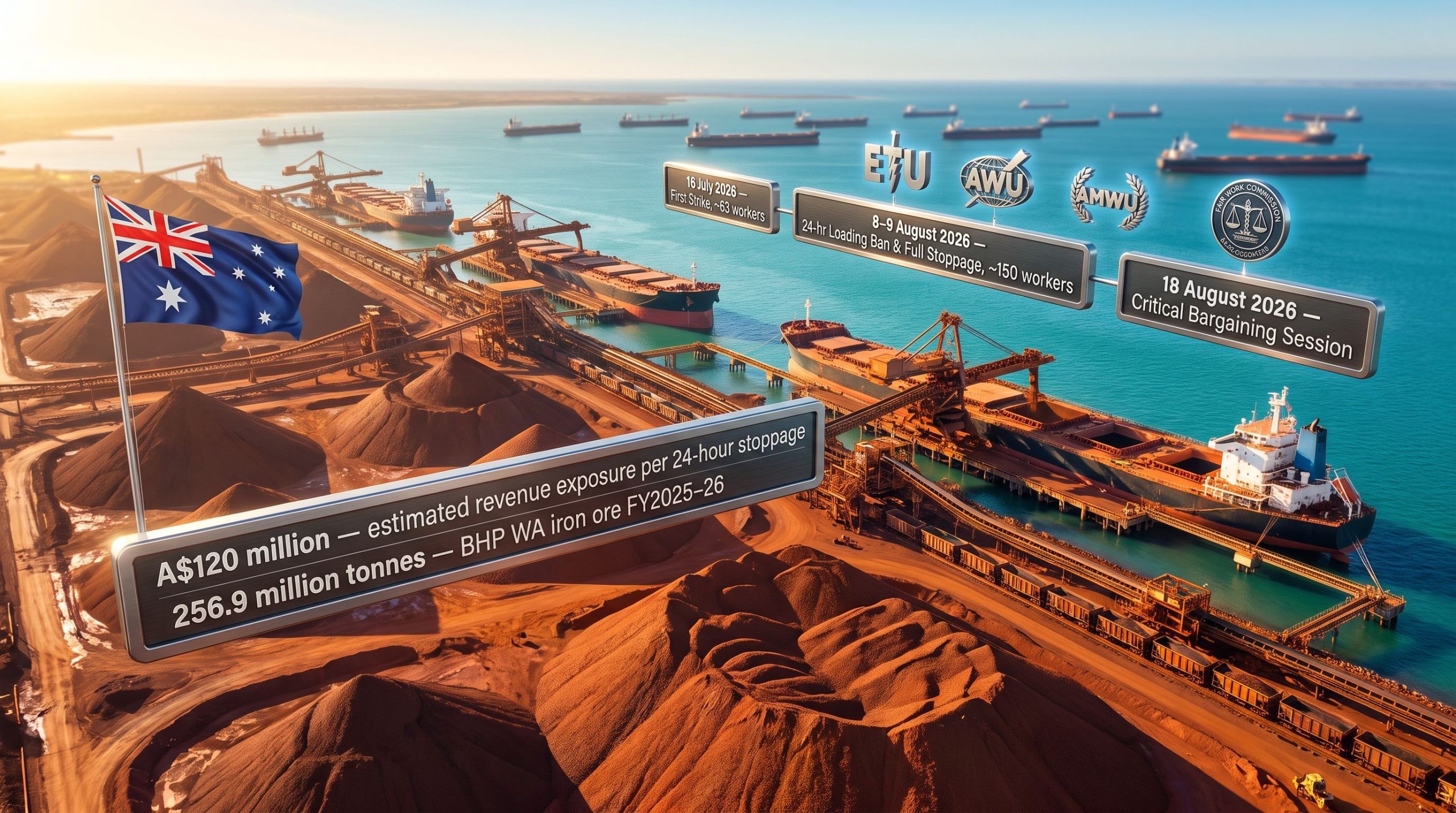
The financial exposure is substantial. According to the Chamber of Minerals and Energy WA, a single 24-hour work stoppage costs BHP approximately A$120 million (US$83 million) in foregone iron ore export revenue. This figure reflects the loaded value of volumes that cannot be shipped, received, or priced during the stoppage.
BHP’s iron ore division typically accounts for the majority of the company’s underlying EBIT. A two-day disruption, as planned for 8-9 August, represents a material earnings event, especially if vessel queuing effects extend the recovery window.
“At A$120 million per day in estimated revenue exposure, Port Hedland represents one of the most financially concentrated single-day supply disruption risks in the global bulk commodities market.”
What the Workers Are Demanding
Enterprise agreement negotiations between BHP and its Port Hedland maritime workforce began in October 2025, covering approximately 450 employees (excluding contractors). The bargaining is led by a coalition of three unions under the Combined Ports Unions banner: the Electrical Trades Union (ETU), the Australian Workers Union (AWU), and the Australian Manufacturing Workers’ Union (AMWU).
The multi-union structure complicates negotiations, as BHP must satisfy the threshold positions of three organizations with different priorities. The unions’ four core demands are:
- Fair and equitable pay structures reflecting operational demands
- Equal pay for workers performing equivalent functions across the port
- Clearer occupational classifications to reduce ambiguity around grades and pay bands
- Improved working conditions, including shift structures, rostering, and safety provisions
Escalation Timeline and Tactical Shift
Under Australia’s Fair Work Act, not all EA-covered workers are eligible for protected action. Fair Work Commission records indicate that up to 236 of the ~450 EA-covered workers are legally eligible. The total port workforce is approximately 1,200.
The July 2026 action involved only around 63 workers, insufficient to halt operations—a loaded vessel departed on 17 July. The August action, with an estimated 150 participants, represents a larger mobilization but still falls short of the full eligible workforce.
The two-phase August structure is tactically sophisticated: a 24-hour ship-loading ban on 8 August creates vessel queue build-up without triggering full operational response, followed by a complete work stoppage on 9 August that compounds congestion. This sequencing extends the effective disruption window beyond the formal 48-hour period.
Market Impact and Buffer Mechanisms
Short-duration stoppages at Port Hedland do not automatically translate into immediate spot price movements. BHP maintains pre-positioned stockpile inventory that can partially buffer a 24-48 hour window, and traders and steel mills often anticipate such disruptions.
However, the August action’s design is aimed at maximizing impact on vessel scheduling and port congestion, which could lead to delayed shipments and tighter near-term supply, especially if the stoppage extends beyond the planned 48 hours.
Source: discoveryalert.com.au
Compiled from international media by the SCI.AI editorial team.