According to www.cnbcindonesia.com, the Indonesian nickel industry has publicly urged regulatory clarity on rare earth element (REE) export rules after 120 Surveyor Reports (LS) remained unpublished as of 29 July 2026. The bottleneck has stalled shipments of processed minerals—including nickel and bauxite—from operations across Sulawesi, Kalimantan Barat, and Bangka Belitung.
Regulatory Hurdles Disrupt Export Flows
The Forum Industri Nikel Indonesia (FINI) confirmed that exports of intermediate nickel products—including Mixed Hydroxide Precipitate, Nickel Pig Iron, Ferronickel, and Nickel Matte—were previously halted due to mandatory testing requirements for rare earth elements (LTJ) and radioactive substances. According to the report, these restrictions stemmed from regulatory ambiguity, insufficient testing infrastructure, and technical execution gaps—not product noncompliance.
The issue came into focus following a coordination meeting convened by the Kantor Staf Kepresidenan (KSP) on 27 July 2026, attended by ministries, law enforcement agencies, research institutions, surveyors, and business associations. FINI’s General Chairman Arif Perdanakusumah stated the meeting provided “certainty for businesses” that exports of processed mining products could resume—provided they meet existing classification and documentation standards.
Surveyor Capacity and Geographic Bottlenecks
As of 29 July 2026, FINI documented 120 pending Surveyor Reports across multiple commodities. These reports originate from active mining and processing sites in Sulawesi, Kalimantan Barat, and Bangka Belitung, with assessments still underway at five accredited surveyors: Anindya, Carsurin, Sucofindo, Tribhakti, and Geo Services.
The delay reflects systemic constraints—not procedural negligence. FINI emphasized that while industry supports REE inventory mapping, the incidental presence of trace rare earths in nickel intermediates should not automatically reclassify those products as restricted exports. “The existence of REEs as accompanying elements in a processed product should not, by default, change the classification of that primary product—which under normal conditions is permitted for export,” Arif Perdanakusumah said in an official statement dated 29 July 2026.
Technical Realities and Economic Pressures
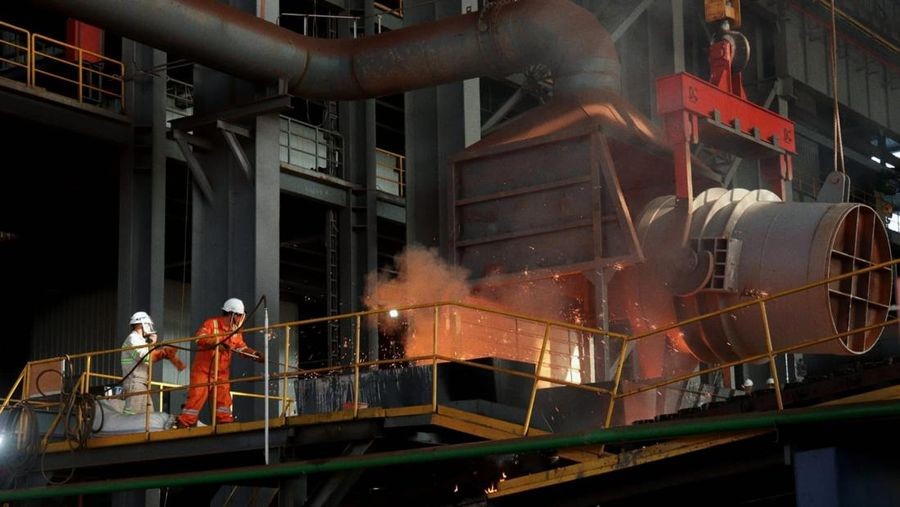
FINI underscored that current nickel smelting technologies—including High Pressure Acid Leaching (HPAL), Rotary Kiln Electric Furnace (RKEF), Oxygen-Enriched Side-Blown Furnace (OESBF), and Heap Leach—are engineered specifically to produce nickel intermediates, not to extract or purify REEs. Recovery of rare earths from these streams remains technically unproven and economically unviable without further R&D, according to the source.
Compounding the challenge, Indonesia’s downstream nickel sector—still relatively young—is confronting acute commercial stress: falling global demand, volatile pricing, rising energy and production costs, and surging input prices for key auxiliaries like sulfur and industrial diesel. These pressures are intensified by policy shifts that add operational complexity without transitional support.
A Path Forward: Phased Policy and Shared Roles
To balance strategic resource stewardship with industrial viability, FINI proposed a proportional, phased implementation framework for REE-related policy. This includes clearly defined transition periods, technology-readiness assessments, and economic feasibility reviews before enforcement. Crucially, the group recommended aligning REE policy with Harmonized System (HS Code) classifications, actual elemental concentrations, mineralogical characteristics, and technically and economically viable recovery potential.
FINI also advocated for role differentiation across the ecosystem: operating smelters could supply initial REE-bearing residues under fair recovery terms and incentives—or advance toward downstream REE processing only where rigorous analysis confirms clear economic and technical benefit. “This approach avoids requiring the nickel industry to build the entire REE value chain independently,” Arif Perdanakusumah explained. “Instead, REE development can proceed through measurable, collaborative roles aligned with each actor’s capabilities and readiness.”
Source: cnbcindonesia.com
Compiled from international media by the SCI.AI editorial team.