According to doanhnghiephoinhap.vn, Vietnam’s logistics costs stand at 16–17% of GDP — significantly higher than the global average of 10–12% and the regional average of 11.6%. The assessment comes from Jian Dan, Head of Investment and Development for Asia and the Middle East at APM Terminals, speaking at the Ministry of Industry and Trade’s Logistics Forum on 24 July 2026.
Cost Burden and Structural Bottlenecks
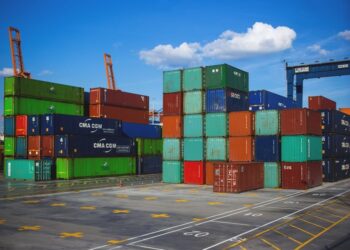
The high cost burden stems from systemic inefficiencies rather than external market forces. As noted by APM Terminals, core constraints include a fragmented multimodal transport system, excessive reliance on road freight (accounting for over 65% of domestic cargo movement), persistent congestion at gateway ports such as Cái Mép and Hải Phòng, and non-harmonized customs and documentation procedures across agencies.
These bottlenecks persist despite Vietnam’s rapid trade expansion: export turnover reached $475 billion in 2025, surpassing India’s $440 billion — a notable achievement given Vietnam’s much smaller land area and population. This growth underscores its deep integration into global supply chains, supported by an extensive network of free trade agreements (FTAs) and strategic geographic positioning along major maritime corridors.
Global Supply Chain Restructuring Reshapes Priorities
“The global supply chain is undergoing profound structural reconfiguration — moving from a model optimized solely for unit cost to one anchored in resilience, reliability, optionality, and speed.” — Jian Dan, Head of Investment and Development for Asia and the Middle East, APM Terminals
This shift has been accelerated by successive systemic shocks between 2020 and 2026: the COVID-19 pandemic, the Suez Canal blockage, the Russia-Ukraine war, Red Sea shipping crises, and the Baltimore Bridge collapse. Multinational enterprises are now prioritizing redundancy, digital visibility, intermodal connectivity, and rapid rerouting capacity — not just raw port throughput or warehouse square footage.
Consequently, nearshoring and friend-shoring strategies have surged. The “China + 1” model — maintaining production in China while establishing secondary manufacturing hubs in politically aligned, operationally stable countries — is now mainstream practice. Vietnam sits at the epicenter of this realignment, with deepwater port infrastructure already operational at Cái Mép and Hải Phòng, and a new deepwater gateway expected in Đà Nẵng in the next phase of development.
Actionable Pathways for Domestic Competitiveness
While Vietnam cannot control international ocean freight rates, it retains full agency over domestic logistics efficiency. Panelists at the forum emphasized that reducing internal friction — through standardized digital documentation (e.g., single-window customs platforms), rail modernization linking North–South corridors and cross-border routes to China and Laos, and air cargo capacity expansion for high-value electronics and e-commerce goods — offers the highest near-term ROI.
Specific investments highlighted include upgrading the North–South railway line to support containerized freight, expanding cold-chain infrastructure at key inland dry ports, and integrating inland container depots with seaports via dedicated rail shuttles. These measures aim to cut road dependency and lower the effective cost per TEU moved within Vietnam — a critical lever given that domestic logistics accounts for nearly 70% of total end-to-end supply chain costs for exporters.
According to the report, successful implementation could reduce Vietnam’s logistics-to-GDP ratio by 3–4 percentage points within five years — bringing it closer to Thailand’s current level of 13.2% and positioning the country as a credible multimodal logistics hub for Southeast Asia.
Source: doanhnghiephoinhap.vn
Compiled from international media by the SCI.AI editorial team.