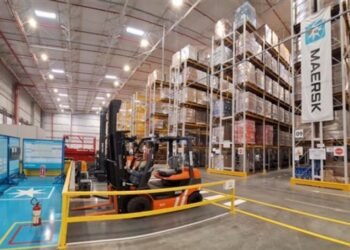
According to www.marketscale.com, US logistics costs fell to 7.8% of GDP in 2026, marking the lowest level in recent years and coinciding with intensifying demand for supply chain talent.
Cost Benchmark Reflects Structural Efficiency Gains
The Council of Supply Chain Management Professionals (CSCMP) and Kearney jointly published the 37th annual State of the Logistics Union report, which documented the 7.8% logistics cost-to-GDP ratio. This figure aggregates transportation, warehousing, and inventory carrying costs — categories that procurement directors and VPs of operations must benchmark against individually, as national averages mask significant intra-sector variation.
Supply Chain Digest, which closely tracks the CSCMP-Kearney study, emphasized the longitudinal value of 37 years of continuous data collection. That depth enables supply chain leaders to assess current efficiency trends not as isolated snapshots but as part of a multi-decade cycle — particularly valuable amid ongoing complexity, including rising cargo theft values despite slightly fewer incidents in the first half of 2026. Meanwhile, US manufacturing expanded for the sixth consecutive month through June 2026, boosting freight volumes and applying modest upward pressure on transportation capacity and rates.
Talent Pipeline Pressure Intensifies Despite Cost Gains
While macro-level cost efficiency improved, workforce constraints deepened. Forbes Advisor’s 2026 review of online supply chain management bachelor’s degree programs — authored by Doug Wintemute and updated in June 2026 — highlights rapid institutional expansion of formal credentialing pathways. Universities are scaling online offerings to meet employer hiring demand, yet the pipeline remains insufficient.
“The structural need is real,” the source states, noting that emerging technologies like Agentic AI and physical AI — ranked among the top supply chain technology trends for 2026 — require professionals fluent in both operational context and technical integration. This dual-competency requirement sits at the intersection of traditional supply chain training and newer digital skills, widening the gap between available talent and strategic needs.
Warehouse Technology Economics Undergo Realignment
Cloud-based warehouse management software (WMS) economics are shifting due to rising AI infrastructure costs, prompting some operators to reassess on-premise versus cloud deployment models. For CIOs and supply chain technology leads evaluating WMS contracts or renewals, the default assumption favoring cloud is no longer valid — the cost calculus has changed in ways not reflected in legacy contract assumptions.
This shift occurs alongside accelerating capital investment in automation. The Automate tradeshow in Chicago drew 50,000 registrants in 2026, per Supply Chain Digest. Organizers are already planning a new venue for 2027 to accommodate growth — a clear signal that robotics and warehouse automation adoption is accelerating, not plateauing. That momentum directly impacts labor planning and technology roadmaps, especially for organizations delaying automation decisions.
Practical Implications for Operations Leaders
Operations leaders are advised to take three concrete actions: First, benchmark internal logistics cost breakdowns — specifically transportation, warehousing, and inventory carrying costs — against the CSCMP-Kearney categories to identify where their operations diverge from the 7.8% GDP figure and where efficiency gains are attainable. Second, audit the talent pipeline now: although formal supply chain degree programs are expanding, hiring competition is intensifying, making early recruiting relationships with online and hybrid programs strategically urgent. Third, if a WMS renewal or cloud infrastructure decision is due within the next 12–18 months, reopen the on-premise versus cloud cost model — AI-driven infrastructure costs have altered the math.
Finally, evaluate automation capital plans in light of Automate 2026’s record attendance. Waiting for a technology cycle to mature may mean competing for constrained integrator capacity later — a risk that grows with each passing quarter.
Source: marketscale.com
Compiled from international media by the SCI.AI editorial team.