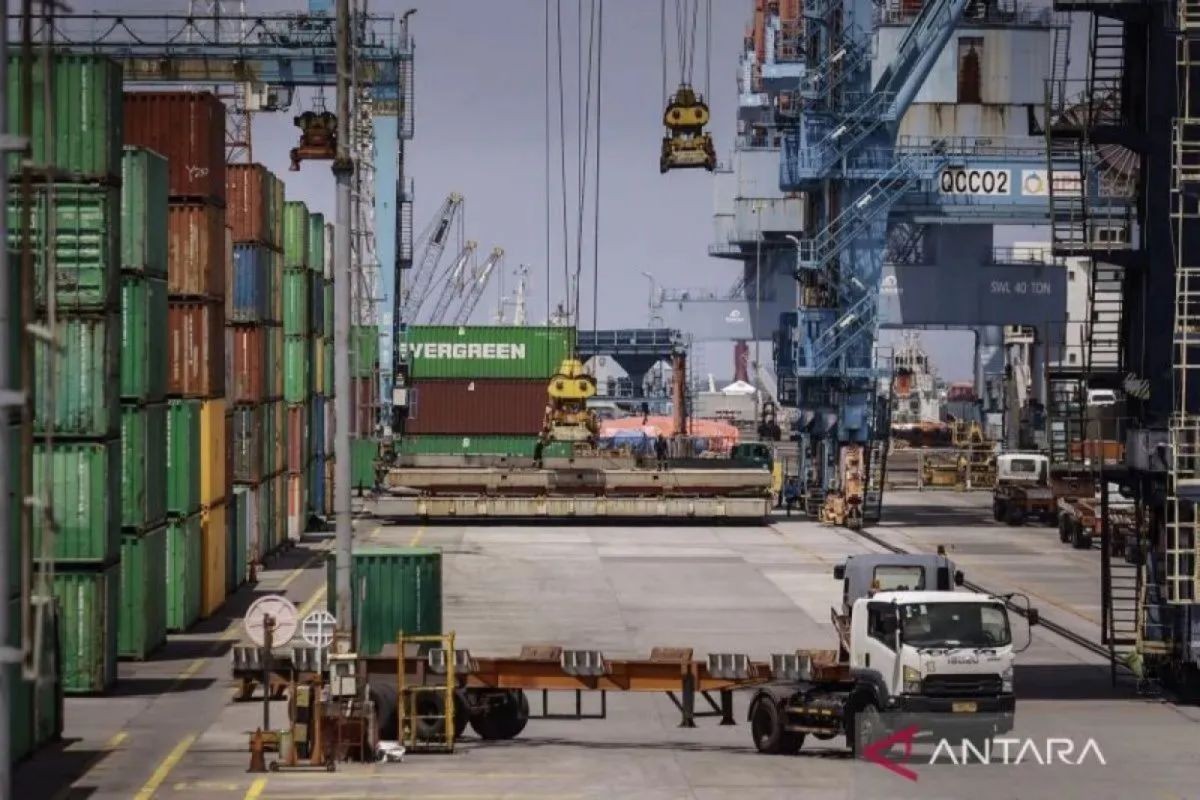
According to en.antaranews.com, the NEXT Indonesia Center research group has urged the Indonesian government to accelerate downstream industrial development to strengthen trade competitiveness and long-term growth amid rising global volatility.
Strategic Shift Toward Higher-Value Exports
Ade Holis, Head of Research at the NEXT Indonesia Center, emphasized that Indonesia’s priority must be building a more diversified, higher-value export structure capable of withstanding global economic shocks. This structural shift would allow net exports to play a larger role in sustaining Indonesia’s long-term economic growth.
Expanding downstream industries across palm oil, minerals, steel, electronics, automotive, chemicals, and broader manufacturing is central to this strategy. According to Ade Holis, deeper palm oil processing, expanded mineral refining, and enhanced competitiveness in domestic manufacturing would collectively strengthen Indonesia’s position in global supply chains while generating new employment opportunities.
Trade Data Highlights Resilience — and Risks
Trade statistics from Statistics Indonesia (BPS) show Indonesia recorded a cumulative trade surplus of US$4 billion during January through May 2026. Total exports reached US$115.4 billion over that period — an increase of 3.02 percent year-on-year.
However, imports rose significantly faster: 15.24 percent over the same five-month span. This divergence narrowed the overall surplus and contributed to a US$1.6 billion trade deficit in May alone. Ade Holis framed this monthly deficit not as a setback but as a catalyst for accelerating structural reform — particularly away from raw-material dependency.
Downstream Projects and Policy Momentum
The push aligns with concrete policy and investment developments already underway. Danantara — a state-backed investment vehicle — is developing 26 downstream projects valued at US$12.4 billion. Meanwhile, Indonesia recently signed a minerals downstreaming pact with Switzerland on 26th June 2026, reinforcing international collaboration in value-added processing.
Additional momentum comes from Indonesia’s 2025 investment performance, which exceeded its official target due to downstream-focused inflows. Government data also shows Rp1,010.6 trillion in recorded investments during H1 2026 — underscoring strong domestic and foreign confidence in the downstream agenda.
Implications for Supply Chain Professionals
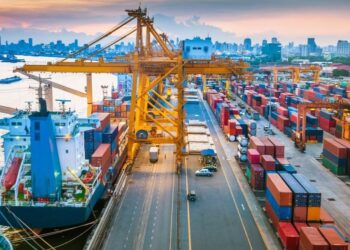
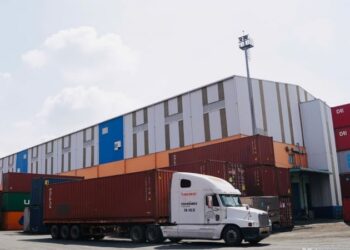
For supply chain practitioners, Indonesia’s downstream acceleration signals both opportunity and complexity. A stronger base of processed and manufactured exports will require upgraded logistics infrastructure — especially at ports like Tanjung Priok in Jakarta — and tighter integration between upstream resource extraction and midstream refining or assembly operations.
The shift also demands new sourcing strategies: procurement teams must adapt to evolving supplier capabilities in refined nickel, biodiesel derivatives, and palm-based oleochemicals. Simultaneously, logistics providers face growing demand for bonded warehousing, specialized handling for intermediate goods, and compliance support for evolving export regulations tied to environmental and traceability standards.
“The greater priority is building a more diversified, higher-value export structure better able to withstand global economic shocks. That would enable net exports to play a greater role in supporting Indonesia’s long-term economic growth.” — Ade Holis, Head of Research, NEXT Indonesia Center
With Indonesia targeting a global role in the semiconductor supply chain and advancing green economy initiatives — including B50 biodiesel mandates and plans to stop diesel imports by July 2026 — downstream capacity is no longer just an industrial policy goal but a foundational element of national trade resilience.
Source: en.antaranews.com
Compiled from international media by the SCI.AI editorial team.