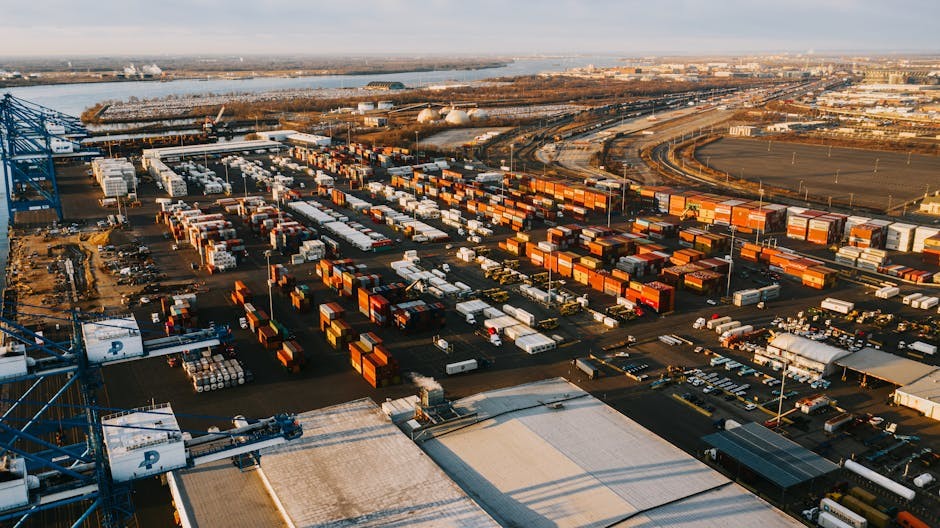
At the intersection of climate policy, industrial legacy, and supply chain resilience lies a quiet but pivotal transformation unfolding on the shores of Lake Huron: the electrification of aggregate transport at Ontario Trap Rock in Bruce Mines, Ontario. This is not merely an equipment upgrade—it is a strategic recalibration of how foundational construction materials move across one of North America’s most historically vital inland waterways. With $6.4 million in federal funding allocated under the $149.7 million Green Shipping Corridor Program, R.W. Tomlinson Ltd. is replacing diesel-powered haul trucks with an electric-powered extended ship loading system spanning 2.7 km from quarry face to commercial dock. The implications extend far beyond emissions reduction: this project signals a paradigm shift in how resource-intensive industries reconcile decarbonization imperatives with the immutable physical demands of bulk material logistics. In an era where global supply chains are increasingly scrutinized for both carbon intensity and geopolitical vulnerability, Canada’s decision to anchor its green shipping strategy in domestic, high-volume commodity flows—particularly trap rock aggregates essential for road bases, rail ballast, and concrete reinforcement—reveals a sophisticated understanding of infrastructure sovereignty. This is not greenwashing; it is granular, geographically grounded, and economically calibrated decarbonization.
The Strategic Imperative of Aggregate Supply Chain Localization
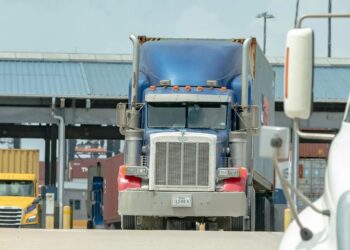
Aggregate supply chains—though rarely featured in headlines—are the bedrock of national infrastructure resilience. Unlike high-value, low-bulk goods that can be rerouted via air or diversified sourcing, construction aggregates are inherently local: their weight-to-value ratio makes long-haul overland transport prohibitively expensive and environmentally inefficient. In Canada, where over 85% of domestic marine shipments are carried by Canadian-owned vessel companies, the Great Lakes-St. Lawrence Seaway system functions as the nation’s most cost-effective and lowest-carbon freight artery for heavy bulk commodities. Yet this system has long operated with aging infrastructure and fossil-fueled ancillary processes—particularly in land-based transfer operations between extraction sites and docks. Ontario Trap Rock’s facility exemplifies this structural tension: producing high-quality trap rock used in major infrastructure projects across northern Ontario and the Great Lakes region, it relies on diesel haul trucks crossing Highway 17—a critical east-west corridor—to deliver material to its dock. That arrangement creates three systemic vulnerabilities: first, truck traffic contributes disproportionately to local air pollution and road wear; second, diesel dependency exposes the facility to volatile fuel pricing and supply disruptions; and third, the inefficiency of repeated short-haul cycles limits throughput scalability. Without intervention, these bottlenecks would constrain Canada’s ability to meet ambitious public infrastructure targets—including the $180 billion Investing in Canada Infrastructure Program—while simultaneously undermining climate commitments.
The localization imperative is further intensified by geopolitical realities. Following the 2022–2023 global port congestion crisis and the cascading effects of Red Sea shipping disruptions, procurement officers across Canadian municipalities and provincial ministries have accelerated efforts to map and fortify domestic aggregate supply footprints. Unlike steel or cement—where imports from the U.S. or Europe remain viable—trap rock cannot be imported at scale due to prohibitive transportation costs and quality specifications tied to regional geology. As Dr. Elena Vargas, Senior Fellow at the Canadian Centre for Infrastructure Resilience, observes:
“Aggregate logistics isn’t about optimizing delivery time—it’s about ensuring geological certainty meets engineering specification within a 200-kilometre radius. When you electrify that last-mile link, you’re not just cutting emissions—you’re hardening the entire value chain against external shocks.” — Dr. Elena Vargas, Senior Fellow, Canadian Centre for Infrastructure Resilience
This insight reframes the Bruce Mines project not as a sustainability pilot, but as a sovereign infrastructure safeguard—one that leverages Canada’s unique geographic advantages (abundant hydroelectric power, deep-water ports, and vast mineral reserves) to create a self-reinforcing loop of energy efficiency, employment stability, and supply continuity.
Electrification Beyond the Dock: Engineering the Extended Loading System
The technical ambition of Ontario Trap Rock’s project extends well beyond swapping diesel engines for electric motors. Its electric-powered extended ship loading system represents a rare integration of three traditionally siloed domains: quarry automation, renewable-powered heavy transport, and marine terminal optimization. Spanning 2.7 km, the system replaces approximately 40 daily diesel truck trips with a continuous, overhead conveyor-and-electric-tram hybrid that moves crushed trap rock directly from primary crushing stations to the dock’s ship-loading booms. Crucially, this is not a simple belt conveyor—it incorporates variable-frequency drives, regenerative braking on downhill segments, and AI-driven load-balancing algorithms to maintain optimal throughput while minimizing energy spikes. Power will be drawn from Ontario’s grid, which derives over 90% of its electricity from non-emitting sources, primarily nuclear and hydro. This context matters profoundly: unlike electrification projects in jurisdictions reliant on coal-fired generation, the emissions abatement here is near-total—estimated at over 1,200 tonnes of CO₂e annually, with additional reductions in NOx and particulate matter that directly benefit the Bruce Mines community. Moreover, because the system operates continuously rather than in discrete truck batches, it enables tighter scheduling of vessel arrivals and departures—reducing idle time at berth and increasing annual dock utilization by up to 18%.
This engineering approach reflects a broader industry evolution away from piecemeal retrofits toward integrated systems thinking. Historically, quarry-to-port logistics were treated as separate capital projects: the quarry operator invested in crushers and screens; the port authority upgraded cranes and berths; and trucking firms managed their own fleets. The Green Shipping Corridor Program, however, deliberately funds interventions that bridge these institutional boundaries. By targeting the “extended loading system”—a term that encompasses both the transport leg and its interface with marine loading infrastructure—the program acknowledges that decarbonization gains are maximized not at individual nodes, but along the functional seam between them. Key technical enablers include:
- Modular battery-swapping stations positioned at midpoints along the 2.7 km route, eliminating downtime for recharging
- Real-time vibration and thermal monitoring of conveyor bearings to preempt failures that could halt marine shipments
- Digital twin integration linking quarry output forecasts with vessel ETA data to dynamically adjust loading rates
Such sophistication transforms what was once a linear, labor-intensive process into a responsive, data-informed utility—setting a new benchmark for how bulk material handling must evolve to meet both net-zero and just-in-time infrastructure delivery requirements.
Economic Multipliers: From Local Employment to National Competitiveness
The economic impact of the Bruce Mines electrification project transcends its immediate emissions metrics. As the largest employer in Bruce Mines—with approximately 50 full-time workers—Ontario Trap Rock anchors the socioeconomic fabric of a remote northern community where alternative employment opportunities are scarce. The $6.4 million investment does more than modernize machinery; it secures multi-decade employment continuity by enabling the facility to increase annual shipments by up to 25 percent. This expansion is not speculative—it responds directly to documented demand surges: Ontario’s 2023–2033 Infrastructure Priorities Plan projects a 42% increase in aggregate demand driven by transit expansions in Toronto, highway upgrades across Highway 11/17 corridors, and Indigenous-led infrastructure partnerships in Northern Ontario. Critically, the project also catalyzes secondary economic activity: local electrical contractors are being trained in high-voltage DC distribution systems, regional steel fabricators are bidding on custom support structures for the elevated conveyor, and Indigenous-owned enterprises are participating in environmental monitoring and community liaison roles. These ripple effects embody what economists term “green-collar multiplier effects”—where clean infrastructure investments generate higher local wage premiums and longer employment durations than conventional stimulus measures.
At the national level, the project advances Canada’s climate competitiveness strategy in two underappreciated dimensions. First, it strengthens the country’s position as a supplier of low-carbon construction inputs to international markets—particularly the U.S. Midwest, where demand for sustainably sourced aggregates is rising under new Buy Clean policies in states like California and Minnesota. Second, it demonstrates scalable pathways for decarbonizing other resource corridors: the Green Shipping Corridor Program’s $149.7 million budget is explicitly designed to fund replicable models, not one-off demonstrations. As noted by Transport Canada’s Director of Sustainable Marine Policy:
“Our corridor strategy isn’t about creating isolated green islands—it’s about building interoperable, standards-aligned infrastructure nodes that collectively lower the marginal cost of decarbonization across the entire Great Lakes maritime network. Bruce Mines proves that when you align federal policy, provincial permitting, and private-sector operational expertise, you get velocity—not just viability.” — Sarah Chen, Director of Sustainable Marine Policy, Transport Canada
This systemic perspective explains why the program prioritizes projects with clear replication roadmaps: the extended loading system design is being documented in open-access engineering guidelines, and R.W. Tomlinson has committed to hosting site visits for operators from Labrador iron ore terminals, BC coastal gravel facilities, and Prairie potash export hubs.
G7 Alignment and the Geopolitics of Green Corridors
Canada’s Green Shipping Corridor Program did not emerge in isolation—it is a direct implementation of the G7’s 2023 pledge to establish at least 14 green shipping corridors by mid-decade. Yet Canada’s interpretation diverges meaningfully from European or Asian counterparts by centering domestic, inland-waterway freight rather than transoceanic routes. While the EU focuses on ammonia-fueled container ships crossing the North Sea and Japan invests in hydrogen-powered ferries in the Seto Inland Sea, Canada’s strategy recognizes that its greatest decarbonization leverage lies not in deep-sea vessels, but in the shore-side ecosystems that feed them. This is a deliberate act of geopolitical calibration: by investing in Great Lakes corridors, Canada avoids competing for scarce global green fuel supplies (e.g., green hydrogen or e-methanol) and instead leverages its comparative advantage in low-cost, low-carbon electricity. The result is a corridor model built on verifiable, near-term emissions reductions rather than speculative fuel transitions. Furthermore, Canada’s approach sidesteps the complex regulatory fragmentation plaguing transboundary corridors—no need to harmonize emissions standards across multiple flag states or port authorities when operating entirely within sovereign jurisdiction and unified federal-provincial environmental frameworks.
This domestic focus also carries strategic risk mitigation benefits. Global green corridor initiatives often face delays due to cross-border permitting, inconsistent subsidy regimes, and competing national priorities. Canada’s single-jurisdiction model enables accelerated deployment: the Bruce Mines project moved from application to construction in under 11 months, compared to the 3.2-year average for G7-aligned maritime decarbonization projects. The government’s decision to fund shore-side electrification—rather than waiting for zero-emission vessels—also reflects pragmatic sequencing: while zero-emission vessel technology remains nascent and capital-intensive, shore-side infrastructure upgrades deliver immediate, measurable benefits with lower technological risk. Key differentiators of Canada’s G7 implementation include:
- Direct alignment with the Net-Zero Emissions Accountability Act, ensuring all funded projects undergo lifecycle emissions verification
- Mandatory inclusion of Indigenous consultation protocols in corridor planning, recognizing traditional territory stewardship as integral to sustainable logistics
- Integration with the Canada Infrastructure Bank’s loan guarantees to de-risk private investment in complementary upgrades (e.g., dock expansion at Ontario Trap Rock)
In essence, Canada is using the G7 framework not as a constraint, but as a catalyst to accelerate homegrown solutions that serve domestic economic and ecological objectives first—and global leadership second.
Lessons for Global Bulk Material Supply Chains
The Bruce Mines case offers transferable insights for bulk material supply chains worldwide—from Australian iron ore exports to South African platinum group metals logistics. Its core lesson is counterintuitive yet profound: the highest-impact decarbonization levers in heavy industry are often not found in the headline-grabbing assets (ships, smelters, refineries), but in the unglamorous, land-based transfer systems that connect them. Global mining and construction firms routinely allocate >70% of their capital expenditure budgets to primary extraction and processing, while spending <5% on logistics interfaces—despite evidence that these interfaces account for up to 30% of scope 1 emissions in aggregate-heavy supply chains. Ontario Trap Rock’s project demonstrates how reallocating even modest capital ($6.4 million) toward integrated, electrified transfer can yield disproportionate returns: 25% throughput growth, 1,200+ tonnes of annual CO₂e reduction, and significant community safety improvements through reduced Highway 17 crossings. These outcomes validate a growing consensus among supply chain engineers: that “last-mile” logistics for bulk commodities is better conceptualized as “first-mile”—the critical, high-friction interface where raw material becomes shippable inventory.
More broadly, the project underscores that supply chain resilience and sustainability are co-dependent, not competing, objectives. During the 2023 Great Lakes low-water event—which restricted vessel drafts and delayed aggregate deliveries across Michigan and Ohio—Ontario Trap Rock’s existing dock capacity became a strategic asset. The planned dock expansion, funded in parallel with the electrification project, will allow deeper-draft vessels to load during seasonal low-water periods, effectively extending the navigable shipping season by up to 22 days annually. This dual benefit—emissions reduction + climate adaptation—is emblematic of next-generation infrastructure investment: projects must now pass a “resilience-sustainability double-test.” As global insurers increasingly factor climate risk into marine cargo premiums, and as ESG rating agencies assign higher scores to supply chains with verified adaptation measures, the business case for integrated projects like Bruce Mines strengthens exponentially. For multinational firms managing global aggregate portfolios, the takeaway is unequivocal: electrifying the land-based transfer leg isn’t just cleaner—it’s cheaper, faster, and more reliable over the asset’s full 30-year lifecycle.
Source: www.canada.ca
This article was AI-assisted and reviewed by our editorial team.