Explore

  • Trending
  • Latest
  • Tools
  • Browse
  • AI Assistant
  • Subscription Feed

Logistics

  • Ocean
  • Air Cargo
  • Road & Rail
  • Warehousing
  • Last Mile

Regions

  • Southeast Asia
  • South Asia
  • Central Asia
  • Japan & Korea
  • Middle East
  • Europe
  • Russia
  • Africa
  • North America
  • Latin America
  • Australia
SCI.AI
  • Supply Chain
    • Strategy & Planning
    • Logistics & Transport
    • Manufacturing
    • Inventory & Fulfillment
  • Procurement
    • Strategic Sourcing
    • Supplier Management
    • Supply Chain Finance
  • Technology
    • AI & Automation
    • Robotics
    • Digital Platforms
  • Risk & Resilience
  • Sustainability
  • Research
  • Expert Columns
  • English
    • Chinese
    • English
No Result
View All Result
  • Login
  • Register
SCI.AI
No Result
View All Result
Home Africa Supply Chain

India’s Pharma Exports Hit $31.1B, But 77% Penicillin G Relies on China

2026/07/02
in Africa Supply Chain
0 0
India’s Pharma Exports Hit $31.1B, But 77% Penicillin G Relies on China

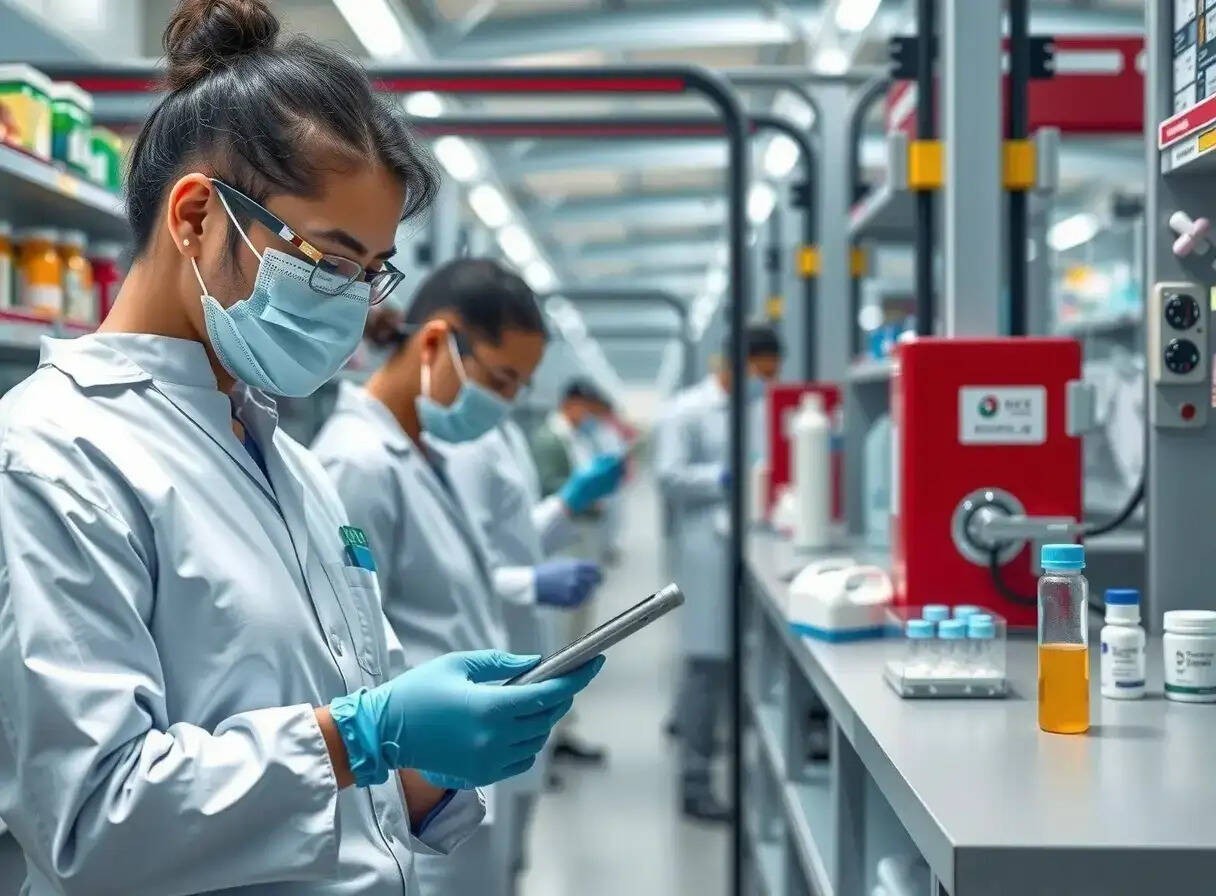
According to chemicals.economictimes.indiatimes.com, India’s pharmaceutical exports surged to $31.1 billion in fiscal year 2025–26, up from $1.9 billion in 2000–01. Yet the sector remains critically dependent on Chinese imports — particularly for active pharmaceutical ingredients (APIs) and chemical intermediates.

Import Dependency Masks Export Strength

While India supplies medicines to over 200 countries and hosts one of the world’s largest clusters of U.S. FDA-approved manufacturing sites outside the United States, its upstream supply chain remains fragile. According to the Pharmaceutical Exports Promotion Council, China supplied 43.45 percent of India’s pharma imports by value in 2023–24, amounting to $3.6 billion. For specific critical inputs, reliance is far more acute: 77 percent of Penicillin G and 94.1 percent of 6-APA — a key beta-lactam intermediate — were imported from China, per government data.

Historical Roots and Structural Imbalance

This dependency emerged over three decades as Indian manufacturers, under intense price pressure, shifted API sourcing to China due to its scale, integrated industrial clusters, cheaper utilities, and easier access to capital. The result was a systemic deindustrialisation of India’s upstream chemical capacity. As Salil Kallianpur, former Executive Vice President at GSK and veteran pharma analyst, observed:

“Chinese mega plants and integrated supply chains give them a sustainable cost edge. Unless India builds an end-to-end ecosystem — from basic chemicals to bulk drugs — dependence on imports will continue as an economic necessity.” — Salil Kallianpur, former Executive Vice President at GSK

Global Shifts Create Opportunity — and New Scrutiny

Geopolitical tensions and pandemic-era disruptions have accelerated U.S. and European efforts to diversify away from Chinese pharmaceutical supplies. The U.S. enacted the BIOSECURE Act and established a Strategic Active Pharmaceutical Ingredients Reserve; Europe’s Critical Medicines Act pursues similar resilience goals. These moves align with the global China+1 strategy, where multinational pharma firms seek alternative, fully traceable suppliers. However, Namit Joshi, Chairman of the Pharmaceutical Exports Promotion Council, warns that global buyers now assess the *entire* supply chain — not just finished dosage forms. Indian manufacturers relying on imported intermediates face competitive disadvantage even as their finished drug exports grow.

Domestic Gaps Extend Beyond APIs

The challenge extends across India’s broader chemicals industry. In fiscal year 2025, India imported chemicals worth more than $54 billion. For pharmaceutical intermediates like paracetamol and amoxicillin, import dependence ranges from 50 to 80 percent, according to industry estimates. Despite a domestic chemicals market valued at $250 billion in 2024, critical gaps persist in upstream specialty and basic chemicals — including those needed to synthesise APIs.

Government Response: PLI Scheme and Bulk Drug Parks

In response, the Indian government launched the Production Linked Incentive (PLI) Scheme for bulk drugs in 2020, allocating Rs 6,940 crore (~$835 million) to boost local production of 41 key APIs and intermediates. Dedicated bulk drug parks are under development in Andhra Pradesh, Gujarat, and Himachal Pradesh. The government reports manufacturing capacity has been established for 26 of the targeted products. Notably, projects to produce Penicillin G and Clavulanic Acid — absent from India’s manufacturing landscape for over two decades — are now underway in Kakinada and Nalagarh.

Resilience Remains a Work in Progress

Despite these initiatives, import trends have not reversed. Data from Pharmexcil shows bulk drug imports rose by 13 percent in the first two months of FY25 versus the prior year. Trade Map and ORF analysis reveals that while finished medicine exports grew from $1 billion in 2001 to $23.3 billion in 2024, API and intermediate imports soared from $1.8 billion to nearly $26 billion over the same period. With India’s pharmaceutical market currently valued at roughly $60 billion and targeting doubling within five years — as stated by Commerce and Industry Minister Piyush Goyal — demand for APIs and intermediates will intensify. Experts stress that long-term competitiveness hinges on developing a self-reliant ecosystem spanning upstream chemicals, energy-efficient utilities, and logistics infrastructure — not just isolated API plants.

Source: chemicals.economictimes.indiatimes.com

Compiled from international media by the SCI.AI editorial team.

More on This Topic

  • HelloFresh scales chilled fulfillment 5X to 500 SKUs with Locus robots (Jul 1, 2026)
  • Extreme Weather Halts Cape of Good Hope Traffic, 600 Ships Affected (Jun 9, 2026)
  • US Export Controls Pressure VPEC’s AI Optical Comm Supply Chain (May 31, 2026)
  • Supply Chain KPIs Lag as Resilience, Speed, Risk Metrics Missing (May 30, 2026)
  • H-E-B scales $700M supply chain expansion in San Antonio (May 29, 2026)
ShareTweet

Related Posts

HelloFresh scales chilled fulfillment 5X to 500 SKUs with Locus robots
Africa Supply Chain

HelloFresh scales chilled fulfillment 5X to 500 SKUs with Locus robots

July 1, 2026
2
Extreme Weather Halts Cape of Good Hope Traffic, 600 Ships Affected
Africa Supply Chain

Extreme Weather Halts Cape of Good Hope Traffic, 600 Ships Affected

June 9, 2026
15
US Export Controls Pressure VPEC’s AI Optical Comm Supply Chain
Africa Supply Chain

US Export Controls Pressure VPEC’s AI Optical Comm Supply Chain

May 31, 2026
42
Supply Chain KPIs Lag as Resilience, Speed, Risk Metrics Missing
Africa Supply Chain

Supply Chain KPIs Lag as Resilience, Speed, Risk Metrics Missing

May 30, 2026
23
H-E-B scales $700M supply chain expansion in San Antonio
Africa Supply Chain

H-E-B scales $700M supply chain expansion in San Antonio

May 29, 2026
14
South Africa Cold Chain Market to Hit $7.6B by 2034, CAGR 13.7%
Africa Supply Chain

South Africa Cold Chain Market to Hit $7.6B by 2034, CAGR 13.7%

May 28, 2026
24

Leave a Reply Cancel reply

Your email address will not be published. Required fields are marked *

Recommended

S&P Cuts Odyssey Rating to CCC+, Warns of 2027 Default — FreightWaves

S&P Cuts Odyssey Rating to CCC+, Warns of 2027 Default — FreightWaves

21 Views
June 5, 2026
The Midwest Premium Crisis: How $1/lb Aluminum and Unrelenting Tariffs Are Reshaping U.S. Metal Packaging Supply Chains in 2026

The Midwest Premium Crisis: How $1/lb Aluminum and Unrelenting Tariffs Are Reshaping U.S. Metal Packaging Supply Chains in 2026

67 Views
March 19, 2026
Africa’s Export Diplomacy at a Tectonic Inflection: How US-China Strategic Rivalry Is Forcing a Supply Chain Reconfiguration Across the Continent

Africa’s Export Diplomacy at a Tectonic Inflection: How US-China Strategic Rivalry Is Forcing a Supply Chain Reconfiguration Across the Continent

9 Views
February 28, 2026
Wing Launches Drone Delivery in Bay Area: 750,000+ Deliveries Completed

Wing Launches Drone Delivery in Bay Area: 750,000+ Deliveries Completed

46 Views
March 29, 2026
Show More

SCI.AI

Global Supply Chain Intelligence. Delivering real-time news, analysis, and insights for supply chain professionals worldwide.

Categories

  • Supply Chain Management
  • Procurement
  • Technology


  • Risk & Resilience
  • Sustainability
  • Research

© 2026 SCI.AI. All rights reserved.

Powered by SCI.AI Intelligence Platform

Welcome Back!

Sign In with Facebook
Sign In with Google
Sign In with Linked In
OR

Login to your account below

Forgotten Password? Sign Up

Create New Account!

Sign Up with Facebook
Sign Up with Google
Sign Up with Linked In
OR

Fill the forms below to register

All fields are required. Log In

Retrieve your password

Please enter your username or email address to reset your password.

Log In

Scan to share via WeChat

Open WeChat and scan the QR code to share

QR Code

Add New Playlist

No Result
View All Result
  • Supply Chain
    • Strategy & Planning
    • Logistics & Transport
    • Manufacturing
    • Inventory & Fulfillment
  • Procurement
    • Strategic Sourcing
    • Supplier Management
    • Supply Chain Finance
  • Technology
    • AI & Automation
    • Robotics
    • Digital Platforms
  • Risk & Resilience
  • Sustainability
  • Research
  • Expert Columns
  • English
    • Chinese
    • English
  • Login
  • Sign Up

© 2026 SCI.AI