According to internasional.kontan.co.id, China’s official manufacturing Purchasing Managers’ Index (PMI) rose to 50.3 in June 2026 — up from 50.0 in May — exceeding the 50.4 forecast in a Reuters economist poll and crossing the 50-threshold that separates expansion from contraction.
AI Export Boom Propels Manufacturing Recovery
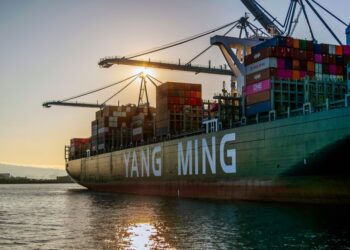
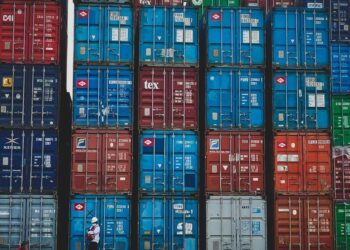
The uptick was driven almost exclusively by surging global demand for AI-enabling hardware. Data from China’s National Bureau of Statistics (NBS) shows exports of automated data-processing equipment jumped 60% year-on-year in May 2026 — the latest month with available trade figures — while furniture exports grew only 1.9% over the same period. This stark divergence underscores how AI-related semiconductor production and advanced electronics assembly are now anchoring China’s industrial output, even as other sectors stagnate.
Exports to the United States showed early signs of acceleration in June, with Xu Tianchen, Senior Economist at the Economist Intelligence Unit, noting that exporters were rushing shipments ahead of new U.S. Section 301 tariffs scheduled to take effect at the end of July. “There are signs of increased shipments to the U.S. in June,” he said — a tactical response to anticipated trade policy shifts rather than sustained demand recovery.
Domestic Weakness Persists Amid Global Reliance
Despite the manufacturing uptick, domestic demand remains deeply subdued. Retail sales in May 2026 fell for the first time in over three years, according to official data. Meanwhile, new home prices declined at an accelerating pace, reflecting ongoing stress in China’s property sector — a key drag on employment, consumer spending, and local government revenues. The non-manufacturing PMI improved only marginally to 50.2 in June from 50.1 in May, and the composite PMI stood at 50.6, just above its May level of 50.5.
These indicators confirm that China’s $20 trillion economy continues to rely heavily on external markets to absorb its industrial output. With weak domestic consumption and unresolved structural headwinds in real estate and labor markets, export performance — particularly in high-tech goods — has become the primary growth lever. As one source familiar with central bank directives revealed, the People’s Bank of China instructed several commercial banks in late June to increase lending this month, signaling growing concern over liquidity constraints and credit demand shortfalls.
Global Implications and Supply Chain Realities
The June PMI data arrives amid heightened geopolitical uncertainty. A closely watched May meeting between U.S. President Donald Trump and Chinese President Xi Jinping yielded no breakthroughs on tariffs or Beijing’s influence over Tehran — issues directly tied to regional stability and energy supply chains. At the same time, rising input costs, easing Middle East-driven price spikes, and foreign buyers de-stocking in anticipation of ceasefire agreements have further narrowed margins for Chinese producers.
For global supply chain professionals, this bifurcated picture presents both opportunity and risk. On one hand, AI infrastructure components — from AI chips to server racks — remain in strong demand, supporting stable lead times and pricing in those segments. On the other, non-AI manufacturing categories face persistent overcapacity and price pressure. Procurement teams must now segment sourcing strategies: prioritizing resilience and technical validation for AI-critical components, while applying cost-optimization rigor to legacy categories like furniture, textiles, and basic machinery — where export growth has effectively stalled.
“There are signs of increased shipments to the U.S. in June,” — Xu Tianchen, Senior Economist at the Economist Intelligence Unit
The divergent trajectories also reinforce a broader industry trend: technology-intensive manufacturing is increasingly decoupled from broader macroeconomic cycles. While traditional industrial output remains sensitive to domestic consumption and property investment, AI hardware exports respond more directly to global cloud infrastructure buildouts, data center expansions, and national AI strategy rollouts — dynamics largely outside China’s domestic policy control.
Source: internasional.kontan.co.id
Compiled from international media by the SCI.AI editorial team.