BNSF’s $4bn Barstow hub bet – transformative or a costly moat? The Berkshire Hathaway railroad has recently won local approval for the largest intermodal facility in North America. But questions about the transload model, ballooning costs, and the UP-NS merger shadow deserve shar
Cost escalation and scope expansion
When BNSF first unveiled its Barstow International Gateway (BIG) on 1 October 2022, the price tag was $1.5 billion and the pitch was straightforward: move container sorting out of congested Los Angeles and into the high desert. Four years later, the number has ballooned to $4 billion, reflecting both expanded infrastructure scope and rising construction and land acquisition costs across the Inland Empire region.
The facility is now projected to cover more than 2,500 acres — over three times the size of the original plan — and will include dedicated rail-served warehousing, automated chassis stacking, and direct connections to Interstate 15 and State Route 58. Its location in Barstow, California places it approximately 120 miles northeast of the Ports of Los Angeles and Long Beach.
Strategic context: UP-NS merger pressures
The timing of BIG’s final approval coincides with heightened regulatory scrutiny of the proposed Union Pacific–Norfolk Southern merger. On 30 April 2026, Union Pacific and Norfolk Southern submitted an amended Surface Transportation Board (STB) application estimating shippers will save $3.5bn annually post-merger. That filing triggered immediate opposition from BNSF and other Class I carriers.
BNSF launched the Stop the Rail Merger Coalition on 29 April 2026 in Washington, D.C., citing concerns over reduced competition, service degradation, and network congestion risks — particularly at key intermodal gateways like Chicago and Memphis. The coalition argues that BNSF’s Barstow investment is not merely operational but defensive: a deliberate effort to strengthen independent capacity ahead of potential market consolidation.
Transload model under examination
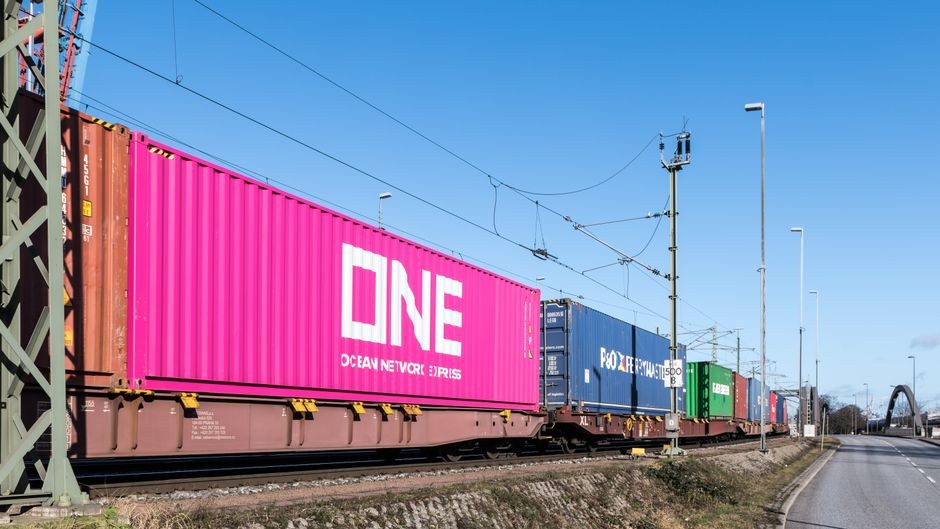
Critics question whether BIG’s core transload model — shifting containers from double-stack trains to drayage trucks for regional distribution — delivers long-term efficiency gains or simply relocates bottlenecks. Industry analysts note that truck availability in the Mojave Desert remains constrained, with average driver dwell time at existing Barstow terminals exceeding 48 hours during peak import surges.
A recent FreightWaves report cited 17% year-on-year growth in drayage rates across San Bernardino County between Q4 2025 and Q1 2026 — a trend expected to intensify as BIG ramps up operations. One logistics executive observed: “Building a $4 billion moat doesn’t solve last-mile friction — it just moves the choke point 120 miles inland.”
Regulatory and competitive landscape
The STB decision on the UP-NS merger remains pending after accepting the application on 11 June 2026 — then immediately parking it for further review. That procedural delay has created uncertainty for shippers evaluating long-term routing strategies, especially those relying on trans-Pacific supply chains anchored at Southern California ports.
Meanwhile, BNSF’s investment signals confidence in the Inland Empire’s role as a logistics corridor. The company expects BIG to handle over 2 million TEUs annually by full build-out in 2029, representing roughly 12% of total West Coast container volume. Local officials in San Bernardino County approved the project’s environmental impact report on 15 May 2026, clearing the final permitting hurdle.
Source: The Loadstar
Compiled from international media by the SCI.AI editorial team.