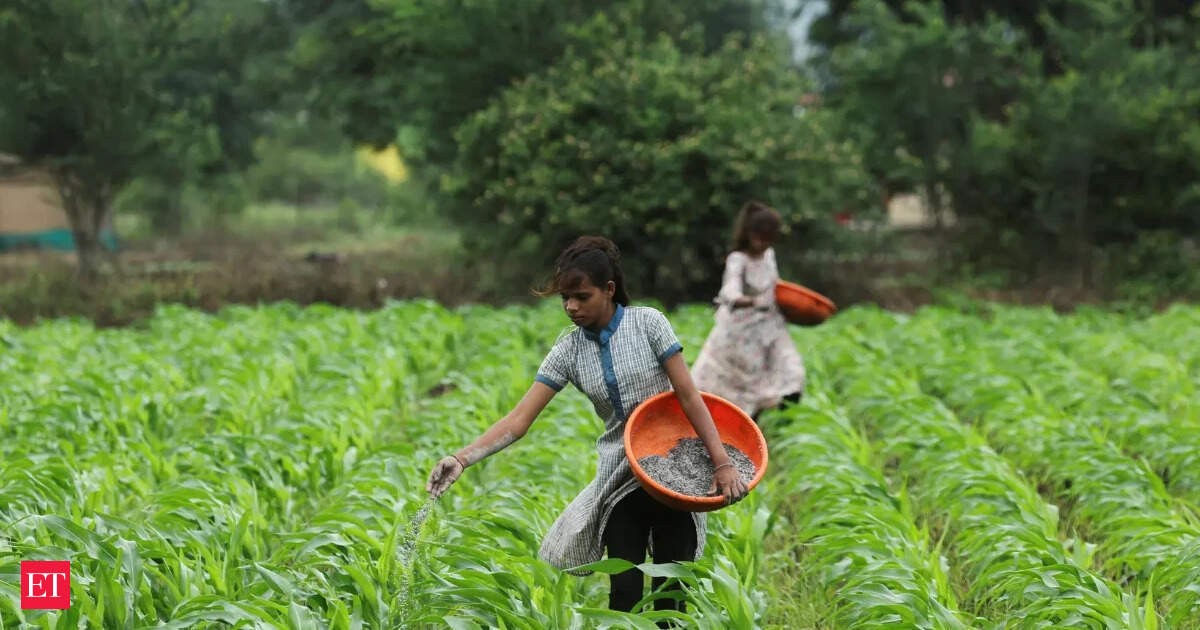
According to m.economictimes.com, India’s monsoon rains are running nearly two weeks behind schedule just as the critical kharif planting season begins — threatening the nation’s $300 billion farm economy and amplifying inflationary pressures across staple food and fiber markets.
Monsoon delay hits core planting window
June is normally the pivotal month for sowing kharif crops — including rice, cotton, millet, and soybeans — but farmers must wait for the first monsoon showers before seeding. With the month nearly over and rains delayed by nearly two weeks in Mumbai and other key regions, agricultural activity has stalled. The delay is disrupting India’s farm economy with the same systemic severity as a semiconductor shortage would halt automotive production, according to the report.
The southwestern monsoon’s arrival has historically been so predictable that Indian agriculture operates on a just-in-time calendar aligned to its onset. This year’s deviation has triggered nervous headlines and immediate market concern — especially given that the 2025 monsoon is now projected to be the weakest in 11 years.
Central and Deccan belt bears brunt
The worst dry spell has struck central India and the Deccan plateau — an agricultural heartland spanning Rajasthan, Gujarat, Maharashtra, Karnataka, Uttar Pradesh, Madhya Pradesh, Chhattisgarh, and Telangana. This region accounts for 90% of India’s soybean and sugarcane output, 80% of its cotton, and 70% of its peanuts and pulses such as lentils and chickpeas. Its dominance extends to fruit and vegetable production, giving it outsized influence on national retail prices.
Nashik — a politically sensitive onion-growing district northeast of Mumbai — exemplifies the crisis: rainfall there this month has reached just 16% of the long-term average. Onion price volatility has repeatedly driven household budget stress and even contributed to government instability in past years.
Inflation and policy responses intensify
The drought’s impact extends far beyond farms. By constraining supplies of cooking oil, sugar, cotton, and affordable plant-based protein, the shortfall is feeding directly into headline inflation — which stands at its highest level since early 2025. The Reserve Bank of India has explicitly flagged abnormal weather as a risk to its economic forecasts.
In response, New Delhi may reinstate export restrictions — as it did in 2023 after late rains and early-season flooding triggered a rice export ban. That measure cut off roughly 40% of global rice trade, since India supplies that share of world exports. Similar curbs on sugar exports are now widely anticipated.
Resilience under climate strain
India’s food system has grown more resilient: rice warehouse stocks have increased by nearly half since the 2023 export ban; wheat inventories are similarly robust; and expanded irrigation, crop science advances, and logistics upgrades have strengthened supply buffers. Fertilizer stockpiles also helped absorb earlier shocks from Strait of Hormuz tensions.
Yet these gains are being outpaced by accelerating climate disruption. Across South Asia — home to nearly 25% of the world’s population — centuries of dependence on the monsoon’s annual rhythm are colliding with rising unpredictability. Global warming is increasing both the frequency and severity of droughts and floods when rains do arrive. As the developing super El Niño intensifies over the Pacific, its downstream effects on Indian agriculture will reverberate through domestic markets and global commodity flows alike.
“The arrival of the southwestern monsoon during June is so weirdly regular that you can set a just-in-time agricultural calendar by it.” — David Fickling, Bloomberg
Source: m.economictimes.com
Compiled from international media by the SCI.AI editorial team.