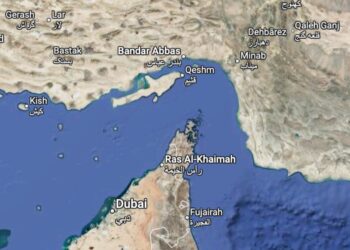
According to www.travelandtourworld.com, the Mediterranean Shipping Company (MSC) has launched a new Europe–Middle East intermodal trade corridor that bypasses the Strait of Hormuz — a move confirmed by the Saudi Press Agency (SPA) and published government announcements on May 22, 2026.
New Multimodal Route Combines Sea and Land Transport
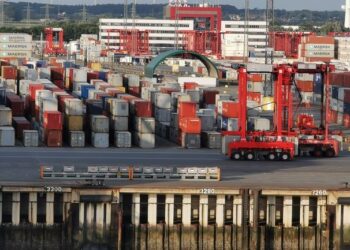
The route enables container vessels from major European hubs — including Antwerp, Bremerhaven, Valencia, Barcelona, and Gioia Tauro — to call at Jeddah Islamic Port and King Abdullah Port on Saudi Arabia’s Red Sea coast. Cargo is then transported overland by road to King Abdulaziz Port in Dammam on the Arabian Gulf coast. From Dammam, feeder vessels distribute shipments across the Gulf region. This land bridge spans approximately 1,400 km across Saudi territory and supports vessels capable of carrying up to 16,000 standard containers.
Saudi Logistics Corridors Initiative Aligns with National Strategy
The route operationalises the Logistics Corridors Initiative, officially launched in March 2026 by the Saudi Ministry of Transport and the Saudi Ports Authority (Mawani). The initiative mandates redirection of cargo from Gulf Cooperation Council (GCC) member state ports toward Saudi Red Sea terminals for onward distribution. It integrates sea, road, and planned rail links under the National Transport and Logistics Strategy, which targets Vision 2030 infrastructure goals. Enhancements include streamlined customs procedures, bonded storage zone development, and port capacity expansion at Jeddah and Dammam facilities.
Geopolitical Turbulence Spurs Logistics Innovation
The route responds directly to the 2026 Strait of Hormuz crisis, during which commercial navigation through the strait was restricted due to escalating geopolitical tensions involving Iran and other regional actors. The Strait of Hormuz handles an estimated 21 million barrels per day of oil and over 30% of global seaborne crude oil trade — data widely cited by the U.S. Energy Information Administration and International Maritime Organization. Jeddah Islamic Port, with an annual handling capacity exceeding 7.5 million TEUs, has seen increased cargo volume since early 2026 as diversions accelerate.
Strategic Importance of Saudi Ports Infrastructure
Jeddah Islamic Port is one of the busiest commercial ports in the Arab world and serves as a primary gateway linking Asia, Africa, and Europe. King Abdulaziz Port in Dammam is the largest port on the Arabian Gulf within Saudi territory and handles over 2.8 million TEUs annually. Together, these assets enable Saudi Arabia to function simultaneously as origin, transit, and distribution hub — a role reinforced by inland transport corridors connecting both coasts.
Broader Impact on Gulf Logistics Landscape
Other carriers and regional stakeholders are adopting similar multimodal adaptations: the UAE’s DP World and Bahrain’s Khalifa Bin Salman Port have announced joint feasibility studies for Saudi–Bahrain rail freight links by Q4 2026. According to the source, these developments reflect a coordinated regional pivot toward supply chain resilience amid maritime chokepoint closures. Saudi Arabia’s proactive infrastructure investments position it at the center of this strategic recalibration — not as a temporary alternative, but as a structurally integrated node in global freight planning.
Source: www.travelandtourworld.com
Compiled from international media by the SCI.AI editorial team.