According to spendmatters.com, AI is rapidly shifting from theoretical promise to operational reality in supply chain risk management — with procurement professionals identifying it as the highest-value domain for autonomous decision-making.
Why Risk Management First?
Bhavuk Chawla, Associate Procurement Director for wood-based packaging for the North American market at Unilever, identifies risk management — not strategy or supplier relationships — as the procurement function most suited to AI autonomy. His rationale centers on three interlocking facts: risk is inherently data-driven, time-sensitive, and codifiable in ways that strategic or relational work is not.
“In a world defined by supply disruption, geopolitical uncertainty, inflationary pressure and climate volatility, procurement risk has reached a point where manual monitoring is no longer feasible. And unlike strategic planning or relationship management, which rely on nuance, cultural fluency, creativity and influence, risk management is inherently data-driven. It is structured, time-sensitive and increasingly too complex for human-only decision cycles.” — Bhavuk Chawla, Associate Procurement Director, Unilever
Risk signals now flood in from satellite imagery, port throughput data, commodity price feeds, regulatory bulletins, social media sentiment, and financial filings — volumes and velocities beyond human processing capacity. AI’s strength lies in detecting subtle patterns across these heterogeneous sources, updating predictions continuously, and triggering actions within seconds — not days or meetings.
Five Documented AI Risk Interventions in Practice
- Predicting global disruptions 60–90 days in advance: AI risk intelligence platforms analyzing millions of data points deliver two- to three-month early warnings. Early adopters report 30%–40% faster response times and 20%–50% better forecast accuracy during volatility.
- Detecting supplier bankruptcy before it happens: A global electronics manufacturer deployed an AI-powered platform monitoring financials, news, and social media — resulting in 30% fewer supplier-related disruptions, improved supplier selection, and reclaimed strategic bandwidth for procurement teams.
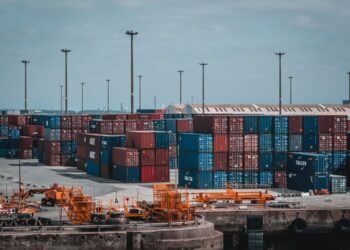
- Predicting port congestion months ahead: By fusing weather systems, vessel AIS data, historical throughput, and global news, AI tools now forecast port delays up to three months in advance, enabling proactive rerouting and avoiding multi-million-dollar delays.
- Real-time rerouting during weather disruptions: AI agents monitor logistics flows, detect anomalies (e.g., hurricane landfall, dock strike), and automatically rebook shipments within pre-defined cost and service-level constraints — shifting procurement from dashboard watching to autonomous exception resolution.
- Geopolitical risk escalation detection: Though the source cuts off mid-sentence, it confirms AI systems are actively monitoring geopolitical tension indices and activating alternative routes when thresholds are breached — aligning with documented use cases from firms like Resilience360 and Everstream Analytics.
Industry Context and Practitioner Implications
This shift reflects broader adoption patterns: cybersecurity and finance have long used autonomous AI for anomaly detection and containment; procurement is now catching up. According to Gartner’s 2025 Hype Cycle for Supply Chain Strategy, AI-powered risk sensing is entering the ‘Slope of Enlightenment’, with 42% of Fortune 500 supply chain leaders piloting predictive risk platforms. Unlike generative AI applications (e.g., drafting RFPs), these agentic systems act — assessing conditions, evaluating options against rules, and executing mitigations without human intervention. For supply chain professionals, this means reallocating time from reactive firefighting to designing robust guardrails, validating AI logic, interpreting edge-case exceptions, and strengthening supplier collaboration around shared risk visibility — not replacing human judgment, but elevating its strategic scope.
Source: spendmatters.com
Compiled from international media by the SCI.AI editorial team.