According to www.aircargonews.net, Amazon launched Amazon Supply Chain Services (ASCS) on 5 May 2026, expanding its third-party logistics offering to businesses across healthcare, automotive, manufacturing, and retail sectors.
Service Scope and Infrastructure Scale
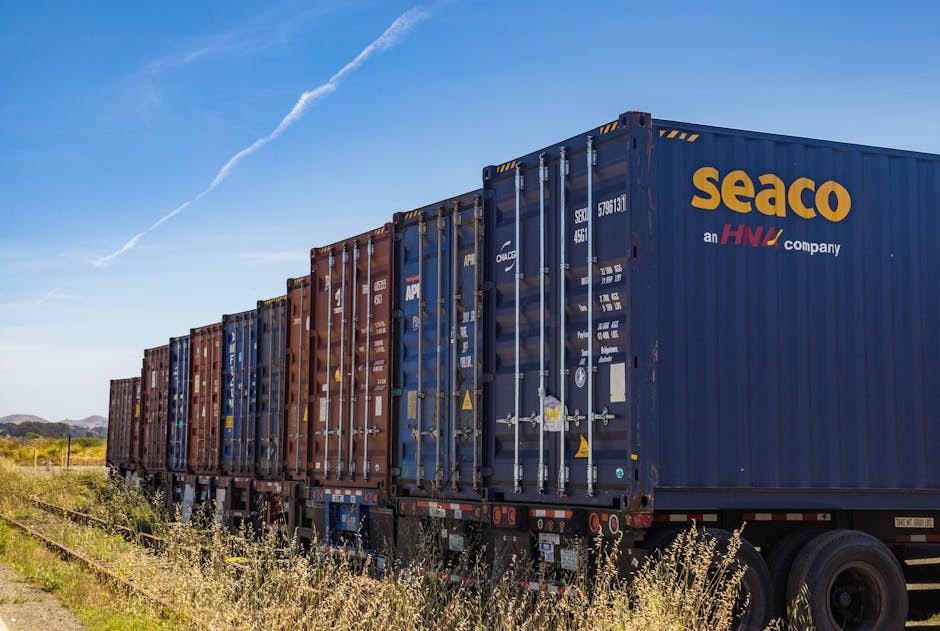
ASCS provides integrated freight, distribution, fulfilment, and parcel shipping solutions. Its freight network spans ocean, air, ground, and rail transport, backed by a physical asset base of 80,000 trailers, 24,000 intermodal containers, and 100 aircraft. The service offers time-sensitive shipment options, simplified booking, customs clearance, and end-to-end shipment visibility. Distribution and fulfilment capabilities include overseas inventory import, bulk storage, demand-driven inventory positioning, and multi-channel order fulfilment. Parcel delivery operates seven days a week with two-to-five-day delivery speeds, pickups from warehouses or third-party providers, and doorstep delivery.
Early Adopters and Use Cases
- Procter & Gamble uses ASCS freight services to move raw materials to production facilities and finished goods across its distribution network;
- 3M transports products from its manufacturing sites to distribution centres worldwide;
- Lands’ End leverages a unified inventory pool in Amazon’s network to fulfil orders across multiple sales channels;
- American Eagle Outfitters deploys Amazon’s parcel shipping network for direct-to-consumer deliveries from its American Eagle and Aerie websites nationwide.
Market Impact and Competitive Reaction
Within hours of the 5 May 2026 announcement, shares of FedEx and UPS each fell by around 10%. Analysts at Cirrus Global Advisors noted that ASCS builds on infrastructure already operating for years — including Amazon Air Cargo, which launched to third parties in 2024. However, adoption hinges on enterprise willingness to shift volume into Amazon’s network. As Derek Lossing, analyst at Cirrus Global Advisors, stated:
“Amazon becomes disruptive to the broader logistics ecosystem only if enterprises meaningfully shift volume into its network. That transition is not guaranteed.”
Operational Governance Challenges
Lossing identified three concrete constraints: data access and competitive neutrality concerns among large retailers; trust and governance requirements for granting Amazon deep visibility into supply chain operations; and capacity allocation during peak periods in a shared network serving both Amazon’s internal retail operations and external customers. Amazon has previously addressed similar concerns in air cargo via a no-bumping guarantee introduced with Amazon Air Cargo.
Industry Context and Precedent
This expansion follows Amazon’s established pattern of repurposing internally built infrastructure for external monetisation. Over the past three years, hundreds of thousands of Amazon sellers have used its logistics network to move, store, and deliver hundreds of millions of packages across third-party facilities and sales channels beyond Amazon.com. The company’s prior entry into air cargo — Amazon Air Cargo — serves as a precedent: it required multi-year investment in fleet, slots, and service guarantees before gaining third-party traction. Meanwhile, competitors are responding: Ethiopian Airlines launched scheduled freighter flights between Hong Kong International (HKG) and Glasgow Prestwick (PIK) on 23 April 2026, and MASkargo partnered with Teleport on Southeast Asia air cargo operations on 21 April 2026.
Source: Air Cargo News
Compiled from international media by the SCI.AI editorial team.