7 Warehouse Automation Trends in 2026: Software Intelligence and Robotics Lead the New Wave
In today’s evolving supply chain landscape, warehouse automation is undergoing unprecedented transformation. According to the “2026 Warehouse Automation Trends” report by systems integrator Hy-Tek Intralogistics, software intelligence, artificial intelligence (AI), and robotics are driving warehouse automation into a new phase. This report provides an in-depth analysis of the trends redefining warehousing and distribution, and how organizations are preparing for the next era of supply chain innovation.
“Software intelligence, AI, and robotics are driving warehouse automation into a new phase, and businesses need to prepare for the next era of supply chain innovation.” — Hy-Tek Intralogistics “2026 Warehouse Automation Trends” Report
Trend 1: Focus Shifts to Inbound Processes
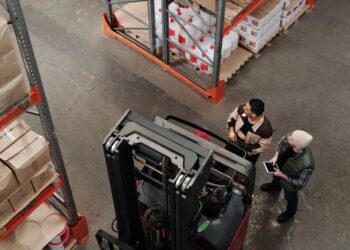
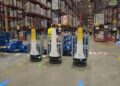
Until recently, many automation projects primarily focused on outbound fulfillment. Now, inbound automation is capturing the spotlight as companies look to reduce bottlenecks and increase efficiency in receiving, putaway, and pallet handling. In the past, many warehouses had to take inbound products out of their original cases and put them into bins, trays, or new cartons that could interact with their storage equipment. Now, load exchangers and case handlers can robotically pick cases into trays or move cases to shelving without intermediate unpacking. Expect to see major investments in robotic depalletizing and pallet-building systems, AI-enabled vision inspection that identifies products and barcodes in real time, and autonomous mobile robots (AMRs) for case and pallet transport—all on the inbound side.
Trend 2: Rent, Don’t Buy Automated Equipment
Today, organizations don’t always have to expend significant capital to add robotics to their warehousing operations. Instead, they can deploy and scale robotic fleets using flexible subscription models, known as robots-as-a-service (RaaS) arrangements. With providers managing updates, maintenance, and scalability, operations teams are free to focus on fulfilling orders instead of servicing equipment. While the RaaS model is most widely used for mobile robots, a similar subscription model is also being employed by other automation companies, like computer vision startups and drone providers.
Trend 3: Software Becomes the Core Driver
While hardware remains important, software is driving many of the biggest advances in modern warehouse operations. Warehouse execution systems (WES), orchestration platforms, and low-code/no-code integration tools are redefining how facilities operate by coordinating and integrating previously separate systems and processes and making configurations much easier. These systems also connect enterprise resource planning (ERP) systems, warehouse management systems (WMS), robotics, and internet of things (IoT) devices into one unified ecosystem, allowing data to drive every process.
Trend 4: Robotic Programming Gets Easier
Programming a robotic arm used to require a specialist. However, low-code interfaces and digital twins now allow operators to configure certain tasks using visual tools like drop-down menus or through “teach-by-demonstration,” where they physically guide the arm. Because configuration is simpler, robots can now switch more easily from performing one task, like decartoning, to another, such as kitting or inspection. As a result, downtime and engineering costs are reduced.
Trend 5: Imaging Systems Get Smarter
Vision technology solutions have evolved. Modern imagers equipped with neural processing units can now identify, classify, and track products in real time. Many traditional vision systems rely on predefined templates or image databases, which can make scaling to large numbers of SKUs (stock-keeping units) cumbersome. In contrast, vision systems using neural-network models can be trained on broader classes of products. One use case is pairing such a vision system with a robotic arm so it can begin reliable picking after a relatively short training period.
Trend 6: Storage Systems Become More Dynamic
Traditional pick modules are increasingly being replaced by robotic automated storage and retrieval systems (AS/RS) that can dynamically optimize storage and retrieval. These systems reduce travel time, increase accuracy, and adapt to changing demand patterns in real time. Unlike static racking, pick modules, and conveyor layouts—which are hard to change once installed—robotic storage systems are typically modular and can be reconfigured as order volumes, SKU mix, or service levels change.
Source: www.dcvelocity.com
This article was AI-assisted and reviewed by our editorial team.