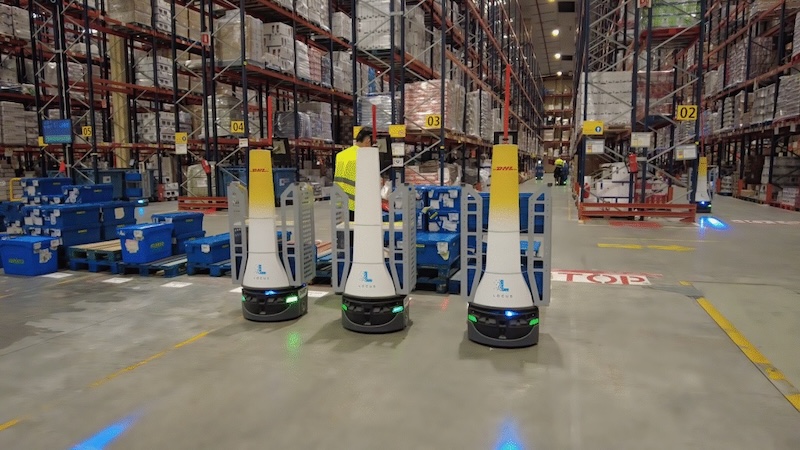
According to roboticsandautomationnews.com, DHL Supply Chain and Locus Robotics have completed their one billionth warehouse pick using autonomous mobile robots (AMRs) — a landmark achievement in large-scale warehouse automation deployment.
Global Deployment Across 40+ Facilities
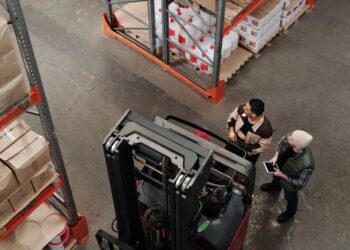
The milestone pick occurred inside a DHL-managed facility and was executed by a single Locus AMR operating within DHL’s global network of automated fulfillment centers. Though the item was a modest pink beanie, the event underscores the operational scale now routine in modern logistics infrastructure.
DHL first partnered with Locus Robotics in 2017, responding to intensifying e-commerce demand and the need for higher warehouse productivity. Since then, the collaboration has expanded to more than 40 DHL-managed facilities worldwide, spanning e-commerce, retail, and healthcare logistics sectors.
Thousands of Locus AMRs operate under coordination from Locus Robotics’ warehouse execution platform — a system designed to integrate robotic fleets with human workers for goods movement and order picking.
Measurable Operational Gains
DHL reports consistent performance improvements since deployment began:
- 30–180% increase in units picked per hour
- 80% reduction in training time for warehouse staff
These metrics reflect real-world adoption beyond pilot phases — a shift from experimental use to embedded infrastructure.
A Decade of Scaling Automation
The one billion pick follows steady growth: in 2020, the global Locus customer network — anchored by DHL — surpassed 100 million picks, also at a DHL facility. This progression highlights how rapidly AMR-based fulfillment has scaled amid evolving demand patterns.
In line with this growth, DHL and Locus announced an expanded agreement targeting deployment of 5,000 AMRs across DHL’s global network. At the time, DHL Supply Chain CEO Oscar de Bok emphasized scalability as foundational to successful automation:
“An idea is only a good idea if it can scale.” — Oscar de Bok, CEO, DHL Supply Chain
From Speed to Consistency
The milestone signals a strategic pivot in logistics operations. While speed once defined competitive advantage, operators increasingly prioritize consistent throughput and reliability — especially amid unpredictable e-commerce demand driven by viral trends, flash promotions, and rapid behavioral shifts.
Automation systems that sustain stable output across fluctuating volumes are now viewed as mission-critical infrastructure — not just efficiency tools.
Infrastructure Behind the Expected Experience
For end consumers, the billionth pick is invisible. What they experience instead is the outcome: orders arriving on schedule, regardless of complexity or volume. Behind that reliability lies an increasingly automated, coordinated, and data-informed physical layer — one that supports the precise orchestration required across global supply chains.
Source: Robotics & Automation News
Compiled from international media by the SCI.AI editorial team.