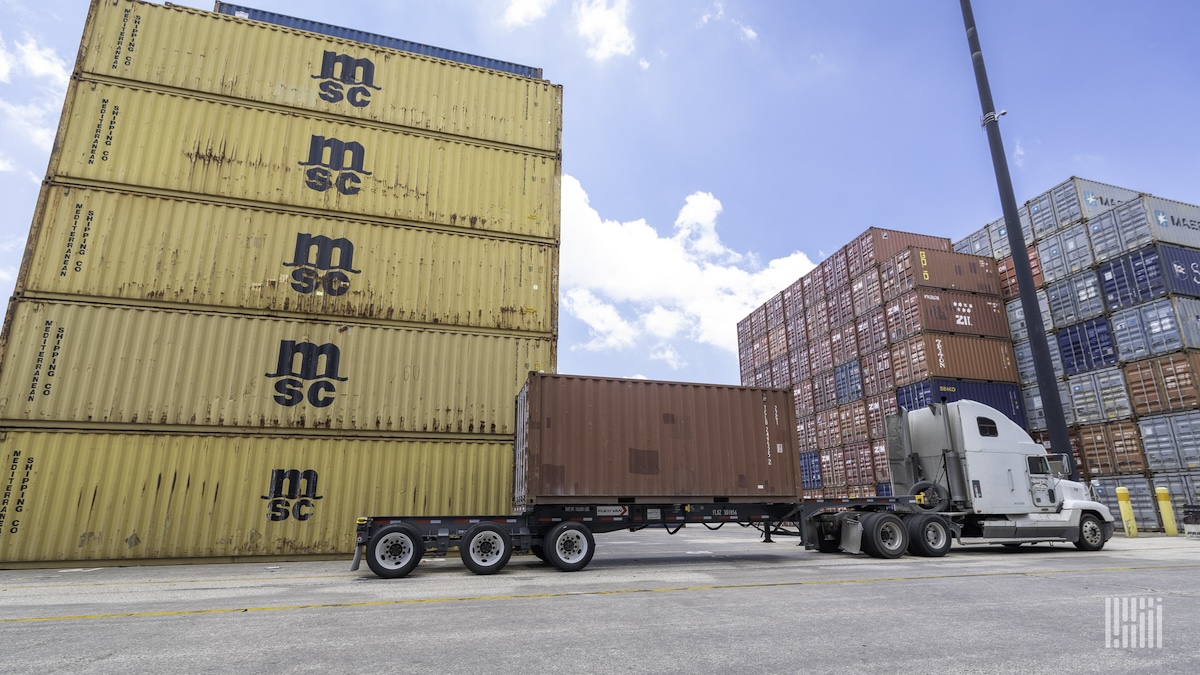
The demand for mobile storage trailers is skyrocketing as manufacturers and retailers across North America seek a flexible alternative to traditional warehouses amidst tariff volatility, labor shortages, and rising logistics costs.
Supply Chain Resilience in the Face of Disruption
As supply chains grapple with unexpected disruptions such as tariff changes, port congestion, and fluctuating inventory demand, the need for flexible storage solutions has become paramount. Companies are increasingly looking to mobile storage trailers as a cost-effective and adaptable solution.
Warehouse on Wheels, a leading mobile storage provider, operates around 37,000 trailers across 37 locations in the U.S., Canada, and Mexico, serving over 7,000 customers across various sectors. According to John Brooks, founder and CEO of Warehouse on Wheels, these trailers act as a ‘pressure relief valve’ between corporate forecasts and on-the-ground disruptions.
- Trailers provide temporary storage capacity when warehouses are full or supply chains are disrupted.
- They serve as overflow storage at factories, distribution centers, or ports.
- Compared to traditional warehouse leases, trailers offer a more flexible and cost-effective option.
A Cost-Effective Alternative to Traditional Warehouses
Brooks highlighted that companies are seeking ways to convert fixed logistics costs into more flexible operating expenses. Traditional warehouse leases average about $11 per square foot before operating expenses, whereas storage trailers cost roughly $6.64 per square foot. This significant cost savings makes trailers an attractive option for businesses looking to optimize their supply chain costs.
Warehouse on Wheels offers refurbished trailers with forklift-rated floors, making them suitable for storage or short-distance cartage within regional supply chains. The flexibility and cost-effectiveness of these trailers make them a valuable tool for supply chain leaders.
The Impact of Supply Chain Disruptions
Disruptions in supply chains, including those caused by tariff changes and port congestion, have fueled the demand for flexible storage solutions. Brooks emphasized that just-in-time supply chains are particularly vulnerable to these disruptions, as companies often lack the time to negotiate warehouse leases when production is at risk.
Mobile storage trailers are often used to temporarily store inbound inventory, stage components for manufacturing, or hold empty packaging used in production systems. In some cases, manufacturers have significantly scaled their use of mobile storage over time, as seen with one Midwest automotive assembly plant that increased its deployment from 60 to over 1,600 trailers.
Nearshoring and Cross-Border Trade
Warehouse on Wheels is also seeing strong demand for mobile storage solutions tied to nearshoring and cross-border trade. Manufacturers operating along key logistics corridors in Mexico, such as Monterrey, Laredo, and El Paso, are increasingly using mobile storage to manage cross-border supply chains.
Brooks noted that the Canadian market has been softer due to slower economic conditions, but the demand for mobile storage solutions remains robust in both Mexico and the U.S.
Expansion and Growth Strategy
Warehouse on Wheels has expanded rapidly in recent years through acquisitions and new market launches. The company’s long-term goal is to grow to 100 locations and about 100,000 trailers across North America. As companies look to optimize their supply chain costs and increase resilience, the role of mobile storage solutions is likely to become even more critical.
Source: www.freightwaves.com
This article was AI-assisted and reviewed by our editorial team.