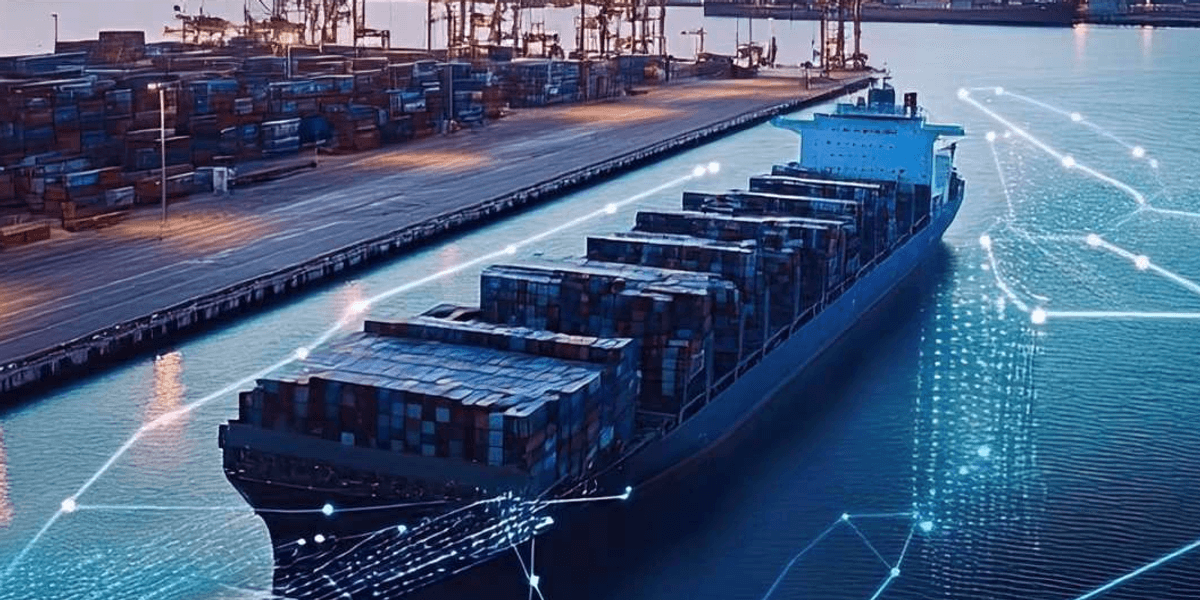
U.S. supply chains are undergoing a structural recalibration—not driven by fleeting market noise, but by a confluence of sustained cost inflation, geopolitical recalibration, and strategic rethinking of inventory velocity versus capital efficiency. The most telling symptom? Port-proximate industrial markets captured just 19% of total U.S. industrial net absorption in 2025, the lowest share recorded in fifteen years—a stark reversal from their historical dominance as gateways for just-in-time distribution. This isn’t merely a leasing trend; it’s a systemic migration of logistics gravity away from coastal chokepoints toward inland nodes where land, labor, energy, and tax structures collectively enable scalability without sacrificing service-level commitments. As Cushman & Wakefield’s North America Ports & Trade Update: 2025 in Review confirms, national industrial net absorption surged 16.3% year over year, yet port-adjacent markets grew demand by only 2%, while inland markets exploded at 21%. This divergence signals not a retreat from global trade, but a deliberate re-engineering of how trade is operationalized—where proximity to the container crane is no longer synonymous with proximity to the customer.
The Rent Shockwave: When Location Premium Becomes a Strategic Liability
Industrial rents in port-proximate markets have surged 65% between 2019 and 2023, outpacing both national inflation and wage growth by wide margins—and they remain 33% higher than the national average. For occupiers requiring facilities exceeding 500,000 square feet, this premium is no longer a line-item cost but a capital constraint that directly undermines ROI on automation, labor investment, and inventory turnover. Consider the math: a Class A warehouse in the Inland Empire commands $1.28/sf/month, whereas Long Beach or Newark averages $1.70/sf/month—a differential of over $2.5 million annually on a 500,000-sf lease. That sum could fund two full-time robotics integration engineers, a predictive analytics stack, or an entire regional safety compliance team. More critically, the rent escalation has been asymmetric: while inland markets saw modest, linear increases tied to construction costs and local labor availability, port markets absorbed speculative bidding fueled by limited land supply, regulatory bottlenecks, and investor demand for ‘blue-chip’ logistics assets. This created a perverse incentive structure—where landlords priced for scarcity rather than utility, and tenants responded not by negotiating harder, but by redrawing their network maps entirely.
This rent shockwave didn’t emerge in isolation. It was amplified by a collapse in the traditional rationale for port adjacency: the erosion of just-in-time (JIT) as an inviolable doctrine. Post-pandemic, JIT revealed its fragility—exposed by vessel schedule volatility, chassis shortages, and terminal congestion that routinely added 7–14 days to dwell times. When dwell time exceeds five days, the cost advantage of port-proximity evaporates, replaced by penalty fees, demurrage, and opportunity costs from idle inventory. Further, the rise of multi-channel fulfillment—especially B2C e-commerce requiring same-day or next-day delivery windows—demands geographic dispersion, not concentration. A single mega-distribution center near Los Angeles may serve the West Coast efficiently, but it cannot meet Prime delivery SLAs in Denver, Dallas, or Nashville without adding 48+ hours of transit time. Thus, high rents became the catalyst, but the underlying driver was functional obsolescence: port-adjacent warehouses were optimized for cross-docking and transloading, not for micro-fulfillment, returns processing, or regional sortation—all of which require different footprints, labor models, and technology stacks.
Geopolitics as Infrastructure: Tariffs, Nearshoring, and the Redefinition of ‘Proximity’
Trade policy is no longer background noise—it is active infrastructure design. The cumulative impact of Section 301 tariffs, Uyghur Forced Labor Prevention Act enforcement, and bilateral negotiations with Mexico and Vietnam has fundamentally altered landed cost calculations. Where once ‘China +1’ meant building a second factory in Vietnam, it now means establishing integrated logistics ecosystems across North America—with Mexico serving as both manufacturing source and nearshored staging ground. This shift has accelerated the development of inland intermodal hubs like Laredo, TX; El Paso, TX; and Kansas City, MO, where rail-served facilities connect seamlessly to maquiladora supply chains and domestic trucking networks. Crucially, these locations offer lower effective duty rates through USMCA rules of origin, reduced exposure to tariff volatility, and shorter lead times than ocean freight from Asia—even when factoring in overland transport. As one Tier 1 automotive supplier told us in a confidential interview: “We’re no longer calculating duty on FOB Shanghai—we’re calculating total landed cost from Monterrey to Chicago, including railcar utilization, border wait times, and inventory carrying cost. That equation now favors inland consolidation centers over port-side break-bulk facilities.”
This geopolitical calculus intersects powerfully with nearshoring economics. According to the Reshoring Initiative, U.S. manufacturing reshoring hit $60 billion in 2025, with over 62% of new investments located more than 200 miles inland. These facilities don’t ship containers—they ship pallets and trailers. Their logistics needs are best served by distribution centers positioned within 200 miles of production, not 20 miles from a port. Moreover, nearshored production enables ‘postponement strategies’: final assembly, kitting, and labeling occur closer to point-of-sale, reducing SKU proliferation and enabling rapid response to demand shifts. This requires flexible, scalable warehousing—something far more readily available and affordable in secondary markets like Columbus, OH; Memphis, TN; or Phoenix, AZ than in constrained port corridors. The result is a virtuous cycle: nearshoring drives inland manufacturing; inland manufacturing drives inland distribution; inland distribution attracts third-party logistics providers investing in automation and talent; and those investments further lower the cost barrier for additional nearshoring. It’s a self-reinforcing architecture—one that port-proximate markets, built for import-centric flows, struggle to replicate.
- Top 5 inland logistics hubs by 2025 net absorption growth: Kansas City (+34%), Memphis (+29%), Columbus (+27%), Phoenix (+25%), Dallas-Fort Worth (+23%)
- Top 3 port markets by rent premium vs. national average: Long Beach ($1.72/sf, +42%), Newark ($1.68/sf, +39%), Savannah ($1.59/sf, +31%)
Network Reconfiguration: From Linear Chains to Adaptive Meshes
The shift away from ports reflects a deeper philosophical pivot—from linear, sequential supply chains to adaptive, multi-node meshes. Traditional models assumed unidirectional flow: port → distribution center → retail store. Today’s winning networks assume bidirectional, multi-origin, multi-destination routing. Returns, reverse logistics, circular economy initiatives, and hybrid fulfillment (e.g., ship-from-store, buy-online-pickup-in-store) demand facilities that function as both origination and termination points. Inland hubs excel here because they sit at natural convergence points for multiple transportation modes—not just ocean, but also Class I rail, interstate trucking corridors, and increasingly, dedicated freight rail spurs. For example, the newly expanded BNSF Intermodal Terminal in Joliet, IL, handles over 1.2 million TEUs annually and connects directly to 14 major highway arteries, enabling same-day truckload dispatch to 18 states. Such infrastructure enables dynamic rerouting: when West Coast ports experience congestion, shippers can divert containers to Houston or Savannah, then move them via rail to Joliet for final-mile distribution—bypassing port-adjacent DCs entirely. This mesh logic reduces systemic risk and increases throughput resilience, but it requires real estate strategy rooted in connectivity, not coastline.
Technology adoption patterns reinforce this mesh architecture. Advanced warehouse management systems (WMS) and transportation management systems (TMS) now prioritize network-wide optimization over facility-level efficiency. Algorithms dynamically allocate orders across geographically dispersed nodes based on real-time inventory, labor availability, carrier capacity, and even weather forecasts. A retailer might fulfill a New York order from a Philadelphia DC on Monday, but from a Pittsburgh DC on Tuesday if snow delays in the Delaware Valley trigger automatic rerouting. This level of orchestration is impossible without distributed infrastructure—and prohibitively expensive to build if every node must be in a high-cost port market. Furthermore, automation economics tilt decisively inland: the $3–$5 million capital expenditure for an automated storage and retrieval system (AS/RS) delivers faster payback in markets where labor costs are 18–22% lower and lease terms allow for 10-year amortization. In contrast, port-market leases often include restrictive clauses limiting tenant improvements, discouraging long-term automation bets. As one logistics technology analyst observed:
“The era of the monolithic, port-anchored DC is over. What we’re seeing is the rise of the ‘network node’—a smaller, smarter, more agile facility embedded in a larger ecosystem. Its value isn’t in its size, but in its algorithmic addressability.” — Dr. Lena Cho, Senior Director, Supply Chain Innovation, MIT Center for Transportation & Logistics
Labor, Energy, and the Hidden Cost of Coastal Concentration
Beyond rent, port-proximate markets face compounding structural disadvantages in labor availability and energy reliability—two factors rarely quantified in traditional site selection models but increasingly decisive in operational continuity. Coastal California, for instance, faces a 23% projected shortfall in logistics labor by 2027, driven by housing unaffordability, aging workforce attrition, and competition from tech-sector wages. Meanwhile, inland markets like Indianapolis and Louisville report unemployment rates 1.8–2.4 percentage points below national average, with robust vocational pipelines feeding into material handling, maintenance, and automation technician roles. Wage premiums in port markets—averaging 14% above inland peers—do not translate into superior retention; turnover remains chronically high due to commute stress, lack of childcare infrastructure, and limited advancement pathways. This creates a vicious cycle: high turnover necessitates constant onboarding, which dilutes productivity, which pressures margins, which fuels further rent sensitivity.
Energy infrastructure presents another hidden liability. Port-adjacent facilities in Southern California and the Northeast operate under frequent Public Safety Power Shutoff (PSPS) protocols during wildfire or storm season—disrupting cold chain operations, halting automated guided vehicle (AGV) fleets, and forcing costly diesel backup generation. In contrast, inland hubs in Texas, Ohio, and Tennessee benefit from diversified grid sources—including growing renewable capacity—and significantly lower probability of forced outages. The 2025 ERCOT winter event demonstrated this asymmetry starkly: while inland Texas DCs maintained 99.98% uptime using hybrid solar-battery systems, several port-adjacent facilities in New Jersey experienced 12+ hour outages due to grid instability. When evaluating total cost of ownership, forward-thinking occupiers now model energy resilience as a core KPI—not a footnote. They recognize that a $0.05/kWh difference in electricity cost pales beside the $180,000/hour cost of a frozen-food warehouse outage. Consequently, sustainability investments—microgrids, battery storage, EV charging infrastructure—are increasingly concentrated inland, where land availability allows for on-site generation and where utility partnerships offer favorable rate structures for load-shifting programs.
- Key labor cost differentials (2025 avg. hourly wages): Inland Midwest ($22.40), Inland South ($21.10), Coastal CA ($25.60), NYC Metro ($26.90)
- Energy reliability metrics: Inland Midwest (99.992% uptime), Inland South (99.987%), Coastal CA (99.931%), Northeast Corridor (99.914%)
Strategic Implications: Rethinking Capital Allocation and Risk Mitigation
For corporate real estate and supply chain executives, the inland shift demands a fundamental rethinking of capital allocation frameworks. Historically, port-proximate assets were treated as ‘core’ holdings—low-risk, high-liquidity, institutional-grade. That assumption is now dangerously outdated. With cap rates compressing to 4.1% in top-tier port markets—down from 5.3% in 2019—the risk-adjusted return profile has deteriorated sharply. Meanwhile, inland markets like Salt Lake City and Nashville offer cap rates of 5.7–6.2% with stronger rent growth trajectories and lower tenant concentration risk. More importantly, the asset class itself is evolving: investors are increasingly valuing ‘adaptive logistics assets’—facilities with clear paths to automation retrofitting, rail-served sites with expansion potential, and locations adjacent to skilled labor pools—not just square footage near water. This shift forces CFOs and CLOs to collaborate earlier in the process, embedding real estate strategy into enterprise risk modeling rather than treating it as a post-strategy execution task.
The implications extend beyond balance sheets into enterprise risk governance. Over-concentration in port markets exposes companies to cascading vulnerabilities: tariff shocks, port labor strikes (like the 2024 ILWU negotiation impasse that idled 29 terminals for 11 days), climate-driven infrastructure damage (e.g., flooding at the Port of Savannah in Q3 2025), and even cyber-physical attacks targeting maritime IT systems. Diversifying across inland nodes doesn’t eliminate risk—it distributes and contains it. A disruption in one hub can be absorbed by others, preserving service levels and brand equity. As one Fortune 100 CSCO stated bluntly in a closed-door Gartner summit:
“We used to measure supply chain risk in terms of supplier count. Now we measure it in terms of node redundancy, geographic dispersion, and infrastructure sovereignty. If your entire network collapses when the Port of Oakland closes for three days, you don’t have a supply chain—you have a single point of failure with extra steps.” — Maria Chen, Chief Supply Chain Officer, Global Consumer Goods Co.
This mindset shift—from cost minimization to resilience engineering—is the defining characteristic of next-generation network design. It treats real estate not as fixed overhead, but as dynamic, deployable capability.
Source: www.dcvelocity.com
This article was AI-assisted and reviewed by our editorial team.