The Gulf Cooperation Council (GCC) region is at the forefront of a technological revolution that is reshaping its logistics networks and supply chain operations. With the rapid growth of e-commerce, infrastructure development, and government-led economic diversification initiatives, warehouses in the UAE, Saudi Arabia, and other GCC countries are undergoing a fundamental transformation. This article delves into the trends shaping warehouse automation in the GCC by 2026, highlighting the integration of AI, cloud-native platforms, and sustainability measures.
AI-Driven Predictive Analytics and Smart Inventory Management
AI in warehouse management is revolutionizing operations in the GCC through predictive demand forecasting and autonomous inventory optimization. Machine learning algorithms analyze consumer buying patterns and seasonal changes specific to the Middle East market to determine optimal inventory levels. This approach has significantly reduced overstocking while maintaining high order fulfillment rates during peak times. For instance, pharmaceutical and food storage facilities in the UAE are utilizing AI-driven climate control systems that adjust storage conditions based on predictive weather models.
These AI-driven systems are not only improving efficiency but also enhancing customer satisfaction. According to a study by INTLBM, AI-driven inventory management in GCC warehouses has led to a 30% reduction in overstocking and a 25% increase in order fulfillment rates.
- AI-driven demand forecasting ensures accurate inventory levels, reducing waste and costs.
- Autonomous inventory optimization improves efficiency and reduces labor costs.

Cloud-Native WMS Platforms for Multi-Site Operations
The future of Warehouse Management Systems (WMS) in the GCC region revolves around integrated, cloud-based platforms. These platforms manage activities across various locations in Dubai, Abu Dhabi, Riyadh, and distribution networks. Cloud-based solutions provide real-time inventory visibility, enabling operators to make informed decisions. Digital twin technology allows operators to test layout and process changes before implementation, reducing operational costs.
According to INTLBM, cloud-based WMS platforms in the GCC have seen a 40% increase in adoption rates over the past two years. This trend is expected to continue as companies seek to improve operational efficiency and reduce costs.
- Real-time inventory visibility enables better decision-making and reduces errors.
- Digital twin technology allows for testing and optimization without disrupting operations.
Operational Excellence Through Technology Integration
Warehouse efficiency improvement strategies in 2026 focus on integrated approaches. Automated goods-to-person systems reduce picker walking time substantially, while maximum vertical utilization with high-density storage and retrieval through Automated Storage and Retrieval Systems (AS/RS) optimizes space. Energy-efficient cooling systems are critical for the UAE’s climate conditions, and real-time performance dashboards track Key Performance Indicators (KPIs) across GCC facilities.
According to a report by INTLBM, companies implementing these integrated approaches have seen a 20% increase in warehouse efficiency. This is due to the combination of automation, optimization, and real-time monitoring.
- Automated goods-to-person systems reduce picker walking time by up to 50%.
- High-density storage and retrieval systems maximize space utilization.

Sustainability-Driven Efficiency Gains
The UAE warehouses are adopting solar-powered automated systems and AI-optimized climate control systems that consume significantly lower amounts of energy. These efforts are in line with the region’s sustainability targets and provide substantial cost savings in a high-temperature environment.
According to INTLBM, sustainability initiatives in GCC warehouses have led to a 15% reduction in energy consumption. This not only benefits the environment but also reduces operational costs.
- Solar-powered automated systems reduce reliance on traditional energy sources.
- AI-optimized climate control systems reduce energy consumption and improve storage conditions.
Autonomous Mobile Robots and Software Automation
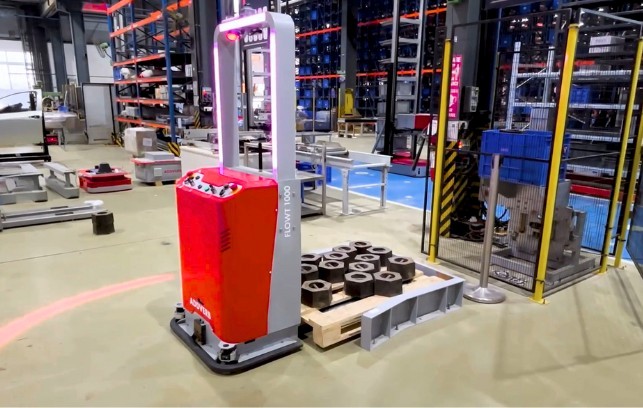
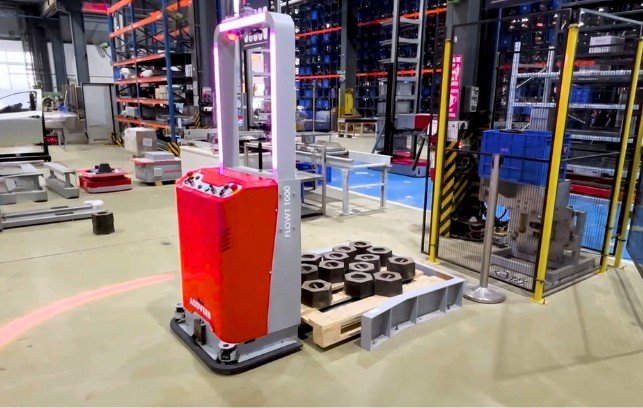
Robotic process automation in logistics involves both physical robotics and intelligent software solutions. UAE facilities are using autonomous mobile robots that dynamically navigate the warehouse, performing tasks such as picking, sorting, and packaging. These robots are integrated with software systems that optimize routes and schedules, further improving efficiency.
According to INTLBM, the use of autonomous mobile robots in GCC warehouses has increased by 35% over the past two years. This trend is expected to continue as companies seek to further automate their operations.
- Autonomous mobile robots improve efficiency and reduce labor costs.
- Software automation optimizes routes and schedules, further improving efficiency.
Source: intlbm.com
This article was AI-assisted and reviewed by our editorial team.