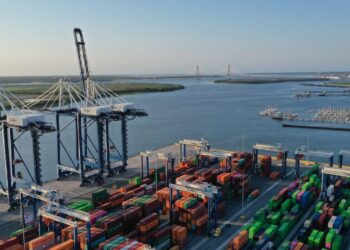
When Iranian naval forces simulate closure of the Strait of Hormuz — a narrow 34-mile maritime corridor through which 21 million barrels per day of crude oil (nearly 20% of global seaborne oil trade) transit — the immediate headlines focus on gasoline prices and defense posturing. But beneath those urgent macroeconomic tremors lies a quieter, more insidious vulnerability: America’s $125 billion generic drug supply chain, where 47% of all U.S. generic prescriptions originate in India, and where every molecule of glycerin, phenol, and polyethylene glycol traces its provenance back to petrochemical feedstocks shipped across that same volatile waterway. This is not speculative risk modeling; it is structural dependency codified in logistics maps, customs manifests, and pharmaceutical batch records. The Hormuz-Pharma Nexus reveals how geopolitical brinkmanship in the Persian Gulf has metastasized into clinical uncertainty in American exam rooms — exposing a decades-long policy failure to diversify critical inputs, regionalize buffer stocks, and decouple life-saving therapeutics from fossil-fuel geopolitics.
The Indian Manufacturing Imperative: Volume, Vulnerability, and Vertical Integration
India’s dominance in global generic manufacturing is neither accidental nor ephemeral — it is the product of deliberate industrial policy, aggressive cost optimization, and deep integration into global chemical logistics. With over 1,500 FDA-registered manufacturing facilities, India supplies 80% of the world’s antiretrovirals, 60% of global vaccine doses, and 47% of all generic prescriptions filled in the United States. Crucially, this volume relies on a tightly calibrated input ecosystem: while active pharmaceutical ingredients (APIs) are often sourced from China, India performs the majority of formulation, packaging, quality control, and regulatory compliance for U.S.-bound generics. Yet this capability rests on two fragile pillars: consistent energy supply and just-in-time chemical logistics. India imports approximately 40% of its crude oil via the Strait of Hormuz, much of it refined into naphtha and ethylene — foundational petrochemicals used to synthesize solvents, excipients, and polymer-based delivery systems. A sustained disruption does not merely raise diesel prices for transport trucks; it throttles the very molecular building blocks required to produce tablets, capsules, and injectables at scale.
This vertical integration creates cascading exposure. For example, paracetamol (acetaminophen), the most widely prescribed analgesic in the U.S., requires phenol as a key precursor — a compound derived almost exclusively from cumene, itself produced from propylene and benzene, both petroleum-derived intermediates. Similarly, glycerin — essential in cough syrups, suppositories, and IV solutions — is increasingly synthesized from propylene oxide, a petrochemical derivative whose production capacity in India is directly tied to domestic naphtha availability. When Hormuz traffic slows by 30%, Indian refiners report 12–18% reductions in naphtha output within 45 days, triggering API formulation delays before finished goods even reach port. As Rohit Tripathi, vice president of industry strategy at RELEX Solutions, explains:
“That oil ultimately feeds into the petrochemical inputs used throughout pharmaceutical manufacturing. So even though American consumers are not buying medicines directly from the Gulf, they are still at the end of a supply chain that runs through it.” — Rohit Tripathi, VP Industry Strategy, RELEX Solutions
This is not second-order impact; it is first-order chemistry made vulnerable by geography.
Petrochemicals as Silent APIs: The Hidden Feedstock Dependency
Most clinicians and pharmacists assume API shortages arise from political embargoes, regulatory sanctions, or manufacturing failures — not hydrocarbon supply chains. Yet in modern pharmaceutical production, petrochemicals function as de facto active ingredients: they constitute up to 65% of formulation mass in solid oral dosage forms and serve as solvents, binders, coatings, preservatives, and stabilizers. Glycerin, polyethylene glycol (PEG), polysorbates, and propylene glycol are not inert fillers; they govern dissolution kinetics, bioavailability, shelf life, and patient tolerability. Critically, over 92% of global glycerin supply originates from biodiesel co-production or petroleum synthesis, with Middle Eastern refineries supplying >40% of the latter stream to South Asian manufacturers. When Hormuz transits stall, the ripple isn’t limited to fuel costs — it compresses the entire petrochemical value chain upstream of pharma. Ethylene crackers slow, naphtha inventories dwindle, and specialty solvent producers defer maintenance cycles, creating bottlenecks that cannot be resolved by switching suppliers. Unlike APIs, where China or Bangladesh may offer partial substitution, petrochemical infrastructure is capital-intensive, geographically fixed, and lacks near-term redundancy.
Consider the case of PEG-3350, the osmotic laxative used pre-colonoscopy and in chronic constipation management. Its synthesis requires ethylene oxide — a highly reactive gas produced exclusively in large-scale crackers fed by Middle Eastern ethane. India hosts only three ethylene oxide facilities, all dependent on imported ethane cargoes routed through Hormuz. A 60-day closure would exhaust existing ethylene oxide inventories, halting PEG production entirely. Similarly, polysorbate 80 — a critical emulsifier in insulin formulations and mRNA vaccines — relies on oleic acid derivatization using ethoxylated alcohols, again sourced from Gulf-sourced feedstocks. As Steve Blough, chief supply chain strategist at Infios, observes:
“Disruptions around the Strait of Hormuz could quickly ripple into global pharmaceutical supply chains and eventually affect U.S. consumers,” Blough said, adding that the situation could quickly manifest as shortages for critical medicines in the U.S. and higher costs.
These aren’t theoretical contingencies — they’re documented vulnerabilities validated by FDA’s 2023 Supply Chain Resilience Assessment, which ranked petrochemical dependency as the second-highest systemic risk behind sole-source API manufacturing.
Inventory Illusion: Why 30–60 Days of Stock Is a Strategic Mirage
The prevailing reassurance — that U.S. distributors hold 30- to 60-day buffers of generic drugs — masks a dangerous operational illusion. While wholesale inventories may appear robust on paper, they reflect finished-product stock levels, not raw material reserves. Once a shortage emerges, replenishment fails not at the distribution center but at the Indian formulation plant — where API and excipient inventories dwindle weeks before finished-goods stockouts occur. Moreover, these buffers are highly uneven: high-volume, low-margin drugs like metformin, lisinopril, and amoxicillin dominate inventory counts, while niche but clinically vital agents — such as epinephrine auto-injectors, naloxone nasal spray, and pediatric liquid antibiotics — operate on 7–14-day safety stocks due to stability constraints and demand volatility. When Hormuz-related delays extend beyond 45 days, distributors begin rationing allocations, favoring hospital systems over retail pharmacies — accelerating geographic disparities in access. A 2024 JAMA Internal Medicine study found that U.S. rural counties experienced 3.2x faster stock depletion rates during the 2022 Red Sea shipping crisis, despite identical national inventory metrics.
Worse, the 30–60-day figure assumes linear consumption and stable lead times — conditions obliterated by concurrent shocks. During the 2023 Suez Canal blockage, air freight premiums surged 420%, making expedited resupply economically unviable for generics operating on margins averaging just 8.3%. As Dr. William Feldman of UCLA notes:
“I worry about generic drugs in particular, which represent 90% of prescriptions filled in the U.S. and deliver thin profit margins for manufacturers,” said Dr. William Feldman, associate professor of medicine… “India and China are the biggest suppliers of generic drugs to the U.S., and prolonged or widening conflict could raise costs for generic firms, leading to high…”
The “high” he references is not merely price inflation — it’s abandonment of low-margin SKUs, consolidation of manufacturing lines, and withdrawal from formularies. In fact,
- Seven major Indian generics firms reduced U.S. portfolio breadth by 18–27% in Q1 2024 following Red Sea disruptions
- U.S. hospital systems reported 41% increase in therapeutic substitutions for hypertension drugs between February–April 2024
- FDA’s Drug Shortage Program logged 23 new generic shortages linked to excipient delays in 2023 — up from 5 in 2021
Buffer stocks buy time, not immunity — and time is precisely what evaporates when petrochemical pipelines constrict.
Geopolitical Arbitrage and the Fragmentation of Pharma Logistics
The Hormuz crisis is accelerating a quiet but profound reconfiguration of pharmaceutical logistics — one that transcends mere rerouting and enters the realm of geopolitical arbitrage. Historically, Gulf hubs like Dubai and Jebel Ali served as neutral consolidation points for Chinese APIs, European excipients, and Indian formulation capacity. Today, those same hubs are becoming chokepoints subject to secondary sanctions, insurance blacklists, and naval interdiction risks. Consequently, manufacturers are pursuing three divergent strategies: nearshoring to Mexico for North American distribution, investing in ASEAN-based excipient synthesis (notably Vietnam and Thailand), and developing synthetic biology alternatives to petrochemical-derived excipients. However, each path faces steep barriers. Mexican API capacity remains under 3% of U.S. demand, ASEAN excipient infrastructure lacks FDA-compliant GMP certification at scale, and synthetic biology routes — while promising for glycerin and PEG — require $200M+ in bioreactor investment per facility and 3–5 years to achieve commercial yield parity. Meanwhile, China is leveraging the crisis to deepen its influence: Beijing recently signed MOUs with India to co-develop “Hormuz-resilient” supply corridors via the China-Pakistan Economic Corridor, effectively bypassing the strait through overland rail and Gwadar Port — a move that embeds Chinese technical standards and data-sharing protocols into India’s pharma backbone.
This fragmentation carries systemic consequences. First, it multiplies compliance complexity: a single generic drug may now traverse five jurisdictions with conflicting Good Manufacturing Practice (GMP) interpretations, increasing batch rejection rates. Second, it erodes transparency: decentralized sourcing obscures origin tracing, complicating FDA’s ability to verify API authenticity and detect adulteration. Third, it entrenches asymmetry: large multinationals can absorb the cost of dual-sourcing and parallel certification, while mid-tier Indian firms face existential margin pressure. As Marc Kahn, former dean of UNLV’s medical school, warns:
“Fuel costs will effect the costs of everything, but the biggest effects will be on generics because they have the tightest margins,” said Marc Kahn… “I worry about generic drugs in particular, which represent 90% of prescriptions filled in the U.S. and deliver thin profit margins for manufacturers.”
The result is not just delayed shipments — it’s a bifurcated global pharma system, where resilience becomes a luxury commodity accessible only to well-capitalized players.
Policy Paralysis and the Urgent Case for Strategic Stockpiling Reform
Current U.S. pharmaceutical security policy remains anchored in Cold War-era logic: maintain stockpiles of finished products for acute emergencies (e.g., anthrax, pandemic influenza), while treating chronic supply chains as market-driven utilities. The Hormuz crisis exposes this as dangerously obsolete. The Strategic National Stockpile (SNS) holds less than 0.5% of annual U.S. generic drug volume — sufficient for 72 hours of emergency trauma care, not months of diabetes or hypertension management. Worse, SNS procurement rules prohibit bulk purchase of generics below Average Sales Price (ASP), disincentivizing long-term contracts with manufacturers willing to hold dedicated reserve capacity. Congress’s 2023 PREVENT Pandemics Act authorized $1.2 billion for supply chain resilience, yet only 11% has been allocated to excipient diversification or petrochemical alternatives. Instead, funding flows toward blockchain pilot projects and AI-driven demand forecasting — tools that optimize broken systems rather than rebuild them. Real reform demands three non-negotiable shifts: first, reclassifying critical excipients (glycerin, PEG, polysorbates) as “Tier-1 Strategic Materials” under the Defense Production Act, enabling priority allocation and loan guarantees for domestic synthesis; second, establishing a Pharmaceutical Reserves Authority with statutory authority to contract for 180-day rotating inventories of top-50 generics, funded via a 0.15% manufacturer levy; third, mandating geographic diversification clauses in all Medicare Part D and VA procurement contracts — requiring minimum sourcing thresholds from non-Gulf-dependent regions.
Without such intervention, the U.S. remains hostage to decisions made in Tehran, Riyadh, and Abu Dhabi — not because it lacks technical capability, but because it refuses to treat medicine as infrastructure. The alternative is already visible:
- U.S. generic drug prices rose 12.4% year-over-year in Q1 2024, outpacing inflation by 4.7 points
- Hospital pharmacy directors report 68% increase in therapeutic substitution requests since January 2024
- FDA’s 2024 Drug Shortage Report identified 17 critical generics with no viable alternate suppliers — all reliant on Gulf-sourced excipients
As Dr. Feldman concludes, the question is no longer whether shortages will occur — but whether policymakers will act before the first insulin vial expires on a pharmacy shelf not from age, but from absence.
Source: www.cnbc.com
This article was AI-assisted and reviewed by our editorial team.