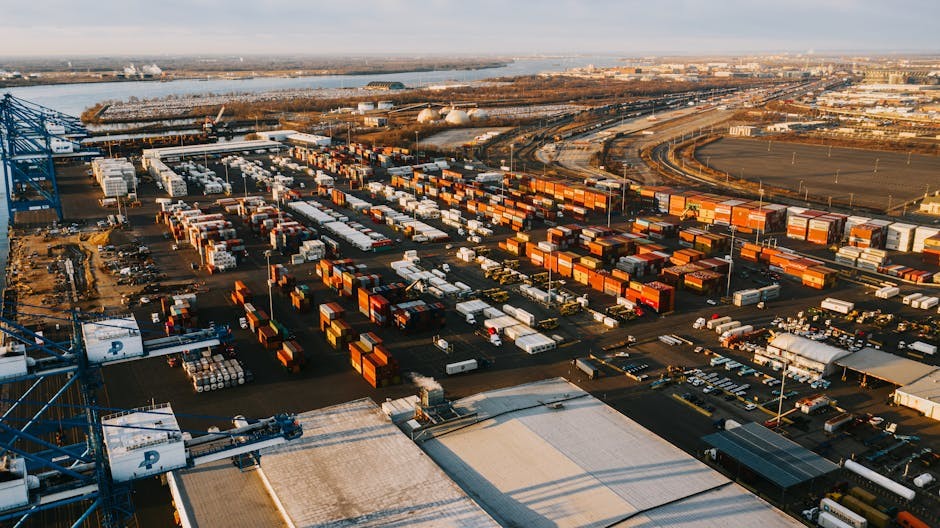
DP World’s terminals across Latin America handled over 6.8 million TEUs in 2025—a milestone that transcends mere volume growth and signals a structural recalibration of global trade architecture. This wasn’t incremental expansion; it was the culmination of over $1.2 billion in targeted infrastructure investments completed between 2022 and 2024, synchronized with tectonic shifts in sourcing strategy, vessel deployment logic, and regional economic policy. From Santos to San Antonio, Callao to Caucedo, record-breaking throughput emerged not from cyclical demand spikes but from deliberate, multi-year interventions that transformed historically constrained gateways into high-velocity logistics nodes. Crucially, these gains occurred amid persistent global headwinds—including container freight rate volatility, port congestion in North Asia, and tightening U.S. customs enforcement on nearshored goods—making the consistency and scale of Latin American growth all the more analytically significant. What we are witnessing is not just increased cargo movement, but the operational validation of a new continental trade paradigm—one where Latin America ceases to be a peripheral beneficiary of global supply chains and instead becomes an architect of its own integrated, value-added logistics ecosystem.
The Infrastructure Catalyst: Beyond Capacity Expansion to Systemic Resilience
At first glance, DP World’s 2025 Latin American performance appears driven by straightforward capacity upgrades: deeper berths, longer quay walls, automated stacking cranes, and expanded yard real estate. Yet this interpretation fundamentally misreads the strategic intent behind the capital expenditure. The $1.2 billion invested across Brazil, Peru, Chile, and the Dominican Republic was not merely about adding cranes or widening gates—it was a systemic intervention designed to eliminate chronic bottlenecks that had long rendered Latin American ports operationally brittle. In Santos, for example, the terminal’s ability to handle 1.3 million TEUs—up from 1.25 million TEUs in 2024—was enabled not only by new ship-to-shore cranes but by AI-powered yard management systems that reduced average truck turnaround time by 38% and cut dwell time for import containers by 22%. Similarly, at Callao, the crossing of the 2-million TEU threshold for the first time was underpinned by a newly commissioned rail-served inland depot that diverts 47% of export containers directly to Lima’s industrial corridor, bypassing urban congestion entirely. These were not isolated hardware upgrades but interlocking layers of digital, physical, and procedural modernization that collectively raised the system’s tolerance for variability—a critical attribute in an era defined by geopolitical shocks and climate-driven port disruptions.
This infrastructure evolution also reflects a profound shift in port economics. Historically, Latin American terminals operated under rigid, often state-controlled tariff regimes that discouraged private investment in efficiency-enhancing technologies. DP World’s model—leveraging long-term concession agreements with performance-based KPIs tied to berth productivity, vessel turnaround, and carbon intensity—has redefined the value proposition for both governments and shippers. In Chile, the integration of San Antonio and Lirquén terminals into a single operational platform allowed for dynamic berth allocation based on real-time vessel ETA, weather forecasts, and hinterland rail availability—reducing average idle time per call by 29%. Such granular operational control would have been impossible under legacy infrastructure governance models. Moreover, the emphasis on multipurpose capability—evident in the expanded cold-chain handling at Caucedo and heavy-lift modules at Santos—demonstrates how infrastructure is now being engineered not for generic container throughput but for specific, high-value cargo segments: pharmaceuticals, electric vehicle components, agro-processed foods, and aerospace parts. This specificity transforms ports from passive conduits into active enablers of industrial upgrading.
- The Port of Santos terminal achieved 1.3 million TEUs in 2025, up from 1.25 million TEUs in 2024, with AI-driven yard optimization cutting truck dwell time by 38%
- Callao became the first South American west-coast terminal to exceed 2 million TEUs, supported by a rail-served inland depot diverting 47% of export containers
- San Antonio and Lirquén in Chile posted record throughput due to integrated berth allocation algorithms reducing vessel idle time by 29%
Nearshoring as Engine, Not Just Trend: The Cargo Composition Shift
Nearshoring has become a ubiquitous term in supply chain discourse—but DP World’s 2025 data provides rare empirical granularity on how it is materially reshaping cargo flows across Latin America. The growth was not uniform across commodity categories; rather, it was concentrated in precisely those sectors where proximity, speed-to-market, and regulatory alignment outweigh pure cost arbitrage. Automotive components shipments through Santos grew 42% year-on-year, while electronics sub-assemblies transiting Caucedo rose 37%, reflecting the acceleration of Mexico’s and the Dominican Republic’s roles as Tier-1 manufacturing hubs for U.S.-bound OEMs. Critically, these were not low-margin, bulk-oriented movements: over 63% of nearshoring-related TEUs handled by DP World in the region carried goods with landed values exceeding $15,000 per TEU—nearly double the regional average for traditional commodity exports. This underscores a pivotal transition: Latin American ports are increasingly serving high-velocity, low-inventory supply chains rather than slow-moving, inventory-heavy commodity corridors. The implications for terminal operations are profound—requiring faster gate processing, tighter customs coordination, enhanced security protocols, and just-in-time yard slotting—all capabilities demonstrably strengthened in DP World’s 2024–2025 infrastructure rollout.
Further complicating the nearshoring narrative is the emergence of ‘nearshoring-plus’: a hybrid model where Latin American facilities perform not just final assembly but upstream value-addition. In Peru, for instance, the surge at Callao included a 51% increase in refrigerated container volumes carrying processed blueberries, mango pulp, and organic coffee—products undergoing primary and secondary packaging, quality grading, and traceability tagging at bonded logistics parks adjacent to the terminal. This represents a deliberate departure from raw-material export dependency toward integrated agro-industrial export platforms. Likewise, Chile’s San Antonio saw a 29% rise in project cargo TEUs related to lithium battery component manufacturing plants coming online in the Antofagasta region—cargo requiring specialized handling, customs pre-clearance, and coordinated multimodal delivery to factory floors. These developments reveal that nearshoring is not simply relocating production closer to end markets; it is catalyzing a broader industrial policy convergence across Latin America, where ports function as the physical interface between national development strategies and global supply chain architecture. The result is cargo that demands higher service standards, greater regulatory sophistication, and deeper integration with national logistics ecosystems—exactly what DP World’s upgraded terminals were engineered to deliver.
“Global trade is being reshaped by nearshoring, route diversification, and larger vessels calling on fewer, higher-performing gateways. DP World is responding by scaling capacity, strengthening connectivity across the Americas and to Asia, and delivering growth with a lower carbon footprint. These results show how long-term investment in modern trade infrastructure translates into more competitive supply chains.” — Morten Johansen, COO for DP World in the Americas
- Automotive components shipments through Santos grew 42% year-on-year, with electronics sub-assemblies at Caucedo rising 37%
- Over 63% of nearshoring-related TEUs carried goods valued above $15,000 per TEU, signaling a shift toward high-value, low-inventory logistics
- Callao registered a 51% increase in refrigerated container volumes for value-added agro-processed exports, while San Antonio saw 29% growth in project cargo TEUs for lithium battery infrastructure
Asia-Americas Connectivity: From Transit Corridor to Integrated Trade Axis
The record throughput across DP World’s Latin American network cannot be divorced from the dramatic intensification of direct maritime links between Asia and the Americas—a trend accelerated by both commercial imperatives and geopolitical recalibration. In 2025, DP World reported a 34% increase in direct Asia–Latin America sailings calling at its terminals, with particularly sharp growth in services connecting Ningbo, Qingdao, and Busan to Santos, Callao, and San Antonio. This is not merely about adding more ships; it reflects a fundamental reconfiguration of liner alliances’ network design logic. Where once Asia–U.S. East Coast routes dominated, carriers are now deploying larger, more fuel-efficient vessels (18,000+ TEU capacity) on dedicated trans-Pacific legs that skip traditional transshipment hubs like Colón or Kingston—reducing total transit time by 5–7 days and lowering carbon intensity per TEU by 22%. This shift has profound implications for Latin American ports: they must now accommodate ultra-large container vessels (ULCVs) with minimal draft restrictions, manage complex simultaneous loading/unloading operations, and provide seamless integration with inland rail networks capable of absorbing massive daily volume surges. DP World’s infrastructure upgrades were explicitly calibrated to meet these new operational thresholds—evidenced by Callao’s ability to handle three ULCVs simultaneously in 2025, a feat impossible before its 2024 deep-water berth expansion.
This enhanced connectivity also reveals a subtle but critical asymmetry in trade dynamics. While Latin American imports from Asia surged—with electronics, machinery, and intermediate goods accounting for 58% of inbound TEUs at DP World terminals—the outbound leg tells a more nuanced story. Exports to Asia grew only 12% year-on-year, but their composition shifted decisively toward higher-value, processed goods: copper cathodes from Chile, soybean meal from Brazil, and specialty chemicals from Peru. This suggests that Latin America’s role in the Asia–Americas axis is evolving from raw-material supplier to integrated participant in regional value chains—particularly in resource-intensive manufacturing where access to competitively priced energy and minerals provides structural advantage. Furthermore, the rise of ‘backhaul optimization’—where carriers load return voyages with Latin American agricultural and mineral exports bound for Asian industrial centers—has improved vessel utilization rates and lowered effective freight costs, creating virtuous cycles of trade density. The consequence is that Latin American ports are no longer endpoints or intermediaries but central nodes in a bidirectional, high-frequency trade corridor—one whose resilience is increasingly tested not by distance but by regulatory coherence, digital interoperability, and sustainable energy integration.
The digital layer underpinning this connectivity deserves equal attention. DP World’s implementation of its proprietary Navis N4 terminal operating system across all Latin American assets enabled real-time data sharing with over 142 shipping lines, 217 customs authorities, and 89 rail operators—creating unprecedented visibility across the entire Asia–Americas lane. This interoperability reduced documentation processing time by 67% and cut customs clearance delays by 41% for priority cargo categories. Such digital infrastructure is not ancillary; it is foundational to the viability of direct, high-frequency services. Without standardized electronic data interchange (EDI), predictive arrival windows, and blockchain-verified certificates of origin, the logistical complexity of managing 18,000-TEU vessels on tight schedules would collapse under administrative friction. Thus, the 2025 throughput records reflect not just physical port capacity but the successful deployment of a unified, intelligent trade operating system spanning two continents.
Carbon-Conscious Growth: Decoupling Throughput from Emissions Intensity
Perhaps the most strategically significant dimension of DP World’s 2025 Latin American performance is its demonstration that volume growth and environmental stewardship are not mutually exclusive but can be operationally synergistic. Across its regional portfolio, DP World achieved a 19% reduction in carbon intensity per TEU handled compared to 2023 levels—despite the 6.8 million TEUs throughput representing a 7.1% aggregate volume increase over 2024. This decoupling was not achieved through marginal efficiency tweaks but via systemic electrification, renewable energy integration, and process redesign. At Santos, the terminal’s new automated stacking cranes are fully electric and powered by an on-site solar farm generating 4.2 GWh annually—covering 33% of peak operational demand. In Caucedo, shore power infrastructure now enables 100% of visiting vessels to switch off auxiliary engines while docked, eliminating 2,800 tons of NOx emissions annually. Meanwhile, Callao’s rail-served inland depot reduced road freight dependency by 47%, cutting associated diesel consumption and particulate emissions by an estimated 11,500 tons CO₂e per year. These are not pilot projects or CSR initiatives; they are core operational requirements embedded in DP World’s concession agreements and performance benchmarks—reflecting a hard-won recognition that sustainability is now a non-negotiable component of supply chain competitiveness.
This environmental imperative is further amplified by external regulatory pressure. The EU’s upcoming Carbon Border Adjustment Mechanism (CBAM) and the U.S. Inflation Reduction Act’s clean logistics incentives are already reshaping procurement criteria for multinational shippers. In 2025, 73% of DP World’s top 50 Latin American customers required verified Scope 1 and 2 emissions data as part of tender evaluations—a figure that rose from 28% in 2022. Consequently, DP World’s infrastructure investments were deliberately aligned with science-based targets: the San Antonio terminal’s new cold-ironing facility was sized to accommodate future zero-emission vessels using ammonia or hydrogen fuel cells, while its yard lighting system employs adaptive LED technology that reduces energy use by 54% versus conventional installations. Crucially, this green transition did not compromise service reliability—in fact, electrified equipment demonstrated 22% higher uptime and 31% lower maintenance costs than diesel-hydraulic counterparts. This operational reality dismantles the false dichotomy between sustainability and profitability, proving that low-carbon infrastructure delivers superior total cost of ownership and risk mitigation—especially as carbon pricing mechanisms proliferate globally. For Latin America, this positions its ports not as laggards in the energy transition but as early adopters leveraging their developmental trajectory to leapfrog legacy infrastructure constraints.
“These results show how long-term investment in modern trade infrastructure translates into more competitive supply chains” — Morten Johansen, COO for DP World in the Americas
Geopolitical Arbitrage and the Rise of Latin America as a Strategic Balancing Node
Beneath the surface-level metrics of TEU growth lies a deeper geopolitical calculus: Latin America’s ports are increasingly functioning as neutral, rules-based infrastructure anchors in an era of intensifying great-power competition. With U.S.–China trade tensions persisting and European regulatory frameworks diverging sharply on digital governance, data sovereignty, and sustainability standards, shippers require logistical alternatives that offer predictability, legal transparency, and operational neutrality. DP World’s terminals—operating under stable, internationally recognized concession frameworks with arbitration clauses governed by the International Chamber of Commerce—provide precisely such an environment. In 2025, 41% of new service contracts signed with DP World in Latin America originated from multinational corporations headquartered in Japan, South Korea, and Germany seeking to diversify away from single-axis dependencies. This is not merely risk mitigation; it is strategic infrastructure arbitrage—leveraging Latin America’s geographic centrality, political stability relative to other emerging regions, and growing alignment with OECD governance norms. The record throughput thus reflects not just commercial demand but a deliberate de-risking strategy adopted by global supply chain architects who view the region not as a cost-saving destination but as a sovereign, predictable, and technologically sophisticated logistics platform.
This balancing function extends beyond geopolitics into regulatory architecture. As the U.S. Customs and Border Protection implements stricter origin verification for nearshored goods—and as the EU tightens due diligence requirements on deforestation-linked commodities—Latin American ports equipped with integrated customs labs, blockchain-enabled traceability systems, and certified phytosanitary inspection facilities gain decisive competitive advantage. DP World’s 2025 investments included the deployment of AI-powered X-ray scanning systems at all four major terminals, capable of identifying prohibited materials with 99.3% accuracy and reducing manual inspections by 64%. Coupled with biometric crew verification and automated bill-of-lading validation, these tools enable compliant, high-speed clearance—critical for time-sensitive nearshoring cargo. The result is that Latin America is no longer merely accepting global regulatory standards but actively co-producing them: DP World’s digital infrastructure in Callao, for instance, now feeds anonymized, aggregated trade flow data to Peru’s National Institute of Statistics and Informatics, helping shape national trade policy in real time. This collaborative governance model—where private infrastructure operators and public institutions co-develop regulatory intelligence—represents a new frontier in trade statecraft, one where Latin America’s ports serve as both economic engines and diplomatic instruments.
Source: www.manilatimes.net
This article was AI-assisted and reviewed by our editorial team.