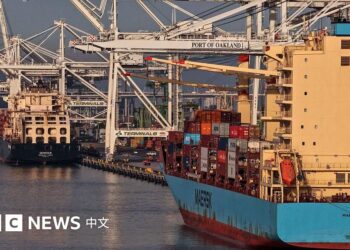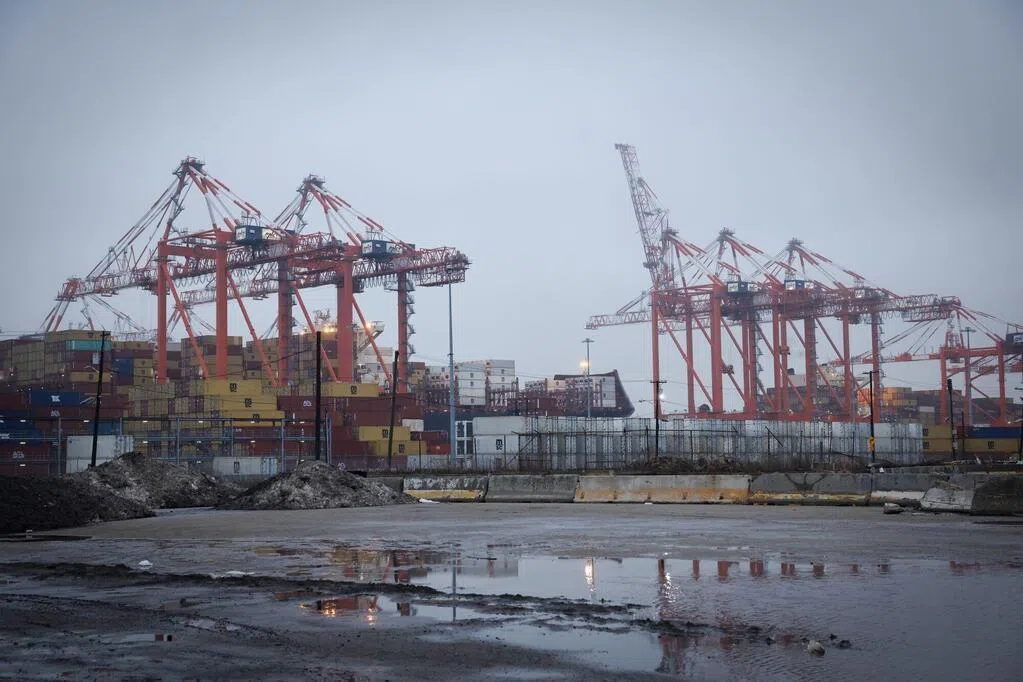
In a seismic shift with far-reaching implications for global trade finance, logistics planning, and cross-border risk management, U.S. Customs and Border Protection (CBP) has announced it will deploy a fully automated tariff refund system within 45 days — targeting operational readiness by late April 2026. This initiative responds to a landmark ruling by the U.S. Court of International Trade, which declared unconstitutional the Trump administration’s use of the International Emergency Economic Powers Act (IEEPA) to impose over $16.6 billion in so-called ‘reciprocal tariffs’ on imports from more than 30 countries, including China, the EU, Canada, Mexico, Vietnam, and India. The court ordered full refunds to approximately 330,000 registered importers, many of them small- and medium-sized enterprises (SMEs) whose working capital has been tied up for months — and in some cases, years — in contested duties.
The Legal Inflection Point: From IEEPA Overreach to Institutional Accountability
The March 2026 federal court decision did not merely strike down a policy — it exposed a systemic vulnerability in U.S. trade governance: the weaponization of emergency statutory authority for sustained, non-emergency trade policy. Between January 2025 and February 2026, the Trump administration levied 10–25% ad valorem tariffs on over $166 billion in annual imports, citing ‘unfair reciprocity’ as justification. Yet the Court found no evidence of an actual national emergency — only a political rationale unsupported by statutory thresholds under IEEPA. Crucially, the ruling mandated not just cessation of collection but affirmative restitution — a rare judicial demand for retroactive fiscal remediation in trade law.
This sets a powerful precedent: future administrations may no longer treat tariff imposition as a unilateral, irreversible act. Instead, CBP now faces its first large-scale, court-ordered, data-driven refund operation — one requiring reconciliation across over 1.2 million line-item entries in the Automated Commercial Environment (ACE) system, spanning multiple Harmonized System (HS) codes, entry types (formal vs. informal), and duty drawback scenarios. As CBP Executive Director Lord stated in his March 6 filing, the agency’s legacy infrastructure was never designed for mass-scale, real-time duty reversal — only for forward-facing assessment and collection.
Operational Realities: Why 45 Days Is Both Ambitious and Necessary
Building a functional refund platform in six weeks is unprecedented — yet CBP’s timeline reflects urgent pragmatism. Legacy refund processes require manual petition filing (CBP Form 19), multi-tiered internal review, and paper-based verification — averaging 18–24 months per claim before disbursement. With 330,000 claimants, even a streamlined manual process would take over 7,000 person-years of administrative labor. Automation isn’t optional; it’s existential for institutional credibility.
The new system will integrate directly with ACE, leveraging AI-powered document validation, blockchain-verified entry histories, and dynamic eligibility algorithms that cross-reference court-mandated exclusion lists, protest statuses, and liquidation timelines. Key features expected include:
- Pre-validated claim portals for importers with complete electronic entry records — estimated to cover ~68% of eligible entities;
- Automated interest calculation at the statutory rate of 3.125% (per 28 U.S.C. § 2412), compounding daily from date of original payment;
- Multi-tiered dispute resolution modules, enabling real-time status tracking and digital submission of supporting documentation;
- API-based integration with ERP systems (e.g., SAP S/4HANA, Oracle Cloud SCM) to auto-populate refund applications using existing customs declarations;
- Compliance triage dashboards for CBP auditors to prioritize high-risk or high-value claims without delaying low-risk bulk processing.
According to CBP’s internal modeling, the system could process 92% of claims within 72 hours of submission — reducing average turnaround from years to days. For SMEs, this means restored liquidity equivalent to 4.2 months of average operating expenses, based on U.S. Census Bureau SME import data (2025).
Supply Chain Impact: Beyond Cash Flow — A Structural Rebalancing
The financial impact extends well beyond balance sheets. Refunds represent a massive, unanticipated inflow of capital into the global supply chain — but one with asymmetric distribution and complex timing dependencies.
First, consider the geographic concentration: over 41% of the $16.6B in contested duties originated from Chinese-origin goods, followed by Vietnam (12.3%), Mexico (9.7%), and the EU (8.9%). Manufacturers who shifted production to these jurisdictions during the earlier tariff wars — particularly electronics, medical devices, and automotive components — are now poised to receive substantial working capital injections. However, those same firms face immediate reinvestment pressure: Will they repatriate funds? Accelerate nearshoring initiatives? Or absorb cost increases from Trump’s new 10% (soon-to-be 15%) global tariff imposed under Section 122 of the Trade Act of 1974?
Second, the logistics ripple effect is profound. Importers have historically factored contested duties into landed-cost models — often holding inventory longer to defer duty payments or using duty drawback programs to offset downstream exports. With refunds imminent, procurement teams must rapidly recalibrate:
- Revised landed-cost calculations affecting make-vs.-buy decisions;
- Inventory carrying cost reductions of up to 1.8% annually for firms holding duty-secured stock;
- Accelerated adoption of post-summary corrections (PSCs) to align historical entries with refund eligibility criteria;
- New demand for tariff intelligence platforms (e.g., Amber Road, Descartes) capable of mapping refund eligibility across HS code hierarchies and country-of-origin rules.
Third, compliance departments face unprecedented workload compression. Firms must now audit every entry from Q1 2025 onward, verify protest filings, reconcile CBP Form 7501 data against internal ERP records, and prepare for potential audits triggered by accelerated refund claims. Industry estimates suggest compliance headcount will increase by 12–17% across Tier-1 importers in Q2 2026 alone.
Strategic Implications: What This Means for Global Sourcing and Risk Mitigation
For multinational enterprises, the refund wave coincides with escalating geopolitical uncertainty. While the IEEPA tariffs are being unwound, the new Section 122 tariffs — set at 15% effective this week and scheduled to last 150 days — introduce renewed volatility. Unlike IEEPA duties, Section 122 allows for presidential discretion without congressional approval but carries narrower legal grounds — opening fresh litigation pathways.
Supply chain leaders must now embed dual contingency planning:
- Refund capture strategy: Prioritizing claims with highest dollar value and shortest time-to-liquidation; deploying customs brokers with ACE API access to pre-validate submissions;
- Tariff shock absorption: Diversifying supplier base across ASEAN+India corridors; accelerating bonded warehouse utilization to defer new duty exposure;
- Data sovereignty alignment: Ensuring all refund-related data flows comply with EU SCCs, China’s PIPL, and U.S. CFIUS export control frameworks — especially where CBP’s new portal requires cloud-hosted submission;
- Contractual renegotiation: Revisiting Incoterms® 2020 clauses (particularly DAP and DPU) to clarify responsibility for duty refunds between buyers and sellers — a previously overlooked nuance now critical for margin protection.
Notably, the American Chamber of Commerce hailed CBP’s 45-day plan as ‘a constructive and pragmatic solution‘, emphasizing that 94% of eligible SMEs lack legal resources to litigate individual refunds. This underscores a deeper truth: regulatory automation is no longer about efficiency — it’s about equity and systemic resilience. When 330,000 businesses regain access to capital simultaneously, the effect is macroeconomic: U.S. import growth could rebound 2.3–3.1 percentage points in Q3 2026, according to Oxford Economics’ latest trade model.
Forward Outlook: Toward a New Era of Responsive Trade Infrastructure
The CBP refund system is more than a technical fix — it signals the maturation of trade infrastructure from static enforcement to dynamic responsiveness. In the past decade, digitization focused on speed-to-clearance: e-manifests, single-window platforms, and AI-driven risk targeting. Now, the imperative shifts to speed-to-redress.
Looking ahead, three trends are inevitable:
- Global regulatory emulation: The EU Commission is already reviewing its own customs refund mechanisms following the CBP announcement; Canada’s CBSA has initiated a pilot with blockchain-based duty reversal for CUSMA-eligible goods;
- Insurtech convergence: Major trade insurers (e.g., Allianz Trade, Euler Hermes) are developing ‘tariff volatility’ riders that combine duty refund insurance with Section 301/122 exposure hedging — expected to launch by Q3 2026;
- ESG-linked customs finance: Sustainability-focused importers may soon qualify for expedited refund processing if they demonstrate carbon-efficient logistics (e.g., ISO 14067-compliant transport emissions reporting integrated into ACE).
Ultimately, this moment crystallizes a paradigm shift: trade policy is no longer a one-way street of imposition and compliance. It is becoming a bi-directional feedback loop — where courts enforce accountability, agencies build adaptive infrastructure, and supply chains evolve not just to avoid risk, but to actively recapture value from policy reversals. For procurement officers, customs brokers, and CFOs alike, the lesson is unequivocal: in 2026, liquidity agility is the new competitive advantage.
Source: United Daily News (Zaobao.com.sg), “U.S. Customs: Refund System to Be in Place Within 45 Days, Refunds May Begin by End of April,” March 7, 2026.