## **The Wide-Ranging Impact of the Iran War on Global Supply Chains**
The specter of conflict in the Middle East has long haunted global markets, with historical tensions often crystallizing around the price of oil. However, the ongoing Iran war has revealed a far more complex and pervasive threat to global economic stability. As detailed in a recent AP News report, the disruption extends far beyond energy markets, sending shockwaves through the intricate and fragile networks that deliver everything from life-saving pharmaceuticals to the semiconductors powering our digital world and the fertilizers essential for global food security. This conflict has transformed the Strait of Hormuz from a vital maritime artery into a critical chokepoint of stagnation, triggering a cascade of delays, skyrocketing costs, and looming shortages. The situation underscores a harsh reality for the modern, just-in-time global economy: a geopolitical crisis in a strategic nexus can derail supply chains worldwide, exposing vulnerabilities that demand a fundamental rethinking of resilience, redundancy, and risk management. This analysis will delve into the multifaceted impacts of the Iran war on global logistics, examining the specific sectors under threat, the economic mechanics of the disruption, and the strategic imperatives for businesses and nations navigating an increasingly volatile trade landscape.
### **The Strait of Hormuz: The Chokepoint of Global Trade**
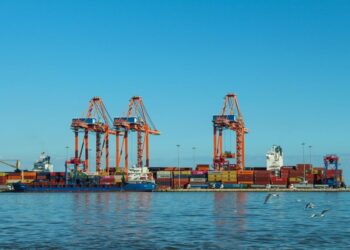
The Strait of Hormuz is not merely a body of water; it is a linchpin of global commerce, a geographic bottleneck through which approximately one-third of the world’s seaborne oil and a significant volume of containerized and dry bulk cargo must pass. Its strategic importance cannot be overstated, as it serves as the sole maritime passage linking the oil-rich Persian Gulf states—including Iran, Saudi Arabia, the United Arab Emirates, Kuwait, and Iraq—to the open ocean and thus to global markets. The current conflict has effectively weaponized this geography. While direct military engagements may be localized, the pervasive risk of escalation—encompassing threats to maritime security, insurance premium spikes, and defensive rerouting by major shipping lines—has induced a state of paralysis. According to data from Clarksons Research cited in the AP report, this has resulted in an estimated 3,200 ships, representing 4% of global ship tonnage, lying idle inside the Persian Gulf. A further 500 ships (1% of global tonnage) are in a holding pattern, “waiting” outside the Gulf in ports off the coast of the UAE and Oman. This is not a temporary queue; it is a massive logistical traffic jam that blocks the flow of goods in both directions. Ships carrying imports into the region are stalled, while those laden with exports cannot depart. This congestion at the world’s most critical energy faucet illustrates how a single point of failure can immobilize a disproportionate share of global transport capacity, setting the stage for a domino effect that reverberates across every connected trade route and industrial sector.
### **The Domino Effect: How Local Stagnation Triggers Global Chain Reactions**
The global supply chain operates as a deeply interconnected and synchronized system, where delays at one node inevitably propagate downstream, amplifying disruption. Michael Goldman, General Manager North America of CARU Containers, provides a fitting analogy: “The supply chain is kind of like a long train with many cars and each car represents, let’s say, a port in the world. Well, if one car gets derailed, it can very often have a domino effect to many other cars behind it or in front of it.” The stagnation in the Persian Gulf is a prime derailment. The idling of thousands of vessels creates an acute shortage of available shipping containers and ship capacity globally. Empty containers are trapped in the Gulf, unable to be repositioned to export hubs in Asia or Europe. This scarcity drives up leasing rates and causes delays at ports worldwide, as scheduled vessels fail to arrive on time to pick up their next cargo. Furthermore, the congestion disrupts carefully orchestrated sailing schedules, causing missed connections at major transshipment hubs like Singapore, Colombo, or Jebel Ali itself. A delay of a week in the Gulf can translate into a two-week delay for a manufacturer in Germany waiting for components from India, as the entire network adjusts. This domino effect destabilizes production schedules, forces factories to idle for lack of parts, and compels retailers to draw down safety stock, leaving them vulnerable to demand shocks. The localized “waiting” of ships thus metastasizes into a global schedule reliability crisis, demonstrating that in today’s supply chains, there is no such thing as an isolated disruption.
### **Critical Commodities Analysis: Pharmaceuticals, Chips, and Fertilizers**
The impact of the Iran war on supply chains is vividly illustrated by its disruption of three critical, yet diverse, commodity flows: pharmaceuticals, semiconductors, and fertilizers. Each sector highlights a different vulnerability within the global system. Firstly, India, often termed the “pharmacy of the world,” is a major exporter of generic drugs and active pharmaceutical ingredients (APIs). Many of these shipments transit through or near the Persian Gulf en route to markets in Europe, Africa, and the Americas. Delays here are not merely inconvenient; they can be life-threatening. Temperature-sensitive pharmaceutical cargoes risk degradation if stranded on idle ships or in congested ports, potentially leading to shortages of essential medicines. Secondly, the semiconductor supply chain, already fragile from recent years’ disruptions, faces renewed pressure. While most advanced chips are air-freighted from East Asia, many less-specialized components, raw materials like silicon, and finished electronics are transported by sea. The grounding of flights and rerouting of vessels from the region adds another layer of delay and cost to an industry where precision timing is paramount, potentially slowing production of everything from automobiles to consumer electronics. Thirdly, and perhaps most critically, is the disruption to fertilizers. The Middle East is a key producer of urea and other nitrogen-based fertilizers, which are derived from natural gas. Export disruptions from the region compound existing global fertilizer shortages, driving up prices for farmers worldwide. This, in turn, threatens agricultural yields and food prices, creating a direct link between geopolitical conflict in the Gulf and global food security. The tripartite strain on medicine, technology, and food underscores that the Iran war’s supply chain impact strikes at the very foundations of modern societal stability.
### **Soaring Transportation Costs and Alternative Route Challenges**
The primary operational response to the Strait of Hormuz blockage has been the mass rerouting of vessels around the Cape of Good Hope in South Africa. While this avoids the immediate conflict zone, it introduces severe economic and temporal penalties. As noted in the AP report, this detour adds approximately 10 to 14 days to a typical Asia-Europe voyage and incurs an extra $1 million or more in fuel costs per ship. These additional costs are not absorbed by shipping lines; they are passed through the supply chain via increased freight rates, war risk insurance premiums, and various emergency surcharges. The increased voyage time also effectively reduces global shipping capacity, as each vessel completes fewer trips per year, further tightening the market and pushing rates upward. This creates a double bind for shippers: pay exorbitant premiums for faster, riskier routes through the Gulf or accept significant delays and high costs on the longer Cape route. For time-sensitive or high-value cargo, some companies are turning to air freight, but this has led to grounded flights and skyrocketing air cargo rates out of the region as well. The challenge of alternative routes thus lies in their inherent inefficiency. They are longer, more expensive, and strain port infrastructure at alternative hubs unprepared for the sudden surge in traffic. The Cape route, while a vital safety valve, lacks the supporting ecosystem of bunkering, repair, and logistics services available along the Suez-Hormuz corridor, leading to further operational friction. This cost-price spiral directly contributes to inflationary pressures globally, as the expense of moving goods becomes a significant component of the final price paid by consumers.
### **Corporate Response Strategies and Supply Chain Resilience Building**
In the face of such profound disruption, corporations are compelled to activate and evolve their crisis response strategies. The immediate tactical responses include diversifying shipping routes as discussed, leveraging air freight for critical components, and working closely with logistics providers to secure container and vessel space at any cost. Many are also renegotiating contracts with suppliers and customers to implement force majeure clauses or to share the burden of increased logistics costs. However, the Iran war crisis is accelerating a more strategic, long-term shift in supply chain management philosophy. Companies are moving beyond reactive tactics toward building genuine resilience. This involves several key strategies. First, **nearshoring and friendshoring**: reducing dependency on distant, geopolitically volatile regions by shifting production closer to key consumer markets or to politically aligned countries. Second, **multi-sourcing and supplier diversification**: moving away from single-source dependencies for critical materials to create a network of vetted alternative suppliers across different geographic regions. Third, **inventory strategy overhaul**: abandoning pure just-in-time (JIT) models in favor of “just-in-case” buffers for strategic components, though this requires significant capital investment. Fourth, **enhanced visibility and digitalization**: investing in supply chain control towers and AI-driven analytics to gain real-time visibility into shipments, predict disruptions, and model alternative scenarios. These strategies represent a fundamental trade-off between efficiency and resilience, a recalibration that the ongoing conflict has made not just prudent, but essential for corporate survival.
### **Long-Term Impact of Geopolitical Risks on Global Supply Chains**
The Iran war serves as a potent case study in how geopolitical risks are becoming a permanent, structural feature of the global trade environment. It reinforces the lesson from the COVID-19 pandemic, the Suez Canal blockage, and Russia-Ukraine war: hyper-efficient, globally optimized supply chains are acutely vulnerable to systemic shocks. The long-term impact will be a sustained movement towards deglobalization of trade flows, not in absolute terms, but in terms of complexity and risk concentration. Global supply chains will likely regionalize into blocs—such as Americas-centric, Europe-Middle East-Africa, and Asia-Pacific networks—where geopolitical alignment and shorter, more controllable routes are prioritized over absolute lowest cost. This will lead to higher baseline costs for manufactured goods as redundancy and regional production replace global cost arbitrage. Furthermore, the war will intensify the focus on **environmental, social, and governance (ESG) and geopolitical due diligence**. Companies will need to deeply map their tier-2 and tier-3 suppliers to identify hidden exposures in conflict zones. Insurance models will also evolve, with war risk coverage becoming more expensive and complex, influencing routing decisions directly. Ultimately, the Iran conflict is catalyzing a paradigm shift where supply chain design is no longer solely the domain of logistics managers but a core strategic function integrated with enterprise risk management, geopolitics, and corporate strategy at the highest levels of leadership.
### **Conclusion: The Necessity of Building Risk-Resistant Supply Chain Systems**
The disruption emanating from the Iran war starkly illuminates the interconnectedness and fragility of our global economic system. As Professor Patrick Penfield of Syracuse University warns, the progression of this conflict will lead to tangible shortages and major price increases. The crisis transcends oil, impacting the fundamental pillars of health, food, and technology. The response cannot be temporary or tactical. The era of designing supply chains purely for lean efficiency is over. The new imperative is to engineer systems that are resilient, agile, and informed by a sophisticated understanding of geopolitical risk. This requires investment in diversification, both in sourcing and routing; the strategic holding of inventory; the deployment of advanced technology for visibility; and a corporate culture that values security of supply as highly as cost reduction. For nations, it underscores the need for strategic stockpiles of critical goods and investments in alternative infrastructure. The lesson from the Strait of Hormuz is clear: in a world of increasing geopolitical friction, resilience is the new efficiency. Building supply chains that can withstand and adapt to such shocks is no longer a competitive advantage but a fundamental prerequisite for economic security and continuity.
This article was AI-assisted and published after review and verification by the SCI.AI editorial team.
Source: AP News