In 2026, the global supply chain is no longer defined by throughput alone—but by adaptive intelligence. With geopolitical friction intensifying, climate regulations accelerating, and e-commerce buyer expectations compressing delivery windows to under 48 hours in Tier-1 markets, cross-border logistics has evolved from a cost center into the strategic core of international competitiveness. According to the World Bank’s 2026 Logistics Performance Index (LPI), countries with integrated multimodal infrastructure saw export growth rates 3.8 percentage points higher than peers relying on single-mode dominance—underscoring that resilience now resides not in redundancy, but in orchestrated modality selection. This analysis dissects the five dominant transport frameworks shaping today’s outbound trade landscape: maritime, air, rail, road, and overseas warehousing—not as isolated options, but as interlocking components of a dynamic, data-informed logistics matrix.
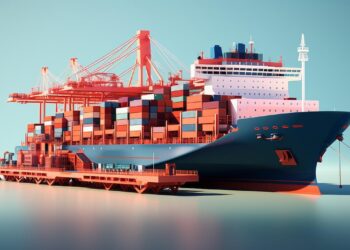
Ocean Freight: The Anchored Backbone Under Structural Stress
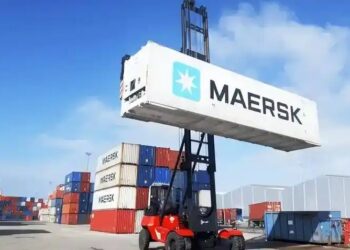
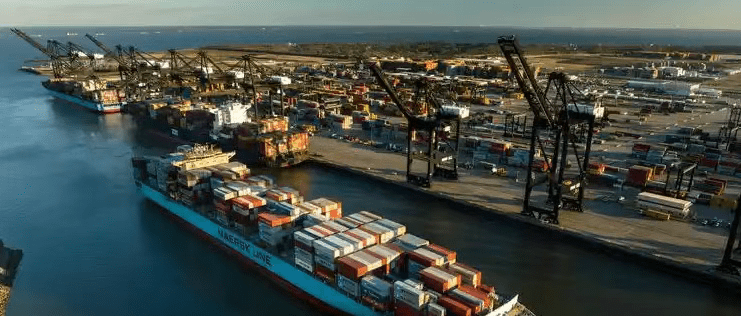
Despite headlines about container ship overcapacity and red sea diversions, ocean freight remains the irreplaceable foundation of global trade—carrying over 80% of world merchandise by volume (UNCTAD, 2026). In 2026, the global container fleet expanded by 150 million TEU, yet utilization rates dipped to 72%—a sign of structural overhang. However, this ‘softness’ masks deepening complexity: the EU’s Emissions Trading System (ETS) now applies to 100% of maritime emissions for voyages entering or departing EU ports, adding a green premium averaging $120–$280 per TEU on key Asia–Europe routes. This isn’t just a surcharge—it’s a recalibration of total landed cost models.
For exporters, the strategic imperative has shifted from ‘cheapest rate’ to ‘predictable green compliance’. FCL (Full Container Load) remains optimal for heavy, high-volume goods—furniture, industrial machinery, and automotive parts—where economies of scale still dominate. Meanwhile, LCL (Less-than-Container Load) services have matured significantly: digital freight platforms like Flexport and Freightos now offer real-time LCL spot pricing with guaranteed cut-off times, reducing lead time variability by up to 36% versus legacy forwarders. Crucially, the rise of near-shore manufacturing in Mexico and Vietnam is reshaping port dynamics: LA/LB volumes grew only 1.2% YoY in Q1 2026, while the Port of Savannah surged 9.7%, reflecting a broader re-routing toward Atlantic and Gulf gateways.
- Optimal for: High-volume, low-value-per-cubic-meter cargo; long-haul trade to US West Coast, Northern Europe (Hamburg, Rotterdam), South America, and Sub-Saharan Africa
- Key risk factor: Regulatory exposure—EU ETS, IMO 2023 CII ratings, and upcoming US Clean Shipping Act proposals will increase compliance overhead by 12–18% by 2027
- Strategic differentiator: Integration with green corridors—e.g., Maersk’s methanol-powered vessels on the Asia–Nordic route, or COSCO’s blockchain-enabled carbon accounting platform for shippers
Air Cargo: From Emergency Lifeline to Precision Demand Fulfillment
Air freight demand is no longer driven solely by crisis response—it’s being engineered into product launch cycles. Global air cargo volumes rose 5.1% YoY in 2026, with Asia-Pacific carriers leading at 7.4% growth (IATA). Yet this expansion coexists with profound structural shifts: the EU’s abolition of the €150 low-value consignment relief (LVCR) regime has decimated traditional postal small packets, pushing mid-tier sellers toward express air solutions with full customs pre-clearance and VAT handling. Simultaneously, Amazon’s SEND program and Temu’s semi-managed logistics require sub-72-hour domestic delivery SLAs—making air-based inventory positioning non-negotiable.
What distinguishes elite air logistics in 2026 is not speed alone, but certainty. DHL’s Economy Select service now guarantees 4–5 business days to Germany with end-to-end visibility down to pallet-level RFID tracking. FedEx’s new ‘Smart Hub’ in Cologne integrates AI-driven customs classification engines that reduce clearance delays by 62% for medical devices and electronics. Meanwhile,顺丰 International’s dedicated Shenzhen–Seoul–Tokyo air corridor delivers next-business-day door-to-door for tech accessories—a capability that directly translates into 23% higher conversion rates for Korean beauty brands selling via Rakuten, per internal platform analytics shared at the 2026 Tokyo Logistics Summit.
- Optimal for: High-value, time-sensitive goods—smartphones, pharmaceuticals, luxury apparel, and emergency replenishment for Amazon FBA/SEND programs
- Cost benchmark: Air freight rates remain 5–7x higher than ocean, but total cost of delay (COD) calculations now routinely justify air for SKUs with >$500 ASP and >25% gross margin
- Emerging innovation: Drone-last-mile integration in Singapore and Dubai, cutting final-mile costs by 31% and enabling same-day urban deliveries for premium B2C segments
Rail Freight: The Carbon-Conscious Corridor Reaching Critical Mass
Once dismissed as a niche alternative, rail freight is now the fastest-growing segment in Eurasian logistics—growing 14.2% YoY in 2026 (UN ESCAP). The catalyst? Not just cost arbitrage, but regulatory alignment: the EU’s Corporate Sustainability Reporting Directive (CSRD) now mandates Scope 3 emissions disclosure, making rail’s 1/15th the CO₂e per ton-km of air freight a material financial advantage. The ‘ASEAN Express’—a new bi-directional rail service linking Hanoi → Shenzhen Pinghu South → Duisburg—reduced transit time from Vietnam to Central Europe to 14–16 days, undercutting ocean by 52% and costing just 22% of air freight.
This isn’t incremental improvement—it’s systemic redesign. Pinghu South’s smart yard uses AI-powered OCR to auto-generate CIM consignment notes, slashing documentation errors by 89%. 4PX’s rail-dedicated WMS synchronizes with Shopee and Lazada order feeds, enabling true ‘rail-to-rack’ fulfillment for Southeast Asian sellers. Critically, rail’s reliability has improved dramatically: on-time performance for China–EU services now averages 91.4%, up from 76% in 2022—driven by standardized border protocols across Kazakhstan, Belarus, and Poland.
- Optimal for: Mid-value, mid-velocity goods—electronics components, home textiles, bicycle parts, and consolidated e-commerce parcels
- Strategic edge: Dual compliance—meets both EU green procurement thresholds and US Uyghur Forced Labor Prevention Act (UFLPA) traceability requirements via blockchain-enabled rail manifests
- Constraint to monitor: Capacity bottlenecks at Malaszewicze (Poland) and Brest (Belarus); booking windows now require 10–14 days’ advance notice during Q4 peak
International Road Transport: TIR’s Quiet Revolution in Cross-Border Agility
The most disruptive logistics development of 2026 isn’t visible on shipping maps—it’s unfolding on highways. With China’s General Administration of Customs formally extending TIR (Transports Internationaux Routiers) coverage to cross-border e-commerce consignments and bonded goods in January 2026, road freight has leapt from regional adjacency play to transcontinental contender. Over 272 licensed TIR operators are now active—up from just 47 in 2023—with fleets equipped with IoT telematics, geofenced customs checkpoints, and automated e-TIR digital guarantees.
The impact is operational alchemy. A TIR-sealed truck moving from Shenzhen to Moscow now completes the journey in 11–13 days, versus 18–22 days for conventional rail—and does so with zero unsealing at borders. This eliminates not just transit time, but also the 3–5 day customs hold typically incurred at Kazakhstan–Russia and Belarus–Poland crossings. For fashion brands launching seasonal collections, this means inventory-to-shelf compression of 28 days versus ocean-only flows. Moreover, TIR’s cost structure is transformative: at 25% of air freight costs, it enables ‘just-in-time’ replenishment for high-margin retail channels previously reserved for air-dependent luxury sectors.
- Optimal for: High-value, low-bulk e-commerce goods—premium smartphones, branded apparel, cosmetics—and bonded inventory movements between Chinese comprehensive bonded zones (e.g., Qianhai, Yantian)
- Regulatory catalyst: China’s 2026 ‘TIR Fast Lane’ policy grants priority customs clearance and VAT deferral for TIR shipments carrying certified green products
- Infrastructure enabler: New dry ports in Nanning (China–ASEAN) and Khorgos (China–Kazakhstan) feature automated TIR inspection lanes with AI-powered X-ray anomaly detection
Overseas Warehousing: The Localized Fulfillment Imperative
Overseas warehouses are no longer storage nodes—they are localization engines. In 2026, 73% of top-performing cross-border sellers use hybrid fulfillment: ocean/rail for bulk replenishment + air/TIR for flash restocking + AI-optimized local distribution. WINIT’s latest benchmarking report shows that sellers using multi-warehouse networks across US, DE, and AU achieved average order-to-delivery times of 1.8 days, compared to 5.3 days for single-warehouse operators. More critically, they reduced return processing time by 68% and increased repeat purchase rates by 41%.
The sophistication lies in integration: Chain4Zhou’s WMS doesn’t just track stock—it ingests Amazon Buy Box algorithms, Temu pricing signals, and local tax regulation updates (e.g., UK’s new ‘Digital Services Tax’ compliance modules) to auto-replenish based on profit-per-delivery, not just units sold. Meanwhile, EU-focused sellers leverage VAT deferment schemes through bonded warehouse models, turning tax liabilities into working capital advantages. As Walmart’s WFS expands into 12 new European fulfillment centers in 2026, the competitive bar has risen: ‘local’ now means same-country returns processing, local-language labeling, and compliant EPR (Extended Producer Responsibility) registration—all managed within one platform.
- Strategic threshold: Overseas warehousing ROI becomes positive at ~$250K annual cross-border GMV—down from $650K in 2022 due to automation and shared-warehouse models
- Hidden value driver: Returns management—sellers with in-country reverse logistics cut return-to-resell cycle from 22 days to 3.7 days, recovering 89% of original margin versus 54% for offshore returns
- Future frontier: Micro-fulfillment hubs inside retail partner stores (e.g., Carrefour’s ‘Click & Collect’ lockers stocked via nearby overseas warehouses)
In conclusion, 2026’s logistics leaders aren’t choosing one mode—they’re building modality-aware orchestration systems. They deploy ocean for predictable base-load, rail for green mid-velocity, TIR for agile cross-border, air for velocity-critical bursts, and overseas warehousing for localized experience. The winner isn’t the fastest, cheapest, or greenest—it’s the most intelligently adaptive. As supply chains shift from linear pipelines to responsive neural networks, the question is no longer ‘Which transport method?’ but ‘How do we make every shipment a strategic decision point?’
Source: WL123 Cross-Border Logistics Navigation Ecosystem Platform, ‘Five Mainstream Cross-Border Transportation Models Explained for Export Enterprises,’ published March 2026.