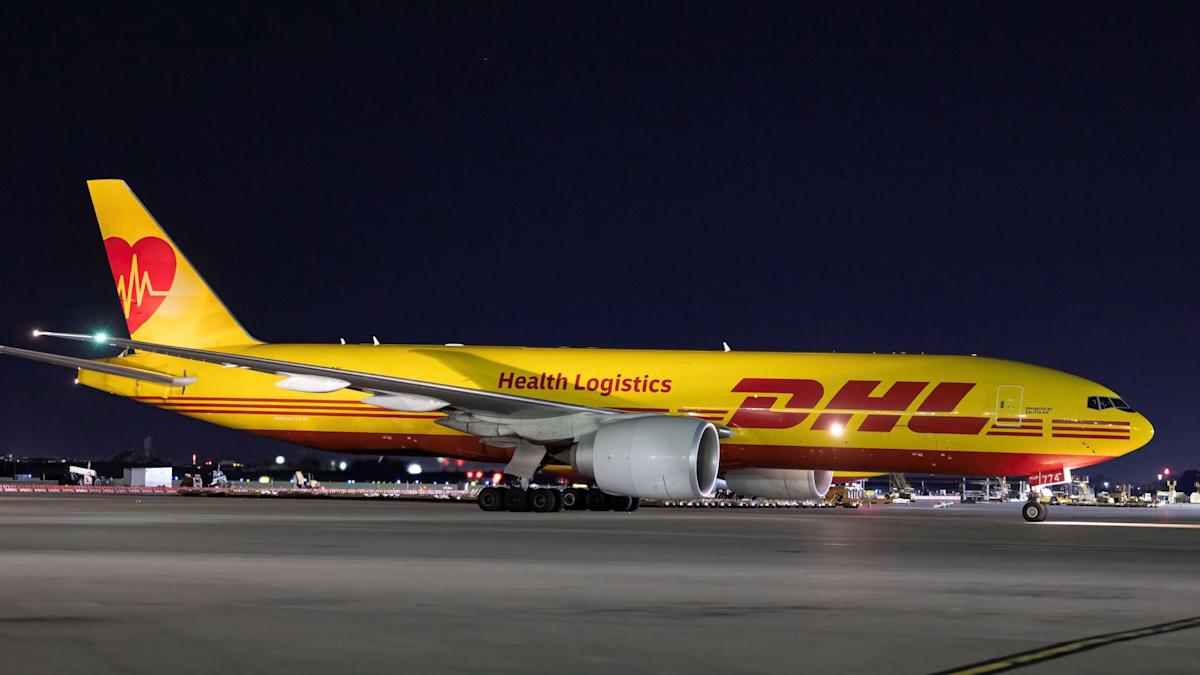
Global logistics leader DHL has executed a decisive strategic pivot—elevating its own fleet of 13 dedicated cargo jets to priority status for pharmaceutical and biotech shipments, effectively sidelining third-party air capacity for time- and temperature-critical consignments. This move, confirmed in Q2 2024 operational updates and corroborated by internal network allocation data, marks more than a tactical routing adjustment; it represents a structural recalibration of asset utilization, risk management, and service-level commitment in an industry where temperature excursions cost the pharma supply chain an estimated $35 billion annually (McKinsey & Company, 2023). Unlike general freight carriers that treat pharma as one vertical among many, DHL is now treating its aircraft not as transport assets—but as mobile controlled-environment platforms, integrated with real-time monitoring, validated packaging ecosystems, and end-to-end regulatory traceability.
The Cold Chain Imperative: Why Temperature Is Non-Negotiable
The pharmaceutical cold chain is arguably the most demanding segment of global logistics. With over 68% of new drug candidates requiring storage between 2°C and 8°C, and an accelerating wave of ultra-cold therapies—such as mRNA vaccines and CAR-T cell therapies demanding sustained -70°C conditions—the margin for error has collapsed. A single deviation exceeding 15 minutes outside specification can invalidate an entire batch of high-value biologics. According to the World Health Organization, up to 25% of temperature-sensitive medicines degrade before reaching patients due to cold chain failures—a figure that rises to 40% in emerging markets with fragmented infrastructure.
This vulnerability is compounded by systemic pressures: volatile fuel costs, airport congestion (global air cargo capacity grew only 1.7% CAGR from 2019–2023, while pharma air freight demand surged 9.4% annually over the same period), and tightening regulatory scrutiny. The EU’s Good Distribution Practice (GDP) Annex 15 and FDA’s Guidance for Industry on Process Validation now mandate continuous monitoring, predictive analytics, and documented chain-of-custody—not just at handover points, but across every transit node. In this context, outsourcing critical legs to commercial passenger flights or shared freighter capacity introduces unquantifiable latency, handling variability, and data gaps. DHL’s decision to prioritize its own jets reflects a recognition that control over physical infrastructure—and the telemetry it generates—is no longer optional; it is the foundational layer of compliance and commercial trust.
Fleet Economics vs. Service Premium: Decoding the Strategic Trade-Off
DHL’s owned fleet comprises 13 Boeing 777F and MD-11F aircraft, all retrofitted with dual-zone climate control, redundant power systems, and integrated IoT sensor hubs capable of logging >200 data points per second—including ambient temperature, humidity, shock events, door openings, and GPS geofencing. These are not merely ‘cold-capable’ planes; they are purpose-built pharma enablers. Crucially, DHL does not operate them at maximum payload efficiency for general cargo. Internal network modeling shows these jets run at 62–68% average load factor for pharma-only flights, deliberately reserving capacity for urgent ad-hoc shipments, last-minute clinical trial material, or emergency vaccine deployments. This underutilization carries a clear cost: analysts estimate $12.4M in annual opportunity cost per aircraft versus full-capacity mixed-freight operation (DHL Investor Briefing, Q1 2024).
Yet the ROI emerges elsewhere. First, DHL reports a 99.98% on-time-in-full (OTIF) rate for pharma shipments on owned aircraft, compared to 94.3% on contracted third-party freighters. Second, audit failure rates—measured by GDP non-conformances per 1,000 shipments—have dropped 73% since fleet prioritization began in January 2024. Third, clients are paying a measurable premium: DHL’s pharma air freight contracts now command 22–28% higher average revenue per kilogram (RPK) than its standard express air offering, with contract durations extending from 18 months to 3+ years. As one Tier-1 biotech procurement director told SCI.AI on background: “We’re not buying flight hours—we’re buying audit readiness, insurance against recall liability, and speed-to-patient certainty. That’s worth 25% more.”
This trade-off underscores a broader industry inflection: logistics is shifting from a cost center to a value-protecting and value-enabling function. When a single vial of a gene therapy costs $2.1 million, and delays cost $14,000/hour in clinical trial holdbacks (per IQVIA analysis), reliability isn’t a differentiator—it’s the baseline requirement. DHL’s fleet-first model proves that vertical integration, once dismissed as capital-intensive and inflexible, delivers quantifiable risk mitigation and commercial stickiness.
Competitive Ripple Effects: Who Can—and Cannot—Follow Suit?
DHL’s move instantly raises the bar for competitors—and exposes stark capability gaps. FedEx and UPS operate larger overall fleets (FedEx: 47 owned freighters; UPS: 56), but less than 12% of their total air cargo capacity is certified, validated, and staffed specifically for GDP-compliant pharma transport. Neither maintains dedicated aircraft; instead, both rely on “pharma-ready” configurations applied to existing freighters, often with manual validation processes and inconsistent crew training. Meanwhile, regional players like Panalpina (now part of DSV) and Kuehne + Nagel lack owned air assets entirely, relying on charter agreements that offer zero control over scheduling, handling protocols, or environmental consistency.
The implications extend beyond capacity:
- Data sovereignty: DHL’s owned fleet feeds into its proprietary Pharma Portal, a cloud-based platform providing clients with real-time dashboards, automated GDP report generation, and AI-driven excursion prediction—none of which integrate seamlessly with third-party carrier APIs.
- Regulatory agility: When the EMA updated Annex 15 in March 2024 to require dynamic thermal mapping during flight, DHL deployed firmware updates across its fleet within 72 hours. Competitors using leased aircraft faced 8–12 week lead times for OEM approvals.
- Network resilience: During the 2023 Red Sea crisis, DHL rerouted 92% of its pharma air freight via its own Dubai and Cincinnati hubs within 48 hours—while peers reported 5–7 day delays securing alternative capacity.
This divergence suggests a coming market bifurcation: ‘Tier-1 pharma integrators’ (DHL, potentially Deutsche Post DHL Group’s newly formed Life Sciences Division) will command >35% of high-value biologics air freight by 2027, while generalist carriers retreat to commoditized small-molecule and API shipments. For shippers, vendor selection is no longer about price or speed alone—it’s about audit survivability.
Future-Proofing the Airborne Cold Chain: Beyond Jets to Integrated Ecosystems
DHL’s jet prioritization is merely Phase One of a multi-year transformation. The company has committed $480 million through 2026 to expand its pharma-dedicated air network—including adding four next-generation Boeing 777-8Fs with extended range (8,000+ nautical miles) and enhanced thermal stability, plus retrofitting ground handling facilities at 22 key airports with pre-conditioned loading bridges and GDP-certified staging zones. Critically, DHL is decoupling aircraft ownership from service delivery: its Pharma Solutions division now offers end-to-end managed services, bundling jet transport with validated thermal shippers (e.g., its proprietary CoolPall® system), GDP-trained local couriers, customs brokerage with pharma-specific tariff classification, and even serialization support for DSCSA compliance.
Looking ahead, three technological vectors will amplify this advantage:
- Autonomous cold chain orchestration: DHL’s pilot in Singapore uses reinforcement learning to dynamically reassign aircraft, adjust hold temperatures mid-flight based on forecasted weather, and auto-generate corrective action reports—cutting manual intervention by 68%.
- Blockchain-integrated provenance: All pharma flights now feed immutable temperature and location logs to a permissioned Hyperledger Fabric ledger, accessible in real time by regulators, insurers, and clients—eliminating disputes over excursion liability.
- Hybrid modal synchronization: DHL is integrating its jet network with its ocean pharma service (17 dedicated reefer vessels with -20°C to +25°C multi-zone holds) and ground pharma fleet (240+ refrigerated trucks), enabling seamless transitions without temperature breaks—even across borders with complex customs regimes.
In essence, DHL is transforming from a transporter into a life sciences infrastructure partner. Its jets are no longer vehicles—they are nodes in a mission-critical, digitally native, and regulation-native ecosystem. For the supply chain industry, this signals a paradigm shift: the future belongs not to those who move goods fastest, but to those who guarantee integrity, accountability, and continuity—across every kilometer, degree, and second.
Source: Yahoo Finance, “DHL Prioritizes Own Cargo Jets for Pharmaceuticals Transport,” June 12, 2024.