Skip to content

Strategy & Planning · Supply Chain · Warehousing & Transport

DHL Outlines Its Ambitions for 2030

DHL Outlines Ambitious Goals for 2030 - Detailing Growth Plans and Speed Over the Next Five Years

Original source: Source information pending

DHL Outlines Its Ambitions for 2030

Ask SCI.AI about this story

📋 本文要点

DHL Outlines Ambitious Goals for 2030 - Detailing Growth Plans and Speed Over the Next Five Years

DHL Outlines Its 2030 Goals

September 26, 2024

Author: Thomas Cullen

The DHL Group remains the largest logistics service provider. However, compared to when it was founded in 1995, its market has undergone significant changes. In 2024, DHL faces competition from expanded container shipping companies and diversified freight forwarders. Although traditional express competitors remain one of its biggest rivals, Amazon has also become a major player in e-commerce logistics services.

DHL’s strategy is undergoing necessary adjustments. In its recently released “2030 Strategy – Accelerating Sustainable Growth,” DHL outlines its growth plans for the next five years and the pace at which it aims to grow.

One of DHL Group’s key features is its continued plan for stock buybacks and generous 5% dividends. This strongly suggests that DHL can generate substantial cash even while maintaining reasonable levels of capital investment. In fact, DHL remains sensitive about over-investing in capital assets. The company states it will continue with moderate acquisitions but seems uninterested in transformative purchases akin to DSV’s recent acquisition of Schenker. Instead, DHL emphasizes its commitment to “return on capital invested” as a strategic metric.

The growth expectations for DHL’s various businesses reflect the company’s sense of maturity. DHL Express may be one of the most valuable segments, yet it only anticipates profit growth that will “outpace volume growth,” with volumes expected at 4-5%. However, its target is to achieve a “mid-teens” margin.

The global freight business is projected to outperform the overall freight forwarding market trend. DHL expects the freight forwarding market to grow in line with global GDP at 2.5-3%. The ‘Supply Chain’ contract logistics segment anticipates average growth of 4-6% for the global contract logistics market and aims to surpass this level, which would be impressive given that DHL Supply Chain is targeting an industry-leading EBIT margin of 6-7%.

The e-commerce sector differs. DHL seeks active investment in this market, which shows “strong growth rates of 6-8% — geographically quite heterogeneous.” In terms of profitability, DHL eCommerce expects “EBIT margins to stabilize at 4-5% during the investment phase (up until 2025); followed by margin expansion to >5%.” In contrast, discussions around Deutsche Post’s parcel business revolve more around “stability,” as the aging Deutsche Post continues to face challenges in transformation.

The goal of the “2030 Strategy” is for revenue in 2030 to be 50% higher than in 2023. However, a deeper analysis reveals that DHL appears to be a group equally focused on stability and profit growth. In today’s market, achieving the former may prove more challenging than the latter.

Source: Ti Insight

Author: Thomas Cullen


Source Website: Transport Intelligence
Ask SCI.AI Finished reading? Continue with SCI.AI. Explore the related policy, route, company and historical context. Continue asking
Stay ahead of supply chain shifts

One email a week: the stories that matter and new risk events — in English, free.

Prefer RSS? Articles Risk events

Truckload rejections hold at 12.8% as peak season stalls
Risk & Resilience

Truckload rejections hold at 12.8% as peak season stalls

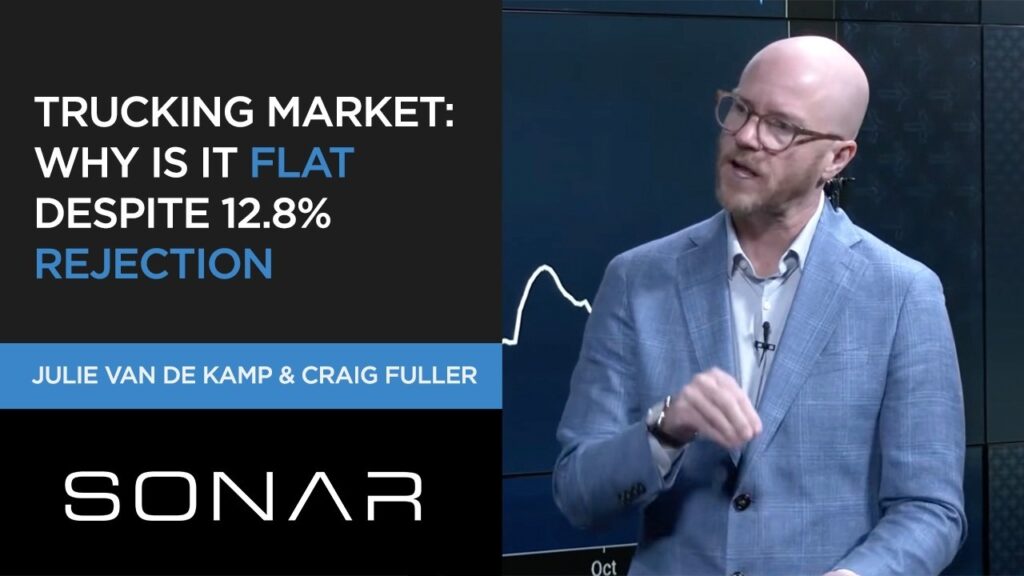
Truckload tender rejections are holding near 12.8%, roughly double the 6% recorded a year earlier, yet FreightWaves analysts Julie Van de Kamp and Craig Fuller say the market shows little of the tightening momentum normally seen ahead of peak season. The rejection index has slipped only about one percentage point in 20 days, even as November's Outbound Tender Volume Index averages 11,434, up 12% year over year and 3% from October. Refrigerated freight is the exception, with reefer rejections at 21% versus 12.6% last year, and a super El Niño could add further pressure on reefer capacity this winter.

PS Logistics unit acquires Roane, adding 170 drivers
Warehousing & Transport

PS Logistics unit acquires Roane, adding 170 drivers

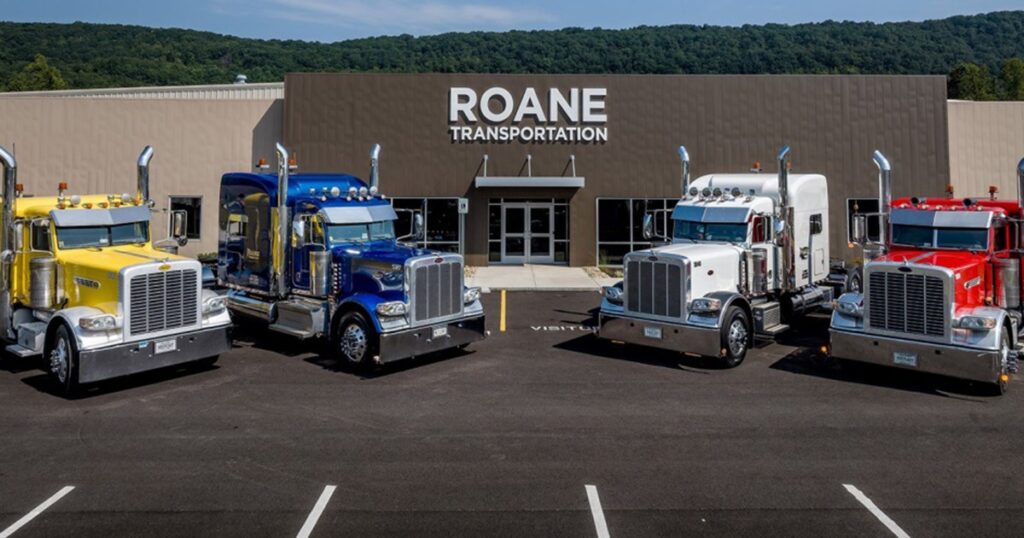
PS Logistics unit Loudon County Trucking has acquired flatbed and Conestoga carrier Roane Transportation for an undisclosed sum, the parent company said on November 10, 2026. Rockwood, Tenn.-based Roane brings more than 170 company, lease-purchase and owner-operator drivers operating out of Rockwood and Memphis, Tenn., and El Paso, Texas. The deal revives PS Logistics' carrier acquisition push after none in 2025, following four purchases in 2024. Since 2016, Birmingham, Ala.-based PS Logistics has acquired 32 carriers and five non-asset logistics operations across the U.S.

China-Europe air cargo falls 17% as EU fees reshape e-commerce
Strategy & Planning

China-Europe air cargo falls 17% as EU fees reshape e-commerce

WorldACD data shows air cargo volumes from China and Hong Kong to Europe fell 17% year on year in October, with Hong Kong-origin volumes down 32% and mainland China down 8%. The decline follows the EU's July introduction of a €3 charge on items under €150 and comes as platforms shift toward consolidated B2B imports. A further €2 per-item handling fee took effect 1 November. Rates on the lane still rose 9% month on month and 14% year on year to $4.85 per kg. By contrast, China-Hong Kong to US tonnages rose 8% year on year.

Welcome Back!

Login to your account below

Create New Account!

Fill the forms below to register

Retrieve your password

Please enter your username or email address to reset your password.

Scan to share via WeChat

Open WeChat and scan the QR code to share

QR Code

Add New Playlist