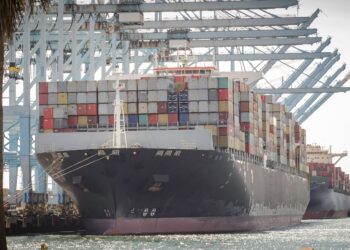
According to www.pwc.com, the Middle East—defined in the report as the six Gulf Cooperation Council (GCC) countries plus Egypt—handled approximately 12% of global trade volumes through the Red Sea in 2023, per data from the US Congressional Research Service (CRS).
Strategic Chokepoints and Energy Flows
The region’s centrality is anchored by two critical maritime corridors. The International Energy Agency (IEA) estimates that in 2023, roughly 30% of the world’s traded oil and about 20% of all liquefied natural gas (LNG) transited the Strait of Hormuz. These figures underscore the Middle East’s irreplaceable role in global energy supply chains. Notably, the Suez Canal obstruction in 2021 and the ongoing Red Sea crisis—spanning 2023–2024—have repeatedly disrupted shipping lanes, triggering sharp increases in both freight rates and marine insurance premiums across the region.
National Transformation Programs Driving Investment
Amid these pressures, national development agendas are accelerating logistics modernization. Saudi Arabia’s Vision 2030, the UAE’s We the UAE 2031, and Qatar’s National Vision 2030 all explicitly identify logistics infrastructure as a core enabler of economic diversification and growth. A concrete example is the UAE’s February 2025 launch of the Emirates Council for Logistics Integration, which targets raising the country’s annual logistics industry revenue from $35 billion to $54.4 billion by 2032. This represents a 55.4% increase over seven years, underpinned by public–private investment in AI-integrated infrastructure.
Cross-Border Infrastructure Projects
Regional coordination remains fragmented, yet tangible progress exists. The Gulf Railway Project—a flagship GCC initiative—aims to link all six member states via a 2,177-kilometer high-speed rail network. Though delayed, its scope reflects a shared recognition that intermodal integration (maritime, aviation, rail, road) is essential to unlocking efficiency gains. However, the report notes persistent gaps: limited cross-border regulatory alignment, insufficient skilled labor pipelines, and uneven adoption of international sustainability standards—including those related to emissions reporting and green port certification—by local logistics firms.
Operational Challenges and Workforce Gaps
According to the report, three structural constraints hinder scalability: first, limited cross-border collaboration among Middle Eastern nations on customs harmonization and digital cargo tracking; second, incomplete intermodal integration, with less than 15% of regional freight currently moving via coordinated rail–port–air hubs (based on GCC Secretariat 2023 transport statistics cited indirectly); and third, a documented shortage of 42,000 certified logistics professionals across the GCC by 2030, per the UAE Ministry of Economy’s National Logistics Strategy 2030 baseline assessment. These gaps constrain responsiveness to shocks like pandemic-related port congestion or Houthi-led Red Sea rerouting, which forced carriers to add 10–14 days to Asia–Europe transit times between late 2023 and mid-2024.
Source: www.pwc.com
Compiled from international media by the SCI.AI editorial team.