A Deliberate Retreat from General E-Commerce
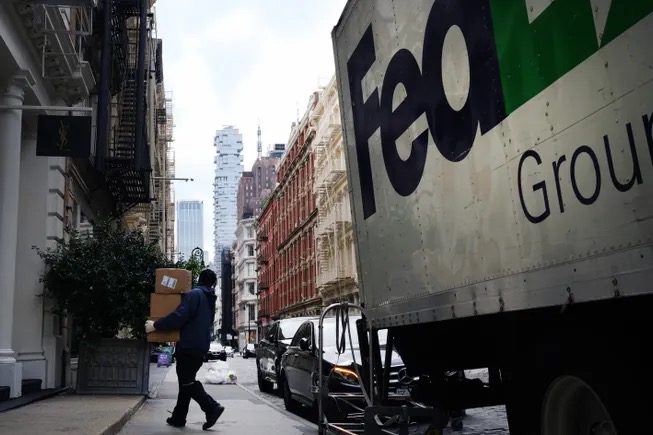
At its 2026 Investor Day, FedEx dropped what may prove to be the most consequential strategic announcement in the last-mile delivery industry this year: the company is deliberately stepping back from the battle for general e-commerce parcel volume. CEO Raj Subramaniam stated unequivocally that FedEx will “concentrate commercial energy where customers value speed, precision, visibility and reliability over the lowest price.” The carrier expects only low single-digit B2C volume growth through 2029, a pace intentionally slower than the broader e-commerce market. This is not a company losing ground — it is one choosing to cede territory it considers unprofitable.
The decision arrives at a pivotal moment for global logistics. The post-pandemic e-commerce surge has flooded last-mile networks with lightweight, low-margin parcels, particularly in the sub-pound package segment where margins are thinnest. Regional carriers, gig-economy platforms, and Amazon’s own sprawling Delivery Service Partner (DSP) network — now comprising over 2,000 partners across the United States — have made this segment ferociously competitive. FedEx’s retreat is essentially an acknowledgment that competing on price alone in general e-commerce delivery is a losing proposition for a full-network carrier. Instead, the company is betting that specialization, not scale, will define the next decade of last-mile logistics.
The $130 Billion Opportunity in Healthcare, Aerospace, and Data Centers
FedEx has identified four verticals as its primary growth engines: healthcare, automotive, aerospace, and data centers, collectively representing a $130 billion addressable market. These industries share a common requirement that general e-commerce fulfillment does not demand — extreme precision, regulatory compliance, and often temperature-controlled logistics. A shipment of biologic drugs requiring continuous cold-chain monitoring at ±2°C has fundamentally different logistics needs than a package of t-shirts, and FedEx is positioning itself squarely to serve the former.
Chief Customer Officer Brie Carere crystallized this positioning with a memorable line: “If you’re shipping T-shirts, FedEx might not be for you, but if you were shipping Oura Rings, FedEx is for you.” The economics support this strategy. Specialized shipments command premium pricing, require fewer price concessions, and generate significantly higher margins per package. Moreover, once a logistics provider establishes the compliance certifications, SOPs, and quality assurance frameworks for industries like pharmaceutical logistics or aerospace parts distribution, customer switching costs become prohibitively high. This creates a durable competitive moat that volume-driven e-commerce delivery simply cannot replicate.
Network 2.0: Closing 475 Stations and Spinning Off Freight
Underpinning this strategic pivot is FedEx’s massive Network 2.0 restructuring initiative. The company plans to close more than 475 stations as it consolidates the formerly separate FedEx Ground and FedEx Express networks into a single, unified operating system. By the 2026 peak shipping season, FedEx expects 65% of eligible volume to flow through the integrated network, up from roughly 25% at the start of the consolidation. Carere noted that U.S. network utilization has already returned to pandemic-era highs — a remarkable achievement considering the post-pandemic demand normalization that challenged the entire industry.
Perhaps even more significant is FedEx’s announcement that it will spin off FedEx Freight as an independent publicly traded company on June 1, 2026. This separation removes the capital-intensive less-than-truckload (LTL) business from FedEx’s balance sheet, allowing investors to value the parcel and express operations on their own merits. The move signals a broader industry trend: logistics conglomerates are unbundling, shedding non-core assets to sharpen their competitive focus. For FedEx, shedding Freight means more capital available for technology investment, network optimization, and strategic acquisitions in its priority verticals.
The InPost Gambit: Smart Lockers as Europe’s Last-Mile Infrastructure
While FedEx contracts its U.S. e-commerce footprint, it is simultaneously expanding in Europe through a strikingly different model. The company announced the acquisition of a 37% stake in Poland-based InPost, Europe’s leading smart parcel locker operator. InPost’s network of tens of thousands of automated pickup points across Poland, the UK, France, and other European markets offers a fundamentally different cost structure for last-mile delivery — replacing expensive door-to-door delivery with batch-drop and consumer self-pickup, which can reduce per-parcel delivery costs by 30-50%.
The strategic implications extend well beyond cost savings. InPost’s locker network represents a new form of last-mile infrastructure that is particularly well-suited to the European market, where urban density, narrow streets, and strict emissions regulations make traditional van-based delivery increasingly challenging. For cross-border e-commerce players — including rapidly expanding Chinese platforms like SHEIN and Temu — this infrastructure provides a scalable, low-cost endpoint for deliveries into Europe. FedEx is effectively building an end-to-end logistics chain: air freight trunk lines into European hubs, local sortation, and smart locker final delivery. This “asset-light, high-density” model may well become the template for profitable cross-border e-commerce logistics.
Industry-Wide Implications: The Great Last-Mile Unbundling
FedEx’s strategic pivot is not occurring in isolation. Its primary rival UPS is pursuing a remarkably parallel strategy, aggressively reducing its dependence on low-margin Amazon volume while investing heavily in healthcare logistics as a growth driver. Amazon, meanwhile, continues to build out its own last-mile delivery network at breathtaking scale, with DSP partners operating fleets of 20-40 vehicles across specific geographic territories. The net effect is a structural unbundling of the last-mile delivery market into distinct competitive zones, each with different success factors.
Market data reinforces this bifurcation. The global urban logistics services market stands at approximately $45.9 billion in 2026, with last-mile parcel delivery commanding a 42% share. Projections show the market reaching $77.7 billion by 2036 at a 5.4% CAGR. But this aggregate number masks a fundamental split: one segment dominated by price-driven, high-volume platforms (Amazon, Cainiao, JD Logistics) competing on speed and cost, and another defined by precision-driven, compliance-heavy specialized logistics where FedEx, UPS, and DHL operate. Future last-mile competition will not be a single game — it will be two entirely different sports played on the same field.
What This Means for Global Supply Chains
FedEx’s 2026 Investor Day announcement marks a watershed moment for supply chain professionals worldwide. The era of “one network fits all” in last-mile delivery is definitively over. For shippers, this means recalibrating vendor strategies: selecting logistics partners based on shipment characteristics, compliance requirements, and value rather than defaulting to the lowest bid. Companies shipping high-value medical devices, precision electronics, or aerospace components now have a clear signal that FedEx is building its entire commercial apparatus to serve them — and pricing accordingly.
For logistics strategists and supply chain planners, the lesson is equally clear: the future of last-mile delivery is not about building the biggest network but about building the right network for specific customer segments. FedEx has drawn a line in the sand, declaring that it would rather be the best at delivering Oura Rings than the cheapest at delivering T-shirts. Whether this bet pays off will depend on execution — particularly on Network 2.0 integration timelines and the InPost partnership’s traction in Europe. But the strategic direction is unmistakable, and it will force every player in the global logistics ecosystem to define their own answer to the same fundamental question: in a fragmenting last-mile market, where exactly do you compete?
Source: Supply Chain Dive