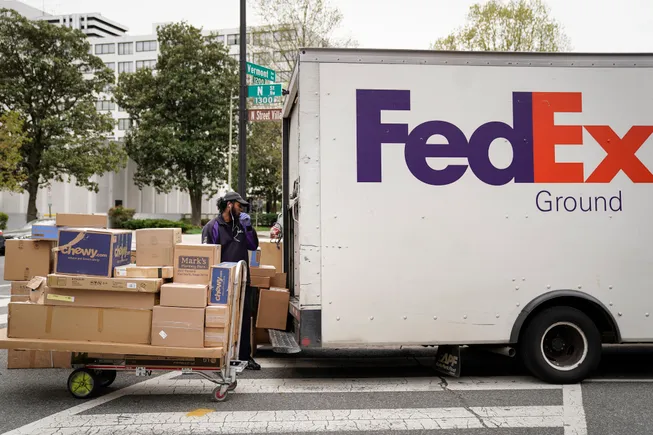
With FedEx and UPS surcharges on the rise, competitors see an opportunity.
================================================================================
According to experts, these additional charges from the courier giants conflict with higher shipping discounts offered to customers, but there are ways for clients to mitigate their impact.
Published October 15, 2024
Increasing surcharges by FedEx and UPS are limiting the benefits of transport discounts provided by these carriers and creating opportunities for competitors.
Parcel pricing experts told Supply Chain Dive that despite weak demand, these giants continue to offer generous shipping price discounts to shippers in order to boost volume. At the same time, they adjust surcharges and introduce new fees to recover profitability.
This year, both FedEx and UPS have raised their fuel surcharge calculations, increased charges for major cities like Chicago and San Francisco, implemented additional fees on import routes with high demand, and announced higher peak season rates.
According to Paul Yaussy, Director of Parcel Consulting at Shipware, in an environment where base rates are heavily discounted, a wave of new fees has led to a larger share of shippers’ parcel expenses coming from surcharges. In the past, 25% of Shipware clients’ parcel shipping costs went towards surcharges, but now it is typically 35% or even 40%, Yaussy said.
“It’s kind of like a tug-of-war because they are introducing new fees while also giving you great prices,” Yaussy noted.
The emergence of surcharges extends beyond the annual rate increases by major carriers and can catch businesses off guard, especially when they expect their annual shipping budgets to remain accurate, Shipware’s professional services advisor Adi Karamcheti said.
For example, a Fortune 100 company using Shipware’s services felt particularly pressured in April after UPS imposed delivery surcharges in several cities. They viewed this change as an interim rate increase due to its impact on profit margins.
“How do you budget for that? How do you plan? What do you tell your boss?” Karamcheti said.
### FedEx and UPS Confident in Their Approach
For their part, executives at FedEx and UPS expressed confidence during earnings calls that surcharges would not deter too many customers.
FedEx Executive Vice President and Chief Customer Officer Brie Carere stated in October that the recent increase in international fuel surcharges “is the right mix and the right approach to ensure we are improving our yields.”
Both carriers also noted that higher peak season fees were necessary to cover increased operational costs, particularly due to this year’s later Thanksgiving date, which shortened the holiday parcel processing time.
“When so much freight is flowing into your network, you actually have to charge for good service because you need to hire people, lease planes and delivery trucks, etc.,” UPS CEO Carol Tome said during a July earnings call.
However, these giants also pointed out that surcharges benefit their per-package revenue or profitability. UPS CFO Brian Dykes noted on the same call that holiday surcharges should improve this metric. FedEx disclosed in a September securities filing that increased fuel surcharges had “a significant positive impact” on its FedEx unit’s package and freight service yields.
These recent surcharges by the giants may also be a driving force to meet financial targets in a softer market where their pricing power is weaker, according to ShipScience founder and CEO Anthony Robinson.
Even if the additional fees are justified, they have sparked interest in carriers other than FedEx and UPS, Robinson added.
“It seems more people are raising their hands saying, ‘Hey, what else is out there?'” Robinson said.
### Alternative Carriers See an Opportunity
Several parcel service providers are working to capitalize on shippers’ fatigue with FedEx and UPS surcharges.
Alternative carrier Jitsu offers a simpler pricing model with “all-in” shipping rates plus only two additional charges for fuel and signature. The company also states it does not impose residential delivery or peak season surcharges.
CEO Raj Ramanan told Supply Chain Dive that Jitsu has increased its volume this year by more than all of 2023’s growth, but he added that the extent to which this growth is due to shippers attracted by their pricing model remains unclear. Nonetheless, the emerging carrier views FedEx and UPS’ current pricing strategy as an opportunity to strengthen its market foothold.
“Our transparency with customers and conversationalists seems to be appreciated from an assessment and planning perspective,” Ramanan said.
GLS US President Steven Bergan, who provides delivery services, also noted that FedEx and UPS surcharges are motivating shippers to explore alternatives.
In the current cost-conscious environment, GLS US contrasts with larger carriers by maintaining existing surcharges. For example, its peak season fee this year will remain at $1.50 per residential parcel, consistent with 2023 levels.
“We’re not making as much noise as they are,” Bergan said, referring to FedEx and UPS.
While FedEx and UPS surcharges may increase interest in alternative carriers, experts do not expect significant changes in market share in the short term.
Bergan pointed out that beyond the operational complexity of adding new carriers, many companies did not expand quickly this year amid economic uncertainty and an upcoming presidential election. This means they can shift fewer additional packages to new carriers without risking their volume-based FedEx and UPS discounts.
“When companies are not growing, they’re trying to save money on what they have,” Bergan said.
### What Should Shippers Do?
Regardless of whether smaller carriers will impact FedEx and UPS market share, they remain one of several options for shippers looking to reduce the risk of pricing fluctuations from global transportation service providers, experts told Supply Chain Dive.
Shippers can obtain particularly low rates for short-haul shipments in areas surrounding major cities where FedEx and UPS face intense competition from regional carriers.
“On some freight, you only need $4 per package,” said John Haber, Chief Strategy Officer at Transportation Insight.
To further save costs, customers should push for contract terms that require any new surcharges to be notified a certain number of days in advance to take effect, Haber added.
FedEx andUPS clients also need to understand the characteristics of their shipped parcels, such as weight and size, and the volume ratio sent to residential versus commercial addresses, according to Shipware’s Karamcheti. This information can help shippers understand their final delivery costs and identify opportunities for better pricing. For example, carriers may offer reduced rates to companies sending multiple packages to the same address because it represents a more efficient delivery route.
“The second package does not have additional delivery costs, which is very valuable for them,” Karamcheti said. “It means fewer stops, which generates more revenue for them.”
—
Source: Supply Chain Dive