DHL Group lifted third-quarter operating profit 16.2% to $1.9 billion on revenue of $25.36 billion, a 12.6% year-over-year gain, as air cargo demand and heavy industrial freight boosted its Express division. Express EBIT jumped 50% to $1.16 billion on a 9.7% rise in transported weight per day. DHL raised full-year EBIT guidance to $7.8 billion and free cash flow guidance to $3.6 billion. Red Sea and Strait of Hormuz disruptions added about $112 million in extra EBIT, while data center and AI-driven trade demand underpinned results.
According to www.freightwaves.com, DHL Group reported a 16.2% rise in operating profit for the third quarter to $1.9 billion, with the company pointing to air cargo, disciplined pricing and high-margin industrial verticals as the main drivers of the gain.
The Bonn-based logistics giant booked revenue of $25.36 billion, up 12.6% year over year, while its profit margin edged up to 7.6% and diluted earnings per share rose 8.5%. Growth was led by the Express, Forwarding and Supply Chain divisions, according to the report.
Air cargo and heavy freight lift Express
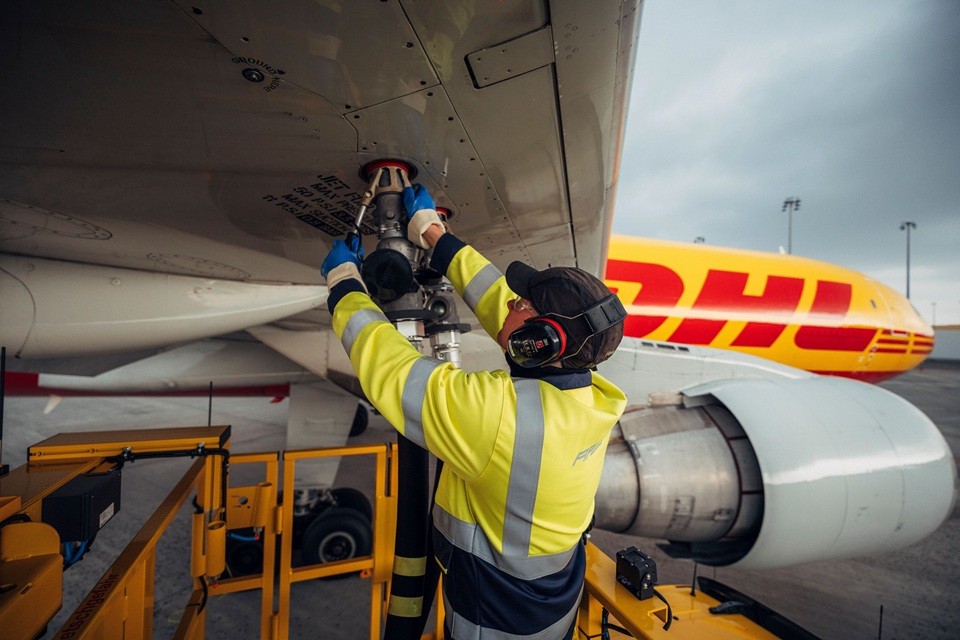
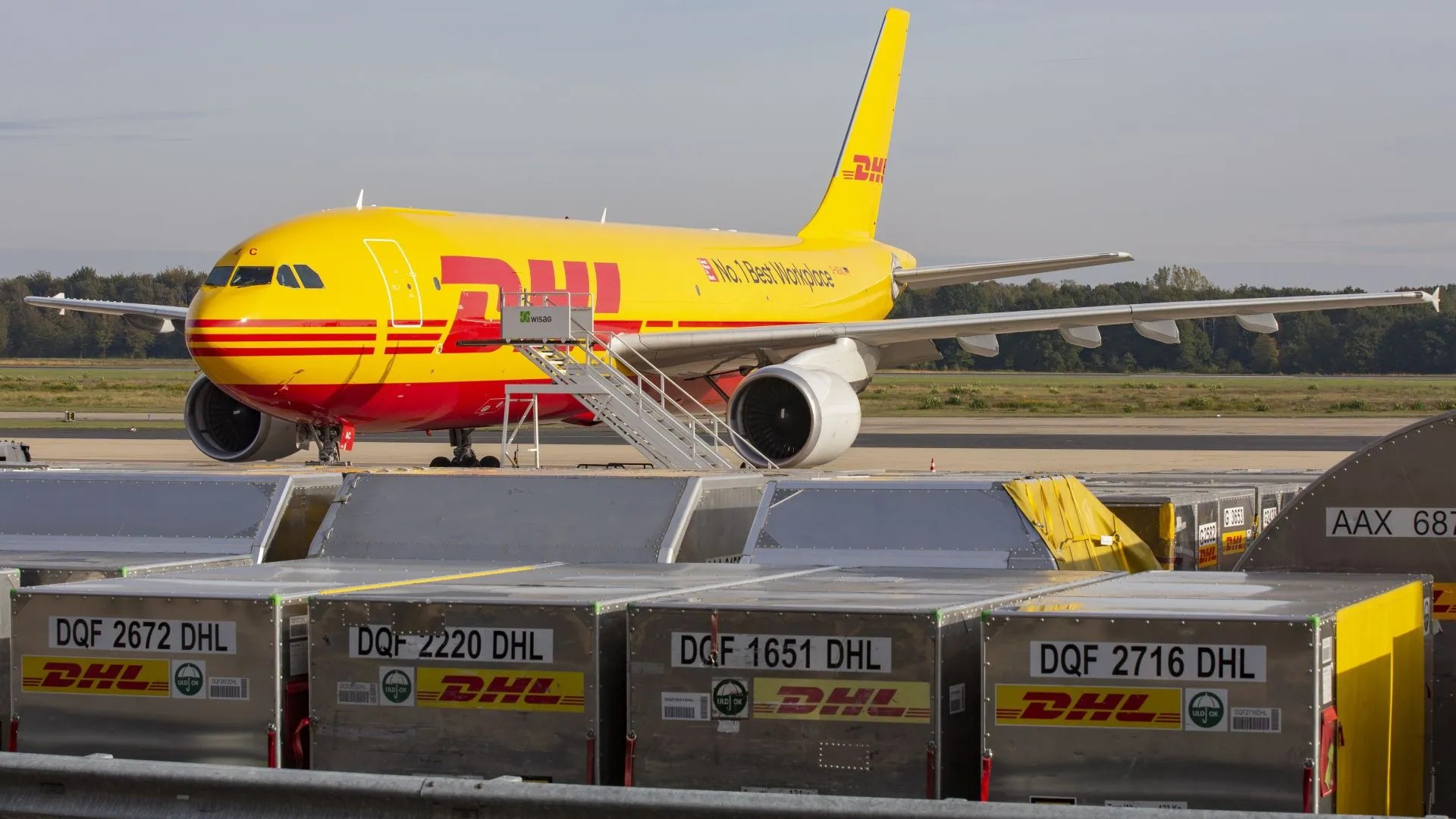
The Express division delivered the sharpest improvement, with earnings before interest and taxes climbing 50% to $1.16 billion. The unit benefited from a 9.7% increase in transported weight per day, tighter capacity management and structural cost reductions put in place over the past two years.
Much of that volume growth traces to a deliberate push to give industrial shippers access to DHL’s time-definite international air network for heavier shipments, which carry higher rates than parcels and improve utilization of the company’s cargo aircraft.
“There is a customer need for highly reliable on-time delivery of certain industrial, quite often heavier parts. This proposition creates value for our customers and profitable growth for us, and we see it as a multi-year, almost structural growth opportunity, targeting dedicated pockets of the very large cross-border B2B market.” — Melanie Kreis, Chief Financial Officer, DHL Group
DHL also gained from temporary capacity constraints in the international market linked to Iran war rerouting and hyperscaler demand, which lifted demand for its freighters and supported higher yields. The company likely captured shipments from Middle East carriers as well as ocean diversion driven by shipping risks through the Strait of Hormuz and the Red Sea.
That spillover contributed about $112 million in extra EBIT, down from more than $167 million in the second quarter, when disruptions were more severe. Demand surcharges that took effect Oct. 1 for peak season, plus the usual January general rate increase, are expected to help sustain yields.
Forwarding and contract logistics post gains
DHL Global Forwarding raised both revenue and operating profit, with EBIT up 32.7% against the prior-year quarter. Air freight volumes grew 12%, with particular strength on trade lanes originating in Asia, while ocean freight growth of 5% was driven mainly by higher volumes from Asia and Europe.
In a separate personnel move, DHL Global Forwarding on Monday appointed Sascha Geiken as CEO for sub-Saharan Africa, excluding South Africa. He previously served as vice president ocean freight for the Middle East and Africa.
The contract logistics division recorded revenue growth across all regions, with the Americas business making a particularly important contribution, including in the technology and online retail sectors. DHL said strong new contract wins in those areas provide a solid basis for future growth, and the division continues to invest in automation, digitalization and additional capacity.
eCommerce and Post & Parcel face headwinds
DHL eCommerce generated organic revenue growth of about 6%, though reported revenue was affected by portfolio changes, particularly deconsolidation in the United Kingdom and Portugal. The decline in reported EBIT versus the prior-year figure was primarily due to positive one-off effects of $137 million in the third quarter of 2025.
At Post & Parcel Germany, domestic and international parcel business continued to support performance, but parcel volume development was impacted by the abolition of the de minimis exemption in the European Union as of July 1 this year. The structural decline in mail volumes continued, and higher costs for personnel, energy and transportation added further pressure on operating profit.
Guidance raised as data centers drive demand
DHL last month raised its full-year earnings before interest and taxes outlook to $7.8 billion, topping its earlier projection of $7.3 billion from core operations. It also lifted its free cash flow forecast to $3.6 billion from $3.37 billion.
Data centers were a major driver of the quarter, underscoring DHL’s ability to provide integrated freight transportation across all modes for demanding customers, the finance chief said. Most of the data center business so far is air freight, but DHL Supply Chain is picking up new customers for equipment storage, delivery and installation.
Much of the strength in global trade is coming from the AI boom. Computers and other equipment for cloud computing expansion accounted for 42% of global goods growth in 2025 and about 76% during the first quarter of 2026, according to a DHL report last month that relied on World Trade Organization and OECD data.
Management said the goal is to translate revenue momentum from favorable market conditions into sustainable growth by building capabilities in strategic focus areas with the highest growth potential. Global trade patterns are shifting, but trade is not slowing down and is projected to grow faster through 2029 than many expected after the U.S.-led tariff increases or the start of the Iran war. DHL is investing heavily in life sciences and healthcare, electric vehicles and battery storage, e-commerce, data center logistics and dynamic geographic regions, while rivals FedEx and UPS are similarly focusing more on end-to-end logistics in some of the same high-margin industrial verticals.
Source: FreightWaves
Compiled from international media by the SCI.AI editorial team.