Schneider Electric is transforming its global supply chain into a hyperconnected, AI-driven network. In an interview with DC Velocity, supply chain chief Stuart Whiting said the company runs more than 164 factories and 85 distribution centers across over 100 countries, and that by 2025 its control towers were automatically supporting 93% of customer requests. The company has moved from a one-size-fits-all delivery model to a customer-aligned ecosystem, with AI producing over 100 million euros ($116 million) in generated value through inventory reductions and improved yields.
According to DC Velocity, Schneider Electric is rebuilding its global supply chain around digital control towers and AI-enabled planning, and the effort is already paying off: by 2025, the company was automatically supporting 93% of customer requests, according to Stuart Whiting, the company’s senior vice president of global supply chain logistics, planning, and services.
A network spanning more than 100 countries
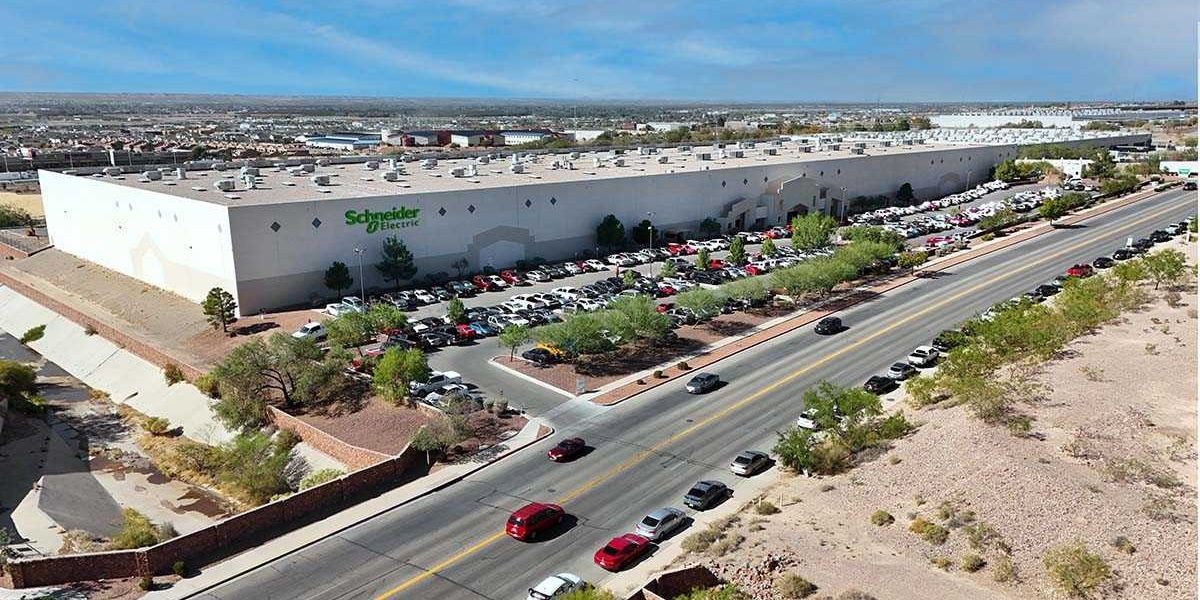
Schneider Electric runs one of the world’s largest industrial supply chains, with more than 164 factories and 85 distribution centers serving customers in over 100 countries, Whiting said in an interview with DC Velocity ahead of his keynote at the Council of Supply Chain Management Professionals‘ EDGE conference in Tennessee.
The scale is only part of the story, he said. The company’s challenge is orchestrating that network so it stays responsive, resilient, and sustainable while supporting the accelerating energy transition. Demand is being reshaped by electrification, industrial digitalization, AI-enabled infrastructure, and the rapid growth of data centers.
To cope, the company has combined manufacturing, logistics, planning, and service operations into a single operating model. Digital control towers, AI-enabled planning, and end-to-end visibility let it sense changes in demand, anticipate disruptions, and make coordinated decisions across the network faster than before.
Designing for disruption rather than reacting to it
Whiting argued that disruption is no longer a temporary condition. Geopolitical tensions, trade policy shifts, tariffs, regional conflicts, changing demand patterns, and supply constraints have become part of the operating environment, and companies that treat disruption as an exception will struggle.
Over the last several years, Schneider Electric has invested heavily in digital control towers, advanced planning systems, AI-driven analytics, and digital-twin capabilities that allow it to simulate scenarios before making decisions. Instead of reacting after a disruption, the company is increasingly able to sense, detect, and predict disruptions and prescribe actions ahead of time.
It has also built what Whiting calls an “any-to-any” network capability—regional strength combined with enough flexibility to redirect flows, rebalance inventory, adjust sourcing, and reroute logistics when conditions change. The control towers act as a single source of truth across logistics and transportation operations, which he said has changed the speed of decision-making compared with five years ago.
“Customers [today] need faster deployment and more tailored service models than ever before. That means our supply chain can’t simply be global; it has to be intelligent.” — Stuart Whiting, Senior Vice President of Global Supply Chain Logistics, Planning, and Services, Schneider Electric
From one-size-fits-all to customer-aligned delivery
Whiting described the redesign of the company’s delivery platform as one of the defining shifts in his organization over the last several years. Historically, supply chains including Schneider’s were designed around efficiency and standardization—one operating model scaled globally.
The problem is that customers no longer operate the same way. A hyperscale data center customer has very different expectations from an industrial manufacturer or an infrastructure project customer, requiring different delivery speeds, service levels, planning horizons, and forms of collaboration.
Schneider’s response has been to turn the delivery platform into a customer-aligned ecosystem able to sense, predict, and respond to requirements in real time. As Whiting put it, customers should not have to adapt to the company’s supply chain; the supply chain should adapt to them.
AI lessons: fix the process before deploying the model
Whiting said the first lesson from Schneider Electric’s digitalization journey is that AI does not solve process problems. If data is fragmented, ownership is unclear, and teams do not trust the outputs, AI will simply accelerate existing problems—and the biggest barriers have often been organizational rather than technical.
The second lesson is to start with outcomes rather than technology. Rather than building sophisticated models for their own sake, the company focuses on improving decisions. AI has delivered the greatest value in forecasting, inventory optimization, logistics orchestration, anomaly detection, and exception management—areas where thousands of decisions are made every day.
That work has evolved into what Schneider Electric calls an autonomous supply chain, spanning machine learning, internet of things, predictive analytics, digital twins, touchless scheduling, and end-to-end control towers. The company reports moving from manual planning toward increasingly automated and prescriptive execution.
The results include significant inventory reductions, improved yields, and over 100 million euros ($116 million) in generated value, according to Whiting.
Source: DC Velocity
Compiled from international media by the SCI.AI editorial team.