
Skip to content

Benchmark Practices

Analysis

Expeditors Q3 air volumes rise 13%, revenue up 51.4%

Expeditors International posted a 13% year-on-year rise in air cargo volumes in the third quarter, with growth accelerating from 8% in July to 19% in September. Air revenues climbed 51.4% to $1.5bn, supported by hyperscaler demand tied to AI infrastructure and elevated freight rates. Air operating costs rose 52% to $1.2bn, trimming the operating margin to 24.3% from 24.8% a year earlier, while airfreight service operating profits reached $375m against $253m last year. Capacity remained tight on fleet expansion limits, aircraft delivery delays, and EU de minimis rules affecting Asia-Europe e-commerce.

Original source: aircargonews.net

Expeditors Q3 air volumes rise 13%, revenue up 51.4%

Ask SCI.AI about this story

📋 本文要点

Expeditors International posted a 13% year-on-year rise in air cargo volumes in the third quarter, with growth accelerating from 8% in July to 19% in September. Air revenues climbed 51.4% to $1.5bn, supported by hyperscaler demand tied to AI infrastructure and elevated freight rates. Air operating costs rose 52% to $1.2bn, trimming the operating margin to 24.3% from 24.8% a year earlier, while airfreight service operating profits reached $375m against $253m last year. Capacity remained tight on fleet expansion limits, aircraft delivery delays, and EU de minimis rules affecting Asia-Europe e-commerce.

According to www.aircargonews.net, Expeditors International reported a 13% year-on-year increase in air cargo volumes in the third quarter, alongside a 51.4% rise in air revenues to $1.5bn, as hyperscaler demand and constrained capacity kept freight rates elevated.

Volume growth accelerated through the quarter

The US forwarder’s quarterly volume gains built steadily month by month, according to the report. July posted an 8% improvement, August delivered a 13% increase, and September closed the quarter with a 19% jump — all measured year on year.

The revenue increase was attributed to both higher volumes and higher airfreight rates, the company said. South Asia led the demand story, with export tonnage there rising most notably during the quarter.

Expeditors also flagged that airfreight demand remained strong across the period, with the growth concentrated in lanes tied to AI infrastructure build-out rather than broad-based consumer shipping.

Hyperscaler demand meets tight capacity

The company identified hyperscaler demand — including shipments from Tier 1 and Tier 2 suppliers supporting AI infrastructure — as a significant driver of volume growth. At the same time, air capacity stayed constrained by limited fleet expansion and ongoing new aircraft delivery delays.

“Hyperscaler demand, which also includes shipments from Tier 1 and Tier 2 suppliers supporting AI infrastructure, was a significant driver of volume growth, while air capacity remains constrained by limited fleet expansion and ongoing new aircraft delivery delays.” — Expeditors International

Capacity was further affected by aircraft redeployments that disrupted Asia-Europe e-commerce, a shift the company linked to European Union regulations aimed at curbing the flow of de minimis imports. Meanwhile, China-US e-commerce tonnage has nearly recovered to levels seen before the US terminated de minimis shipments in May 2025.

With geopolitical events added to the mix, airfreight rates remained elevated during the quarter as demand outpaced available capacity, the company said.

Costs outpace revenue as margin slips

Air operating costs grew faster than revenues, rising 52% to $1.2bn during the quarter. Air Cargo News calculations show the airfreight operating margin declined marginally from 24.8% in the third quarter of last year to 24.3% this year.

Airfreight service operating profits — service revenues minus operating expenses — reached $375m, compared with $253m in the same period last year.

The higher operating costs likely stem from elevated carrier rates as demand growth outstripped capacity additions, along with significantly higher fuel prices driven by the conflict in the Middle East. The latest IATA/Platts fuel price monitor figures show jet fuel costs up by more than 112% compared with last year.

Source: Air Cargo News

Compiled from international media by the SCI.AI editorial team.
Ask SCI.AI Finished reading? Continue with SCI.AI. Explore the related policy, route, company and historical context. Continue asking
Stay ahead of supply chain shifts

One email a week: the stories that matter and new risk events — in English, free.

Prefer RSS? Articles Risk events

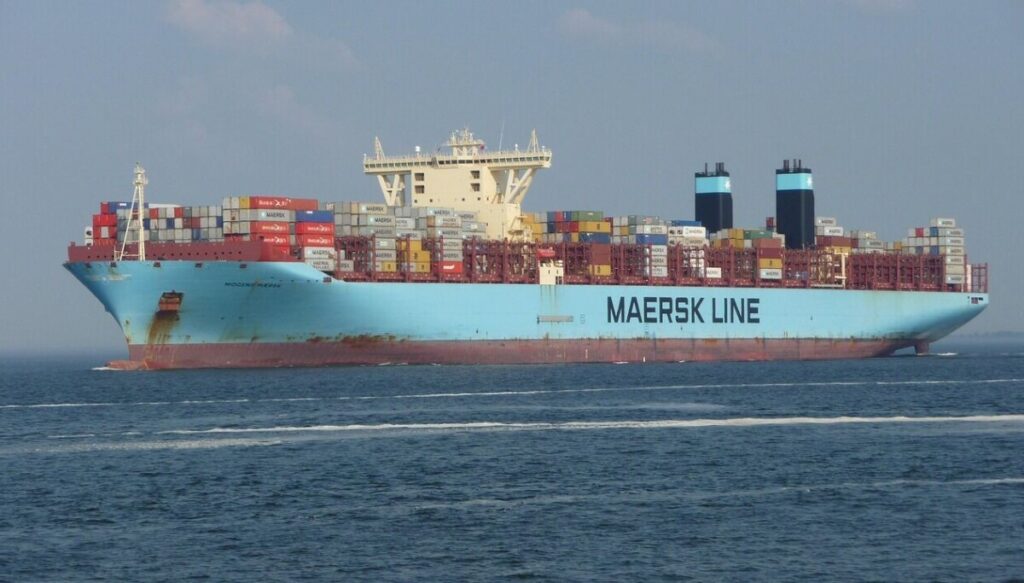
Maersk orders 26 ships adding 483,600 TEU from 2029
Benchmark Practices

Maersk orders 26 ships adding 483,600 TEU from 2029

Maersk has ordered 26 container ships with a combined capacity of about 483,600 TEU, scheduled for delivery in 2029 and 2030 as part of its fleet renewal strategy. The order will not ease near-term pressure: congestion at Asian ports has left roughly 8.5% of the global container fleet unavailable, equal to about 3m TEU, and schedule reliability fell below 50% in August, its lowest since September 2022, with vessels arriving an average of 6.8 days late. Cleveland Group's Hayley Hedley warns the newbuilds change nothing for importers this winter and urges shippers to track individual vessels rather than rely on booking arrival dates.

Ryder raises 2025 outlook as used tractor prices jump 19%
Benchmark Practices

Ryder raises 2025 outlook as used tractor prices jump 19%

Ryder System raised its full-year earnings outlook after third-quarter comparable EPS reached $4.33, up 21% year over year, on revenue of $3.4 billion. Used tractor prices climbed 19% annually and 15% sequentially, while used truck prices rose 5% and 6%. Fleet Management Solutions pre-tax earnings rose 21% to $177 million as rental utilization hit 77%. Ryder added $300 million to its 2026 rental fleet investment, bringing the total to $500 million, betting on higher rental demand in 2027 even as Dedicated Transportation Solutions and Supply Chain Solutions posted uneven results.

Amazon Q3 shipping costs rise 11% as operating margin hits 13.9%
Benchmark Practices

Amazon Q3 shipping costs rise 11% as operating margin hits 13.9%

Amazon reported record third-quarter operating profitability, with operating income up 61% to $28.1 billion on revenue of $201.9 billion, even as shipping costs rose 11% year over year due to fuel inflation and higher line haul rates. Operating margin hit an all-time high of 13.9%. North America revenue reached $112.9 billion and international revenue $43.1 billion. CFO Brian Olsavsky said better inventory placement and package consolidation lowered cost to serve, while CEO Andy Jassy noted the company now runs more than 1 million robots. Amazon guided fourth-quarter sales to $240 billion-$247 billion.

Welcome Back!

Login to your account below

Create New Account!

Fill the forms below to register

Retrieve your password

Please enter your username or email address to reset your password.

Scan to share via WeChat

Open WeChat and scan the QR code to share

QR Code

Add New Playlist