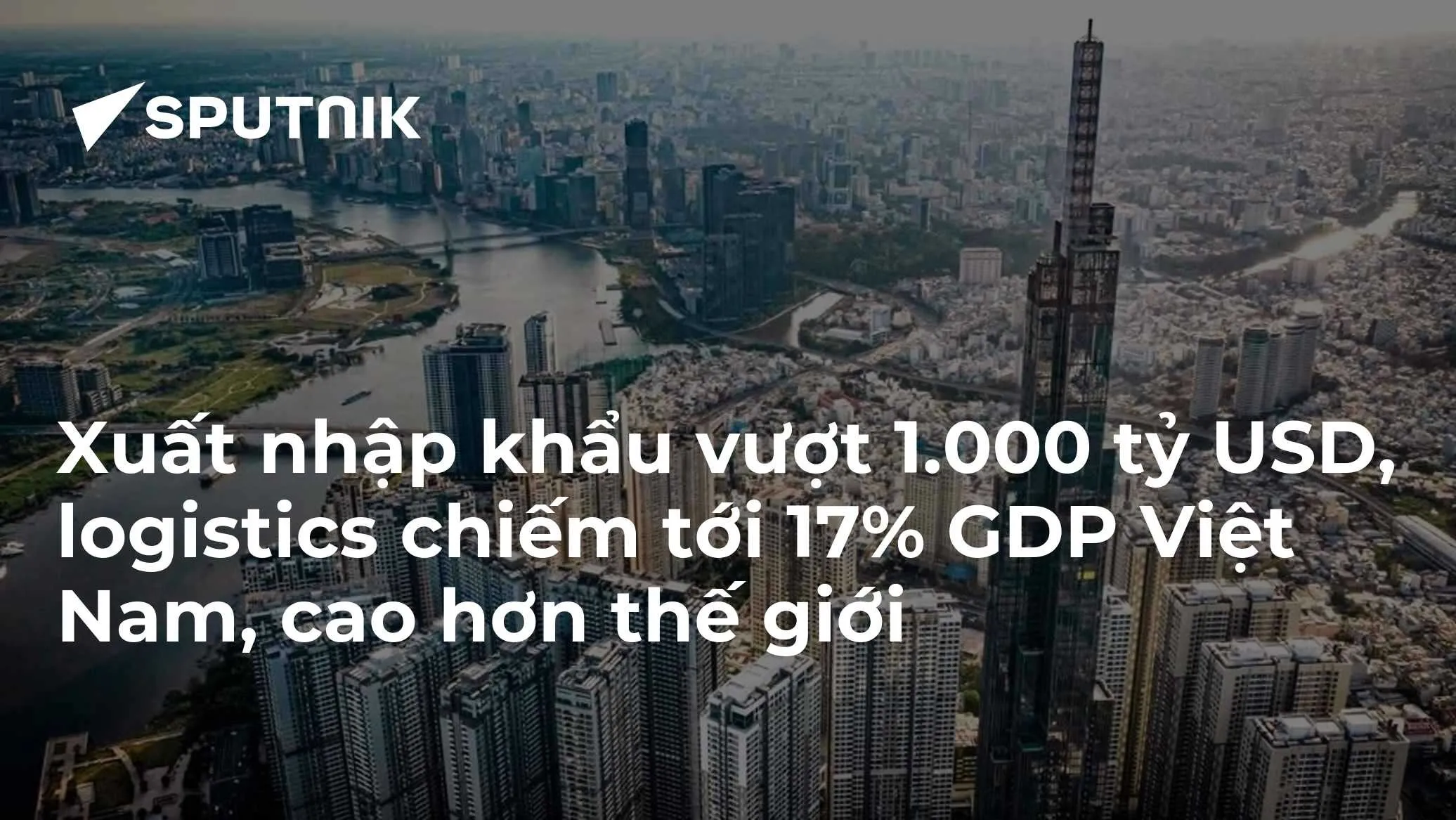
Vietnam's logistics costs stand at about 16-17% of GDP against a global average of 10-12%, Deputy Prime Minister Pham Gia Tuc told the Vietnam Logistics Forum 2026 in Gia Lai on November 7. Import-export turnover for the first ten months of 2026 reached $1,010.55 billion, up 32.3% year on year, with an October trade surplus of $7.31 billion. The government wants a national logistics coordination mechanism drafted by December 2026 and a bottleneck list by the first quarter of 2027, alongside a national logistics database pilot.
Vietnam’s logistics costs are running at roughly 16-17% of GDP, well above the global average of 10-12%, even as the country’s total goods trade surpassed $1 trillion in the first ten months of 2026, according to kevesko.vn.
The figures were presented at the Vietnam Logistics Forum 2026, held on November 7 in Gia Lai province and organized by the Ministry of Industry and Trade together with the provincial People’s Committee under the theme of connecting highland logistics to global supply chains.
Trade volume outpaces logistics capacity
Total import-export turnover for January through October 2026 reached $1,010.55 billion, up 32.3% year on year, according to figures cited at the forum. October alone produced a trade surplus of $7.31 billion.
Domestic demand indicators moved in step. Retail sales of goods and consumer service revenue were estimated to rise 14.7%, while passenger and freight transport volumes grew 16.7% and 15.5% respectively.
The logistics sector itself has been expanding at about 14-16% a year and contributes roughly 4.5-5% of GDP, the forum heard. Even so, officials judged that capacity has not kept pace with the scale of trade now flowing through the economy.
Cost gap erodes export competitiveness
Deputy Prime Minister Pham Gia Tuc, addressing the forum, said the cost differential directly inflates the price of goods and undercuts the competitiveness of import-export businesses.
“Logistics is an essential service sector, connecting production with consumption and the domestic market with the international market. A smooth logistics system not only helps reduce costs and expand exports but also enhances the economy’s self-reliance and competitiveness.” — Pham Gia Tuc, Deputy Prime Minister
Beyond high costs, the forum identified weak links between production zones, industrial parks and logistics centers on one side and seaports, railway stations and border gates on the other. Direct access to international markets remains limited, and domestic firms have not developed integrated logistics services at scale.
Deputy Minister of Industry and Trade Luong Hoang Thai said logistics should be treated as strategic soft infrastructure, and that development must follow cargo flows and economic efficiency rather than administrative boundaries. He pointed to fragmented data, weak multimodal links and slow inter-agency coordination on bottlenecks.
National coordination mechanism proposed for December
The Deputy Prime Minister directed the Ministry of Industry and Trade to review logistics business regulations, with priority on Decree 163/2017/ND-CP, and to submit to the Prime Minister in December 2026 a plan for a national logistics coordination mechanism headed by a government leader.
The Ministry of Construction, working with the industry ministry and localities, must identify a list of bottlenecks, resources and processing timelines in the first quarter of 2027, with priority given to multimodal transport to reduce reliance on road haulage.
On customs procedures, the forum proposed a single-window, single-file, single-database inspection model at border gates, with more post-clearance audit, less pre-clearance inspection and wider use of electronic documents. A national logistics database pilot is targeted for 2027, alongside green logistics development and contingency transport and warehouse capacity for essential goods.
Gia Lai positions highland corridor to the sea
Gia Lai hosted the forum on the strength of its potential to build a transport, processing and export network linking the Central Highlands to the coast. Provincial Party Secretary Thai Dai Ngoc said consolidation has given the province more room to connect western raw-material areas with seaports and production centers.
Gia Lai is home to more than 300 exporting enterprises whose goods reach about 120 countries and territories, generating over $3.5 billion in annual export turnover. The province holds the Le Thanh international border gate, Phu Cat and Pleiku airports, Quy Nhon port and the under-construction Phu My port project.
Thai Dai Ngoc said the province still needs multimodal transport, warehousing, cold storage and export services to convert those advantages into results. The Deputy Prime Minister asked the province to build an integrated chain from production and processing through preservation, transport and export, particularly along the corridor linking the highlands to Quy Nhon port.
At national level, the GoGlobal program for 2026-2030 is intended to help Vietnamese logistics firms build forwarding, warehousing and distribution networks in overseas markets, following the 2025-2035 logistics development strategy with a vision to 2050.
Source: kevesko.vn
Compiled from international media by the SCI.AI editorial team.