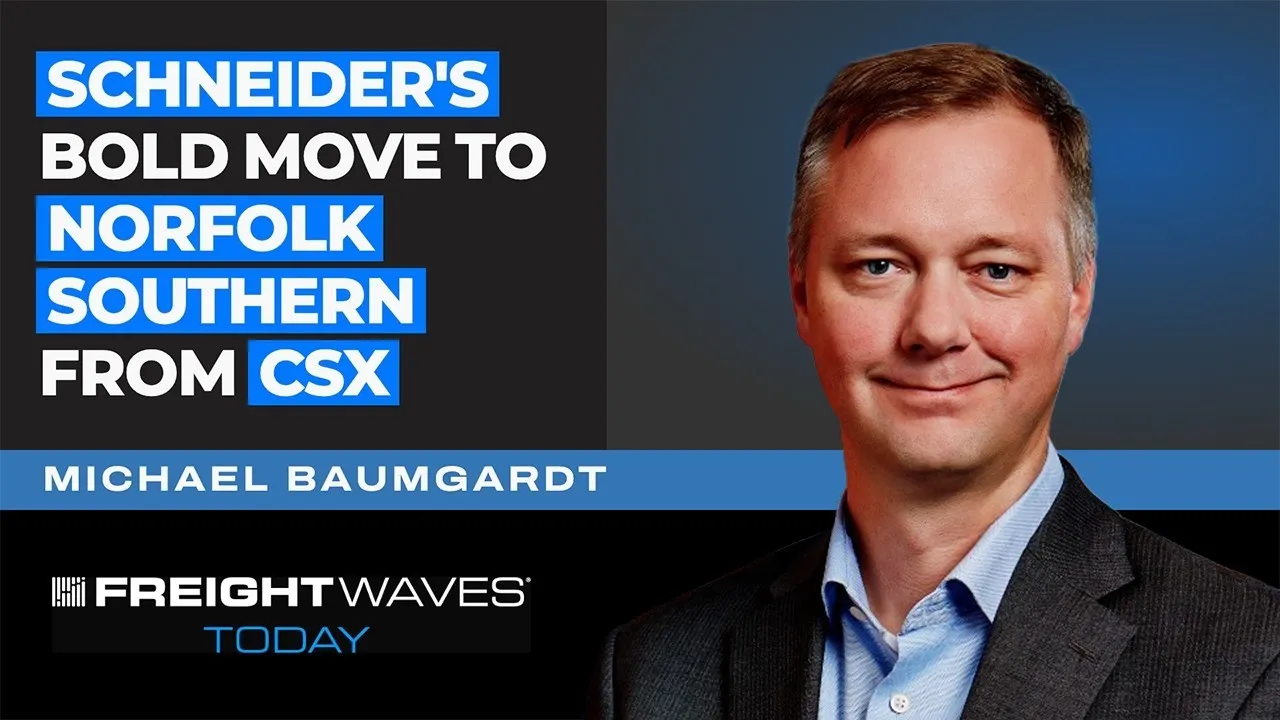
Schneider National is shifting all of its eastern intermodal rail business from CSX to Norfolk Southern, making the railroad its exclusive eastern partner alongside Union Pacific in the West. The deal was announced the same day Schneider reported third-quarter earnings. Schneider's Michael Baumgardt said the move followed an evaluation of network reach, train frequency and proximity to population centers, while Norfolk Southern's Shawn Tureman said the railroad has been building toward the partnership since doubling its intermodal franchise ambitions in 2022. Truckload rates running more than 30% above intermodal levels are adding urgency, with dray capacity and driver supply cited as the main constraints.
Schneider is making a monumental shift in its intermodal operations, moving all eastern rail business from CSX to Norfolk Southern. This strategic partnership aims to unlock significant growth, enhance capacity flexibility, and drive more freight off the roads and onto rail. Discover the full implications of this major move and what it means for the future of intermodal logistics.
Schneider National is transferring its eastern intermodal operations to Norfolk Southern, ending its prior relationship with CSX in what both companies describe as a growth-driven realignment. The deal, announced the same day Schneider reported its third-quarter earnings, positions Norfolk Southern as Schneider’s exclusive eastern rail partner alongside Union Pacific in the West.
Schneider cites network reach and train frequency in rail decision
Michael Baumgardt, Schneider’s EVP of Intermodal and Logistics, said the decision followed a lengthy evaluation focused on network reach, train frequency, and proximity to population centers.
“It starts with growth and it’s really about, okay, how can we get closer to our customers? How can we make sure that we get more truck freight off of the road and into intermodal where it makes sense?” — Michael Baumgardt, EVP of Intermodal and Logistics, Schneider
Customer response in the first 24 hours after the announcement was positive, he added, particularly around Schneider’s asset-based model featuring company drivers, company chassis, and company containers.
Norfolk Southern’s Vice President Shawn Tureman said the railroad has been building toward this moment for years, growing from the third- to the second-largest intermodal franchise in the United States by 2018. In 2022, the railroad set a new target to double its intermodal franchise again and has been directing discretionary capital toward that goal ever since.
“It’s not a question of if, but when. And the way we’re going to get there is by partnering with powerful partners like Schneider.” — Shawn Tureman, Vice President, Norfolk Southern
Rate gap of 30%-plus adds urgency to intermodal shift
The current rate environment adds urgency to the move. Truckload rates carry a 30%-plus premium over intermodal rates, making intermodal an increasingly attractive option for shippers.
Baumgardt said the primary capacity constraint is not equipment — boxes are available — but rather dray capacity and driver supply. He argued Schneider’s company-driver model gives it a structural advantage in managing that bottleneck.
Both executives said the pending Norfolk Southern-CSX merger, a topic that surfaces weekly in industry discussions, was not the driver of this agreement, though they acknowledged it could improve the product.
“The merger would be icing on the cake in terms of enhancing service, reliability, and speed.” — Michael Baumgardt, EVP of Intermodal and Logistics, Schneider
Tureman echoed that view, pointing to single-line service, shorter routes, and reduced interchange friction as potential merger benefits for Schneider’s customers.
Transition planning targets a seamless handoff
On the transition itself, both sides said planning began immediately after the agreement and that the goal is a seamless handoff. Tureman said Norfolk Southern pulled forward some infrastructure investments specifically to prepare.
“What I hope, 3 months from now, for our customers not to have noticed anything.” — Shawn Tureman, Vice President, Norfolk Southern
He added that a smooth transition would set the stage for joint sales efforts heading into what he called a strong intermodal market in 2026 and 2027.
Schneider reported earnings growth in its intermodal segment in Q3, consistent with the company’s stated growth pillars of logistics, dedicated, and intermodal. Dedicated revenue rose 3.1% in the quarter, though Baumgardt emphasized that disciplined freight selection and appropriate driver allocation remain priorities as the company manages through the current freight cycle.
- Schneider is moving its eastern intermodal rail partnership to Norfolk Southern, complementing its existing western alliance with Union Pacific.
- Norfolk Southern grew from the 3rd to 2nd largest U.S. intermodal franchise by 2018 and launched a second doubling initiative at its 2022 Investor Day.
- Truckload rates currently run more than 30% above intermodal rates, with dray and driver availability — not box count — cited as the primary capacity constraint.
Source: FreightWaves
Compiled from international media by the SCI.AI editorial team.