India's exports to China rose 36.62 percent year-on-year to $19.47 billion in the 2025-26 fiscal year, with growth of about 36 percent continuing in the April-September period, according to a Global Times report. The article examines how supply chain complementarity could help India meet Commerce and Industry Minister Piyush Goyal's goal of becoming a major exporter to China and ASEAN. It notes China's imports grew more than 20 percent year-on-year from March through September 2026, with monthly imports topping 2 trillion yuan ($300 billion) in September for the first time.
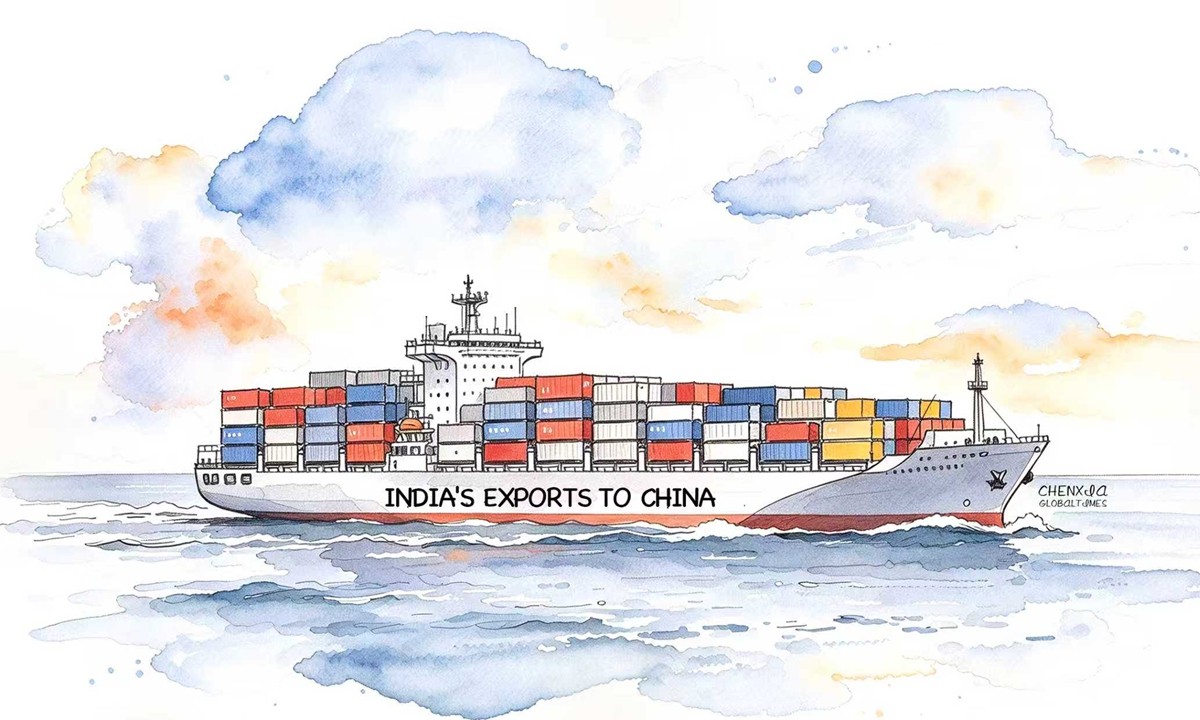
According to globaltimes.cn, India’s exports to China climbed 36.62 percent year-on-year to $19.47 billion in the 2025-26 fiscal year, a figure that has given new weight to Commerce and Industry Minister Piyush Goyal‘s stated ambition for India to become a major exporter to China and ASEAN in the years ahead.
The momentum has carried into the current fiscal year, with exports up by roughly 36 percent during the April-September period. That sustained pace, the report notes, points to the scale of the Chinese market for Indian exporters rather than a one-off surge.
The opportunity is framed against a less predictable global backdrop. With global economic growth subdued and trade policy uncertainty weighing on international commerce, access to some traditional developed markets, including the US, has become harder to forecast — making China’s import demand a notable contrast.
China’s import demand sets the scale
From March through September 2026, China’s imports grew by more than 20 percent year-on-year for the seventh consecutive month, according to the report. In September, monthly imports exceeded 2 trillion yuan (about $300 billion) for the first time.
That sustained growth reflects the scale of China’s import requirements and the openings it may create for exporters looking to diversify their markets. The source attributes part of the demand to China’s manufacturing sector, whose production generates appetite for imported raw materials including iron ore, aluminum ore and other industrial inputs.
Those materials, together with imported components and intermediate goods, enter China’s manufacturing processes and are transformed into finished or semi-finished products for domestic use and export markets. In this way, the report states, China’s manufacturing base connects suppliers around the world to global production networks.
Complementarity over zero-sum framing
For India, the report argues the opening lies in becoming a more integral part of those production networks. Closer integration with Chinese supply chains, it suggests, would let Indian firms benefit from their neighbor’s industrial growth while building their own export capacity.
The article pushes back on Western commentary that casts Indian and Chinese industrial development as a zero-sum contest in which one side’s gains come at the other’s expense. It notes that such a narrative sits uneasily with Western companies’ continued investment in China and their pursuit of its market.
“India was open to Chinese suppliers to meet its growing import needs.” — Piyush Goyal, India’s Commerce and Industry Minister
Goyal’s openness, as quoted by PTI, is presented as a starting point. The report argues that turning it into concrete action — more predictable market access and fewer unnecessary barriers for Chinese suppliers seeking to enter India — could help businesses on both sides build supply-chain links.
Two-way trade as the practical route
The benefits are described as running both ways. India can expand exports by supplying goods Chinese industry and consumers need, while imports of Chinese components and intermediate goods can help Indian manufacturers cut costs, sharpen competitiveness and scale up production.
The report cautions that lasting gains will take time to build, and that export promotion alone will not deliver India’s ambition of becoming a major exporter to China. Closer industrial integration, with two-way trade reinforcing each other, is presented as the practical way forward.
Source: globaltimes.cn
Compiled from international media by the SCI.AI editorial team.