
Skip to content

Supplier Management

Analysis

Yttrium Export Controls Raise Prices 4,400% Amid U.S. 100% Import Reliance

China’s 2025 yttrium export controls caused yttrium oxide prices to surge 4,400% and reduced U.S.-bound shipments by 75% year-on-year. The U.S. is 100% import-reliant on yttrium, with 93% historically sourced from China. USA Rare Earths produced the first commercial yttrium metal outside China in early 2026, while GE Vernova stockpiled material and tested substitutes. New domestic separation capacity remains years away, creating a persistent bottleneck. The October 3, 2026 report underscores yttrium’s role in jet engines, semiconductors, LEDs, and defense lasers.

Original source: rareearthexchanges.com

Yttrium Export Controls Raise Prices 4,400% Amid U.S. 100% Import Reliance

Ask SCI.AI about this story

📋 本文要点

China’s 2025 yttrium export controls caused yttrium oxide prices to surge 4,400% and reduced U.S.-bound shipments by 75% year-on-year. The U.S. is 100% import-reliant on yttrium, with 93% historically sourced from China. USA Rare Earths produced the first commercial yttrium metal outside China in early 2026, while GE Vernova stockpiled material and tested substitutes. New domestic separation capacity remains years away, creating a persistent bottleneck. The October 3, 2026 report underscores yttrium’s role in jet engines, semiconductors, LEDs, and defense lasers.

According to rareearthexchanges.com, China’s 2025 yttrium export restrictions triggered a 4,400% surge in yttrium oxide prices and cut U.S.-bound shipments by 75% year-on-year — while the United States remains 100% import-reliant on yttrium, with roughly 93% historically sourced from China.

Strategic Vulnerability in Critical Materials

The U.S. has no domestic yttrium production capacity and depends entirely on foreign supply, making it acutely exposed to geopolitical disruptions. As noted in the October 3, 2026 report, this total import reliance creates an immediate vulnerability: when China imposed export controls in 2025, downstream industries faced abrupt shortages and cost shocks. Yttrium underpins high-value applications including jet engine thermal-barrier coatings, semiconductor etch chambers, white LED phosphors, and Nd:YAG defense lasers — all of which are essential to aerospace, defense, and clean energy technology sectors.

The report emphasizes that even if new mines open in the U.S. or allied countries, new domestic separation and processing capacity would take years to scale — leaving a critical bottleneck in the middle of the supply chain. This gap persists despite recent progress: USA Rare Earths produced the first commercial yttrium metal outside China in early 2026.

GE Vernova responded proactively by stockpiling yttrium and testing substitute materials, underscoring industry-level contingency planning amid tightening constraints. The report stresses that such measures remain stopgaps — not structural solutions — given yttrium’s irreplaceable functional properties in key defense and electronics applications.

Market Response and Industrial Adaptation

Price volatility intensified rapidly after the 2025 controls: yttrium oxide prices rose 4,400%, reflecting both scarcity and strategic demand compression. Concurrently, U.S.-bound yttrium shipments fell 75% year-on-year — a quantifiable disruption confirmed by trade data cited in the analysis. The report notes that firms like Lynas Rare Earths and MP Materials — named as popular organizations in the source — operate outside China but do not yet produce yttrium at commercial scale.

China Northern Rare Earth Group and Baogang Group, both highlighted in the source as key players, continue to dominate global yttrium refining. Meanwhile, the European Union, South Korea, and the United States are accelerating assessments of domestic processing pathways — though none have achieved operational yttrium metal production beyond pilot scale as of 2026.

According to the report, the shortage has already altered procurement timelines and R&D priorities across aerospace, automotive, and healthcare technology sectors. One forum moderator — identified in the source as having authored 6,082 messages — summarized the impact concisely:

“China’s 2025 yttrium export restrictions sent prices up 4,400% and cut U.S. shipments 75%. Here’s why this obscure rare earth threatens aerospace, chips.”

Source: rareearthexchanges.com

Compiled from international media by the SCI.AI editorial team.
Ask SCI.AI Finished reading? Continue with SCI.AI. Explore the related policy, route, company and historical context. Continue asking
Stay ahead of supply chain shifts

One email a week: the stories that matter and new risk events — in English, free.

Prefer RSS? Articles Risk events

India eyes China export growth as shipments rise 36.62%
Supplier Management

India eyes China export growth as shipments rise 36.62%

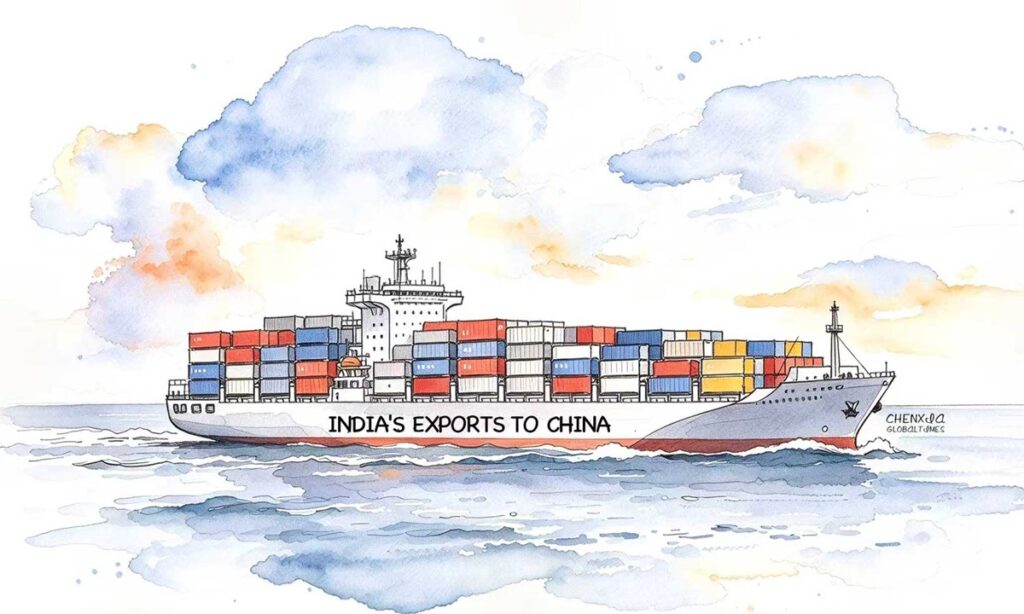
India's exports to China rose 36.62 percent year-on-year to $19.47 billion in the 2025-26 fiscal year, with growth of about 36 percent continuing in the April-September period, according to a Global Times report. The article examines how supply chain complementarity could help India meet Commerce and Industry Minister Piyush Goyal's goal of becoming a major exporter to China and ASEAN. It notes China's imports grew more than 20 percent year-on-year from March through September 2026, with monthly imports topping 2 trillion yuan ($300 billion) in September for the first time.

C.H. Robinson: 5 external forces raise supply chain costs in 2027
Supplier Management

C.H. Robinson: 5 external forces raise supply chain costs in 2027

A 2027 Freight Market Outlook Report from C.H. Robinson—released Oct 14, 2026—identifies five external forces reshaping global supply chains in 2027: transportation regulations, legal and liability changes, capacity growth constraints, extreme weather (including a strong El Niño), and geopolitical tensions. These forces are projected to increase operating costs, disrupt ports and inland networks, and redirect freight flows. The report urges shippers to monitor supply-demand imbalances in real time and adapt strategies continuously. Full findings are available on C.H. Robinson’s website.

2027 Supply Chains Reshaped by Geopolitics, Weather, and 78% Fertilizer Cost Surge
Supplier Management

2027 Supply Chains Reshaped by Geopolitics, Weather, and 78% Fertilizer Cost Surge

C.H. Robinson’s 2027 Freight Market Outlook Report identifies geopolitical conflict, climate disruptions, and regulatory shifts as primary external forces reshaping global supply chains. Input costs have surged 78% for fertilizer and 66% for pesticides since 2020, forcing operational overhauls. The report highlights how conflict in key corridors, trade realignments, and extreme weather are testing long-held logistics assumptions. Bob Carpenter, CEO of GS1 US, noted that geopolitical tension and supply chain disruptions are compelling organizations to transform strategies. The 2024 startup awards drew 400 applications from 12 countries, reflecting growing innovation pressure.

Welcome Back!

Login to your account below

Create New Account!

Fill the forms below to register

Retrieve your password

Please enter your username or email address to reset your password.

Scan to share via WeChat

Open WeChat and scan the QR code to share

QR Code

Add New Playlist