The Port of Los Angeles moved a record 1.42 million TEUs in September — the highest monthly volume ever in the Western Hemisphere. September imports hit 546,000 loaded TEUs (+19% YoY), exports rose 10% to 126,000 TEUs, and empty container handling reached 371,000 units. Through September 2026, volume totaled nearly 8.1 million TEUs (+3% vs. 2025). Vietnam is now the port’s second-largest trading partner; China’s share fell from 60% to 40%. Tariff uncertainty remains a top planning risk, with October volume forecast at 900,000 TEUs.
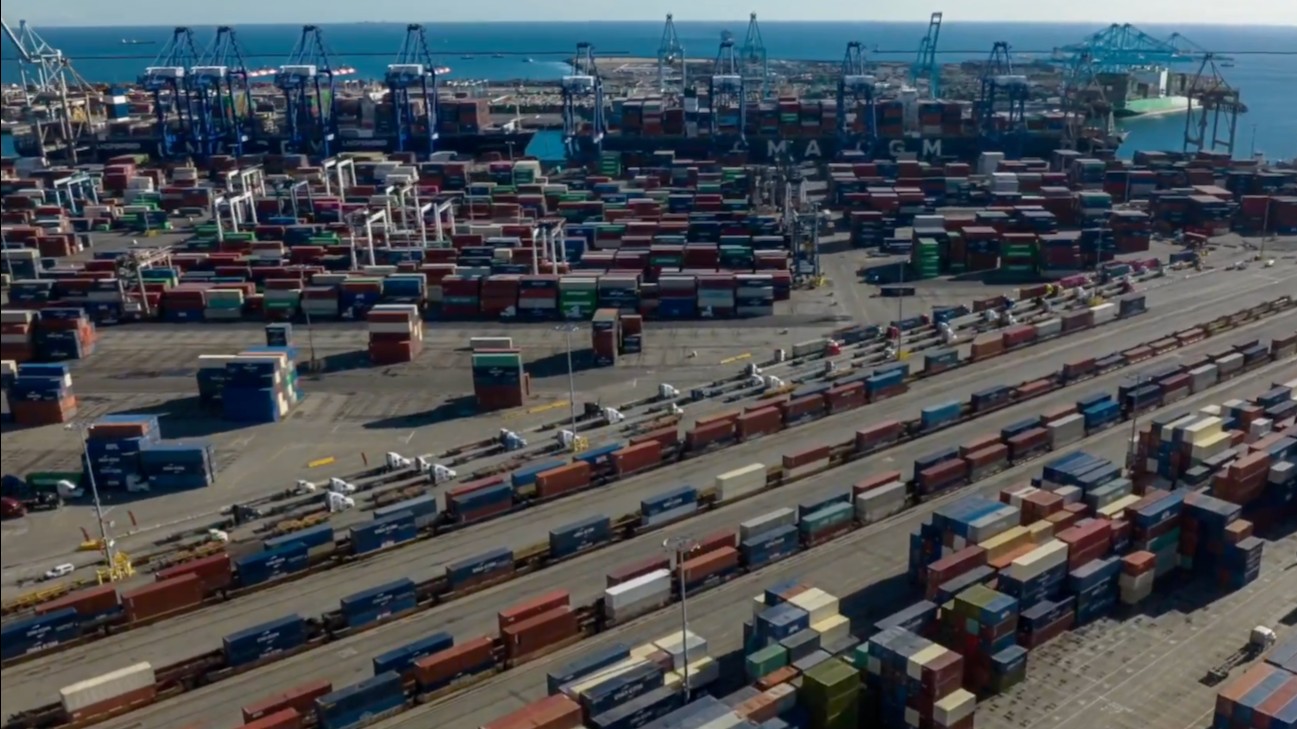
According to www.freightwaves.com, the Port of Los Angeles handled 1.42 million TEUs in September — its highest single-month volume ever and the largest monthly total recorded by any port in the Western Hemisphere.
Record Volumes Amid Shifting Trade Routes
Executive Director Gene Seroka attributed the surge to lower tariff levels, resilient U.S. consumer demand, and cargo rerouting away from the constrained Panama Canal and Suez Canal. September imports totaled 546,000 loaded TEUs — up 19% year over year and 26% above the port’s five-year average. Exports rose 10% to 126,000 loaded TEUs, while the port processed a record 371,000 empty containers as carriers repositioned equipment to Asia.
The July–September quarter moved nearly 3 million TEUs — the port’s strongest quarter on record — and the June–September period totaled nearly 4 million containers. Through September 2026, cumulative volume stood at nearly 8.1 million TEUs, up about 3% from the same period in 2025.
Seroka projected October volume at approximately 900,000 TEUs, citing typhoon-related schedule disruptions in Asia, pre-holiday cargo “roll pools” ahead of China’s National Day, and ongoing holiday-season replenishment as sustaining factors.
Trading Partner Shifts and Sourcing Realities
Seroka confirmed that Vietnam is now the Port of Los Angeles’ second-largest trading partner, behind China, and that Thailand has entered the port’s top five for the first time. Vietnam-origin volume through Los Angeles has quadrupled over the past decade. Meanwhile, China’s share of port business has declined from 60% to 40%, though Seroka noted diversification has been slower than many importers would prefer.
Harvard Business School Professor Willy Shih, speaking at the same media briefing, observed that companies are increasingly “optimizing for options” rather than lowest cost due to unpredictable policy shifts. He emphasized that apparent moves away from China often reflect changes in final assembly locations — not reduced upstream dependence — since Vietnam and Mexico still rely heavily on Chinese components.
“Building comparable supplier networks in Mexico could take about a decade.” — Willy Shih, Professor, Harvard Business School
Tariff Uncertainty and Operational Conditions
Seroka stressed that tariffs remain a central source of planning uncertainty, forcing importers to make rapid decisions based on cost, demand forecasts, and looming policy deadlines. While purchase orders in Asia remain solid, he described November and December as particularly difficult to forecast. Ocean carriers and shippers are also shifting more cargo to Los Angeles from Panama Canal routings due to drought-related constraints and higher fuel costs linked to Middle East conflict.
He noted that shorter, faster transits have gained strategic value. Operationally, the port is running smoothly: truck turn times are healthy, and large vessels complete turns in about four days. However, rail dwell times require close monitoring as holiday cargo moves inland.
Source: FreightWaves
Compiled from international media by the SCI.AI editorial team.