Skip to content

Supply Chain Finance

Analysis

GE Aerospace raises India supply chain spend to $400M by 2030

GE Aerospace will increase its India supply chain spending from USD 200 million in 2025 to USD 400 million by 2030. The company invests USD 255 million in its Pune facility and works with 17 global and over 2,000 local Indian suppliers. With 1,400+ commercial and 200+ defence engines operating in India, and 3,200+26 GE and partner engines on order as of 2026, demand is surging. India’s domestic air traffic—340 million in FY26—is projected to reach 1.1 billion by 2040.

Original source: m.economictimes.com

GE Aerospace raises India supply chain spend to $400M by 2030
📋 本文要点

GE Aerospace will increase its India supply chain spending from USD 200 million in 2025 to USD 400 million by 2030. The company invests USD 255 million in its Pune facility and works with 17 global and over 2,000 local Indian suppliers. With 1,400+ commercial and 200+ defence engines operating in India, and 3,200+26 GE and partner engines on order as of 2026, demand is surging. India’s domestic air traffic—340 million in FY26—is projected to reach 1.1 billion by 2040.

According to m.economictimes.com, GE Aerospace plans to raise its India supply chain spending from USD 200 million in 2025 to USD 400 million by 2030, nearly doubling its investment as it expands component sourcing from the country.

Expanded Local Sourcing and Manufacturing Footprint

The company’s Pune manufacturing facility produces aero engine components and serves as a global sourcing base. To date, GE Aerospace has invested USD 255 million in that facility. It also operates a technology centre in Bengaluru, established in 2000, which developed the Analytics-Based Maintenance (ABM.ai) platform and pioneered the Blade Inspection Tool (BIT) across multiple engine platforms. The Bengaluru centre holds over 1,000 patents and functions as a Global Capability Centre for digital operations.

GE Aerospace currently sources from 17 global suppliers based in India—including Tata Group, Mahindra, HAL, and Godrej—as well as more than 2,000 local suppliers. Its Indian operations support both civil aviation and defence segments, with over 1,400 commercial engines and more than 200 defence engines currently in service across the country.

Growth Driven by Domestic Aviation Expansion

India’s domestic passenger traffic reached 340 million in FY26, and is projected to climb to 1.1 billion by 2040, reinforcing demand for new aircraft and engines. According to the report ‘Powering Progress: GE Aerospace’s Economic Impact in India’, prepared with EY India, Indian airlines have ordered 1,700+ new aircraft expected to enter service over the next decade—most powered by GE Aerospace and partner engines.

The report states:

“As of 2026, 3,200+26 GE Aerospace and partner engines are on order by Indian carriers,”

reflecting strong near-term demand. In July 2026, IndiGo signed an MoU with CFM International—a joint venture between GE Aerospace and Safran—for over 1,000 LEAP-1A engines to power 510 Airbus A320neo-family aircraft.

Digital Capabilities Supporting Global Operations

GE Aerospace’s Digital Technology (DT) team in India supports global supply chain, MRO, and sales operations using applied AI, predictive analytics, and optimization tools. This GCC model enables real-time decision-making across geographies. For example, ABM.ai provides predictive insights that allow airlines to proactively schedule maintenance and reduce unscheduled engine removals—directly improving fleet reliability and reducing downtime.

Vikram Rai, CEO of GE Aerospace South Asia, said the spending increase reflects the company’s long-term commitment to India’s growing aviation ecosystem. The report underscores how localized R&D, manufacturing, and digital infrastructure collectively strengthen GE Aerospace’s global supply chain resilience and responsiveness.

Source: m.economictimes.com

Compiled from international media by the SCI.AI editorial team.

Ask SCI.AI Finished reading? Continue with SCI.AI. Explore the related policy, route, company and historical context. Continue asking
Nippon Express acquires Metro Supply Chain for $1B
Supply Chain Finance

Nippon Express acquires Metro Supply Chain for $1B

Nippon Express Holdings completed its acquisition of Canada-based Metro Supply Chain Group on 1 October 2026. The deal values Metro at approximately US$1 billion, based on its CAD 1.38 billion revenue for the fiscal year ending 30 September 2025 and CAD 56.4 million operating profit. The integration establishes Metro as a key platform for Nippon Express’s global contract logistics, spanning Canada, the United States, and the United Kingdom. The companies held a closing ceremony in Montreal on 7 October, attended by executives including Satoshi Horikiri and Chiko Nanji.

IFC, SMBC launch $500M supply chain finance facility
Supply Chain Finance

IFC, SMBC launch $500M supply chain finance facility

The International Finance Corporation (IFC) and SMBC have launched a $500 million supply chain finance facility to improve working capital access for SMEs in emerging markets. IFC contributes $250 million, SMBC matches it with $250 million, and the facility operates through IFC’s Global Supply Chain Finance (GSCF) programme, launched in 2023. It has already enabled over $3.8 billion in supplier finance transactions. The first anchor buyer is a large food manufacturer in Latin America. The model leverages buyer credit strength to extend early invoice payments to suppliers lacking formal banking access.

US-China Tariff Relief Covers $30B Goods, Alters Logistics Math
Supply Chain Finance

US-China Tariff Relief Covers $30B Goods, Alters Logistics Math

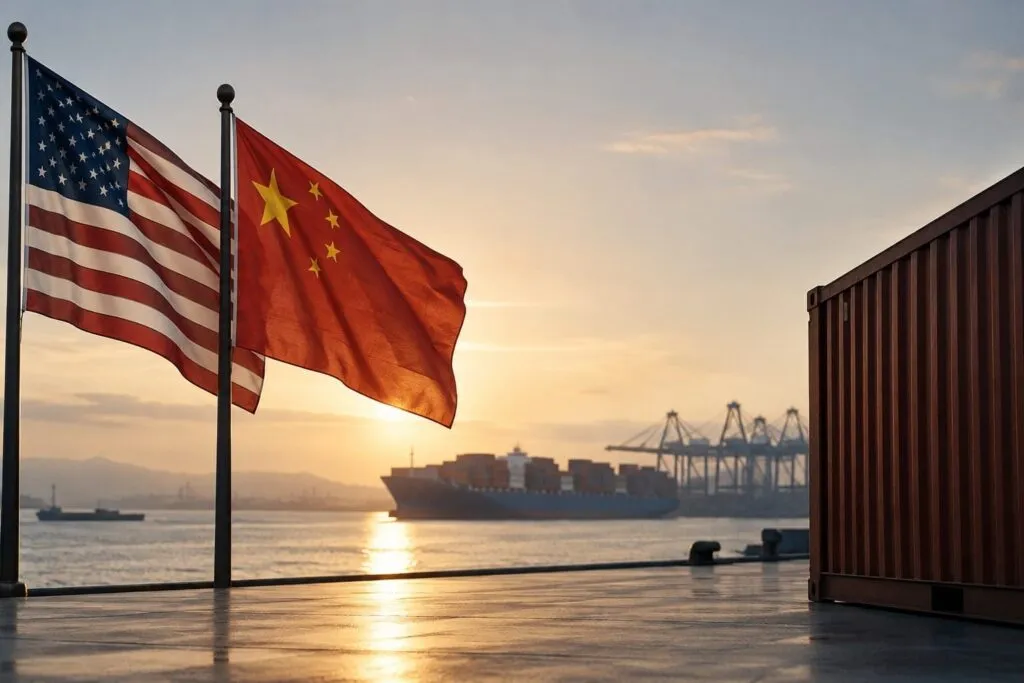
The latest U.S.-China tariff agreement covers $30 billion of imports in each direction, with the U.S. listing 77 Chinese product categories and China listing 1,619 U.S. categories. Over 90% of covered Chinese-listed goods may return to most-favored-nation rates, though implementation remains pending. U.S. containerized imports hit 2.6 million TEUs in August, with China contributing 884,000 TEUs — the largest origin but with a declining share. The shift underscores a move from country-level sourcing decisions to SKU- and component-level logistics economics, embedding trade policy directly into freight demand, inventory planning, and network design.

Welcome Back!

Login to your account below

Create New Account!

Fill the forms below to register

Retrieve your password

Please enter your username or email address to reset your password.

Scan to share via WeChat

Open WeChat and scan the QR code to share

QR Code

Add New Playlist