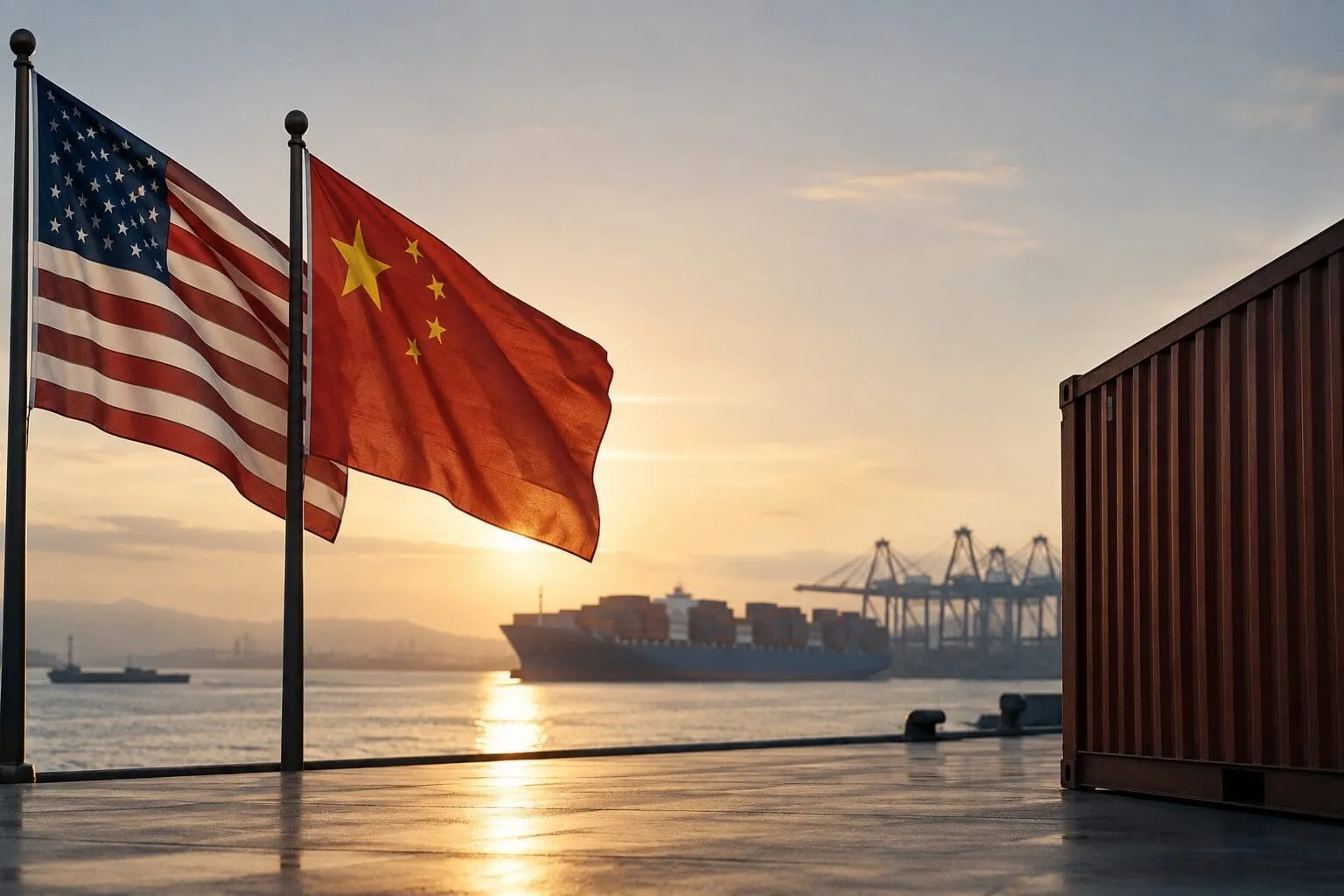
According to logisticsviewpoints.com, the latest U.S.-China tariff agreement covers approximately $30 billion of imports in each direction but does not reset broader supply chain strategy.
Tariff Lists and Implementation Status
The United States has published a list of 77 categories of Chinese goods eligible for relief, while China’s list covers 1,619 categories of U.S. products. Beijing stated that more than 90% of the products on its list could have additional tariffs removed and revert to standard most-favored-nation rates. However, publication of the lists does not mean immediate effect: both governments must still complete domestic implementation procedures, and no comprehensive effective date has been announced.
For importers and exporters, this timing gap is operationally critical — purchase orders, production schedules, and ocean transit timelines continue advancing while policy remains pending. The arrangement excludes strategic sectors including semiconductors, batteries, and electric vehicles, and the overall tariff structure remains significantly tighter than pre-conflict levels.
This is not a broad normalization of trade but a targeted recalibration of landed-cost economics for specific products already embedded in restructured supply chains — making it fundamentally a story about network economics rather than high-level diplomacy.
From Country-Level to SKU-Level Decision Making
The U.S. list includes consumer goods such as toys, blankets, tableware, artificial flowers, child safety seats, and holiday decorations. China’s list is far broader, covering agricultural products, meat, seafood, dairy, timber, personal-care items, medical equipment, and coal. These disparate items map into radically different logistics networks: containerized transpacific routes for consumer goods; grain elevators, railroads, barges, and cold storage for agriculture; bulk terminals and rail capacity for coal.
A tariff change therefore alters more than border duties — it reshapes supplier selection, freight mode choice, inventory planning, port allocation, and inland corridor demand. For example, a policy decision in Washington or Beijing can translate directly into additional container bookings from Shenzhen, intermodal volume in Chicago, grain movements on the Mississippi River, or refrigerated capacity demand at Gulf Coast ports.
Companies now manage landed cost — a composite of manufacturing cost, duties, freight, drayage, brokerage, inventory carrying cost, lead time, and service risk — while increasingly assigning explicit value to policy uncertainty itself.
Impact on Sourcing and Network Design
U.S. containerized imports reached approximately 2.6 million TEUs in August — among the highest monthly totals on record — with China accounting for roughly 884,000 TEUs. Though China remained the largest origin, its share continued edging lower as volumes from Vietnam, Thailand, and Indonesia increased. This reflects diversification, not decoupling: the ‘China-plus-one’ model remains dominant.
A retailer that shifted household product production from China to Vietnam due to elevated tariffs may now reconsider the original supplier if the tariff differential narrows substantially — particularly given China’s manufacturing scale, established tooling, dense supplier ecosystems, and superior port connectivity. Yet diversification may still deliver resilience benefits worth preserving even after tariff advantages fade.
Similarly, China’s agricultural relief list includes wheat, corn, sorghum, meat, seafood, dairy, soybean oil, and soybean meal — while commercial soybeans remain excluded. That distinction matters because shifts in Chinese purchasing patterns rapidly propagate into transportation infrastructure utilization, affecting grain elevators, barge movements, and railroad capacity.
Source: logisticsviewpoints.com
Compiled from international media by the SCI.AI editorial team.