Skip to content

Supply Chain Finance

Analysis

IFC, SMBC launch $500M supply chain finance facility

The International Finance Corporation (IFC) and SMBC have launched a $500 million supply chain finance facility to improve working capital access for SMEs in emerging markets. IFC contributes $250 million, SMBC matches it with $250 million, and the facility operates through IFC’s Global Supply Chain Finance (GSCF) programme, launched in 2023. It has already enabled over $3.8 billion in supplier finance transactions. The first anchor buyer is a large food manufacturer in Latin America. The model leverages buyer credit strength to extend early invoice payments to suppliers lacking formal banking access.

Original source: africabusinesscommunities.com

IFC, SMBC launch $500M supply chain finance facility

Ask SCI.AI about this story

📋 本文要点

The International Finance Corporation (IFC) and SMBC have launched a $500 million supply chain finance facility to improve working capital access for SMEs in emerging markets. IFC contributes $250 million, SMBC matches it with $250 million, and the facility operates through IFC’s Global Supply Chain Finance (GSCF) programme, launched in 2023. It has already enabled over $3.8 billion in supplier finance transactions. The first anchor buyer is a large food manufacturer in Latin America. The model leverages buyer credit strength to extend early invoice payments to suppliers lacking formal banking access.

According to africabusinesscommunities.com, the International Finance Corporation (IFC) and Sumitomo Mitsui Banking Corporation (SMBC) have launched a $500 million supply chain finance facility to expand access to working capital for small and medium-sized enterprises in emerging markets.

$500 million facility targets emerging-market supply chains

The facility links financing to the credit strength of large anchor buyers rather than the individual financial profiles of their suppliers. This structure enables SMEs—including many with limited formal credit histories—to receive early payment on approved invoices at more favorable rates. IFC will provide up to $250 million in direct funding, while SMBC contributes an equal $250 million, allowing for longer financing periods and higher transaction volumes across supplier networks.

The first anchor buyer is a large food manufacturer in Latin America. The model is designed for replication across additional buyers, sectors, and markets, with geographic scope explicitly including Latin America as the initial deployment region.

According to the report, the facility was structured through IFC’s Global Supply Chain Finance (GSCF) programme, which launched in 2023 and has already supported over $3.8 billion in supplier finance transactions globally.

Supply chain finance aims to strengthen SME resilience

The source states that limited access to finance remains a major constraint for businesses in emerging markets, where the MSME finance gap is measured in trillions of dollars. Many smaller businesses lack the documented financial histories required to access formal banking services. The facility creates a verifiable transaction record for participating suppliers, beginning with early payment within days of invoice approval by the buyer.

Nathalie Louat, Global Director for Trade and Supply Chain Finance at IFC, said:

“Supply chain finance is one of the most effective tools to put working capital directly in the hands of small businesses in emerging markets — quickly, affordably, and at scale. By partnering with SMBC and leveraging the creditworthiness of established buyers, we can reach suppliers that the market alone would not serve, giving them not just liquidity today, but the financial footing to grow their businesses and create jobs.” — Nathalie Louat, Global Director for Trade and Supply Chain Finance at IFC

Priyamvada Singh, Global Head of Sales, Global Trade Finance, SMBC, added:

“Supporting resilient global supply chains is a key priority for SMBC. Our partnership with IFC enhances our ability to provide working capital solutions to suppliers, enabling them to manage liquidity more effectively, support business growth, and contribute to the stability and efficiency of global trade and supply chains.” — Priyamvada Singh, Global Head of Sales, Global Trade Finance, SMBC

Source: africabusinesscommunities.com

Compiled from international media by the SCI.AI editorial team.

Ask SCI.AI Finished reading? Continue with SCI.AI. Explore the related policy, route, company and historical context. Continue asking
Stay ahead of supply chain shifts

One email a week: the stories that matter and new risk events — in English, free.

Prefer RSS? Articles Risk events

83% of supply chain staff unprepared for AI, adoption scores 1.94
Supply Chain Finance

83% of supply chain staff unprepared for AI, adoption scores 1.94

Supply chain organizations are adopting artificial intelligence faster than they are preparing workers to use it, according to research from the Association for Supply Chain Management and the Digital Supply Chain Institute. The Oct. 14 report found 83% of respondents consider their workforce unprepared, while 91% plan to use AI to support employees and only 14% feel fully prepared. Average adoption across 13 supply chain functions scored 1.94 on a five-point scale, with demand planning highest at 2.28 and reverse logistics lowest at 1.59. AI-ready organizations reported a 71% project success rate versus 28% for unprepared ones. Skills shortages and unclear business cases tied as top barriers at 33% each.

Griffin flags AI bubble as Anthropic posts $80.7B loss
Supply Chain Finance

Griffin flags AI bubble as Anthropic posts $80.7B loss

Citadel founder Ken Griffin told the Future of Global Markets Conference in New York on October 20 that companies are questioning whether AI spending justifies its cost. The stakes are visible in Anthropic's draft IPO prospectus, which Reuters reported shows an $80.7 billion net loss for the first half of 2026, including a $72 billion noncash charge, alongside commitments of at least $518 billion over a decade for cloud and computing infrastructure. For supply chain operators, the question is whether AI-enabled TMS, WMS and planning tools change operating decisions — freight cost, throughput, inventory — rather than simply speeding up individual tasks.

Hapag-Lloyd revises ZIM bid with new Asia route, modern fleet
Supply Chain Finance

Hapag-Lloyd revises ZIM bid with new Asia route, modern fleet

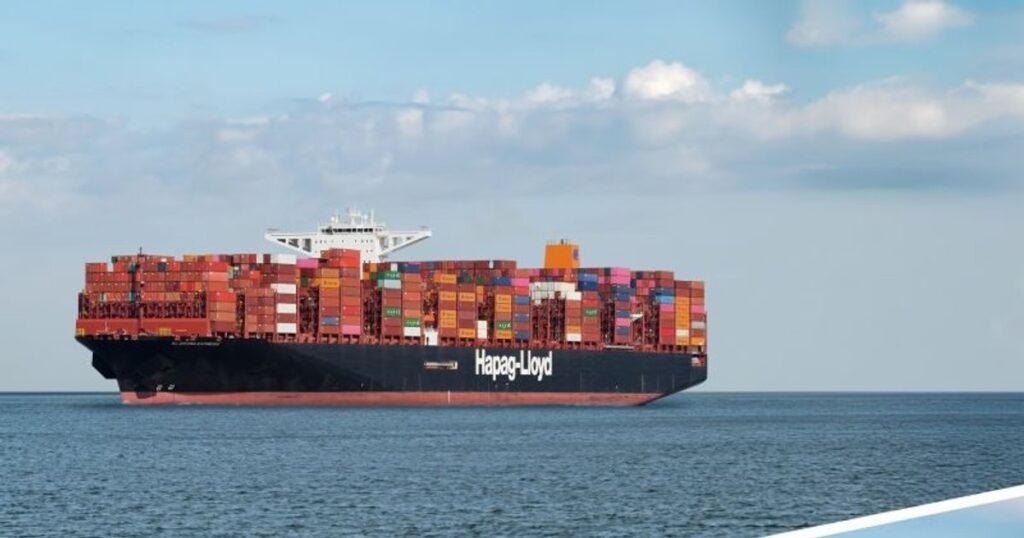
Hapag-Lloyd has revised its acquisition bid for Israel’s ZIM to meet Israeli regulatory requirements, adding an additional Asia-bound liner route and a new modern fleet for ZIM Israel. The updated proposal includes major investments in Israeli maritime personnel to retain domestic expertise and strengthen national shipping capabilities. CEO Rolf Habben Jansen stated the changes deliver 'materially more maritime independence' and address national security needs highlighted over the past three years. Originally announced in February 2026 with a late-2026 closing target, the deal’s timeline remains uncertain amid 'complex and highly detailed' negotiations.

Welcome Back!

Login to your account below

Create New Account!

Fill the forms below to register

Retrieve your password

Please enter your username or email address to reset your password.

Scan to share via WeChat

Open WeChat and scan the QR code to share

QR Code

Add New Playlist