Skip to content

Disruptions

Analysis

India’s Exporters Face Empty Container Shortage at Nhava Sheva Port

Indian exporters face a critical shortage of empty containers at Nhava Sheva Port (JNPA), with 40ft boxes especially scarce. The port handled a record 832,000 teu in August — up 12% month on month and 20% year on year — and exported more containers than it imported, a rare occurrence. August goods exports rose 26.12% year on year. CMA CGM and Hapag-Lloyd are among carriers affected, while ICEGATE system failures have halted cargo clearances. Stakeholders cite vessel schedule disruption and surging US-bound exports as root causes.

Original source: Source information pending

India’s Exporters Face Empty Container Shortage at Nhava Sheva Port

According to The Loadstar, Indian exporters are confronting a severe shortage of empty containers at Jawaharlal Nehru Port Authority (JNPA), also known as Nhava Sheva Port, amid widespread vessel schedule disruptions that have thrown container equipment cycles off balance.

Acute Shortage Affects Major Carriers

The shortage is especially acute for French liner CMA CGM, though it impacts most carriers operating at JNPA. Container depots in and around Nhava Sheva Port have informed customers they cannot offer pick-ups of empties for CMA CGM. Freight station service provider Seabird confirmed the operational strain:

“Despite vehicles being sent to the yards and waiting in long queues, containers are still not being released due to the ongoing shortage. This situation is beyond our control and may result in delays or failure to complete the pick-up within the required timeline.”

The scarcity is most pronounced for 40ft boxes, with one source reporting difficulty securing empties for bookings with Hapag-Lloyd at multiple inland container depots (ICDs) across northern India. As India remains historically a deficit region for ocean containers, repositioning and imports from the Far East constitute the primary replenishment sources for container lines.

Industry stakeholders attribute the equipment crunch to two interlinked factors: disrupted equipment inventory cycles caused by deteriorating service reliability, and surging demand for Indian exports — particularly last month’s stronger-than-anticipated rush of shipments bound for the US, where 40ft boxes are predominantly used.

Record Throughput Amid Trade Imbalance

JNPA recorded record container throughput in August, handling 832,000 teu — an increase of 12% month on month and 20% year on year, according to official port data. Notably, the port handled more export containers than imported boxes — a rare trade pattern at Indian gateways.

This surge aligns with robust national export performance: India’s overall goods export trade by value grew by 26.12% in August, government data shows. SC Ralhan, president of the Federation of Indian Export Organisations, stated:

“The 26.12% growth in August is a very encouraging performance, and yet again reflects the resilience, competitiveness, and adaptability of Indian exporters.”

Ralhan also emphasized market diversification, adding:

“Equally significant is the broadening of India’s export markets, which indicates that our exporters are increasingly leveraging new and emerging opportunities while strengthening their presence in traditional markets.”

Compounding Digital and Regulatory Bottlenecks

Beyond physical equipment shortages, digital infrastructure failures are impeding cargo movement. Importers and customs brokers report persistent glitches on ICEGATE — Indian Customs’ integrated electronic gateway portal — resulting in widespread manifest filing failures and system errors.

The Brihanmumbai Custom Brokers’ Association reported that clearance of cargo covered by affected manifests has come to a complete standstill, exposing importers to major penalty consequences. These concurrent supply chain hurdles — from container scarcity to platform unreliability — are collectively constraining the pace of cargo volumes moving in and out of Indian ports.

Source: The Loadstar

Compiled from international media by the SCI.AI editorial team.
Ask SCI.AI Finished reading? Continue with SCI.AI. Explore the related policy, route, company and historical context. Continue asking
Record-Low Rhine Levels Choke Barge Traffic, Stress Ground Transport
Disruptions

Record-Low Rhine Levels Choke Barge Traffic, Stress Ground Transport

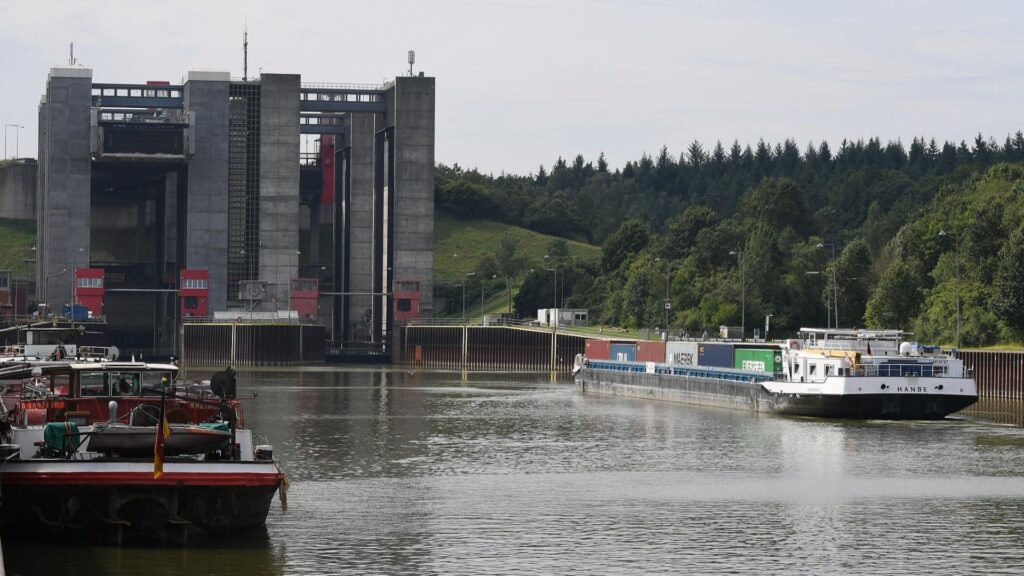
Record-low Rhine River water levels — falling to 32 cm at Kaub on September 15, 2026, the lowest since 1920 — are crippling barge traffic. Navigation restrictions took effect on September 10, 2026, forcing up to 40% load reductions and diverting 1.7 million tons of freight to roads and rails. Chemical and energy sectors report steep shipment declines: BASF cut ammonia barge deliveries by 12%, while coal deliveries dropped 31%. Rhine freight volumes fell 37% YoY in mid-September, with levels expected to stay below 50 cm through October 2026.

Supertanker Shortage Pushes Oil Freight to $1.2M/Day
Disruptions

Supertanker Shortage Pushes Oil Freight to $1.2M/Day

A critical shortage of supertankers has sent VLCC earnings to over US$1.2 million/day on the Persian Gulf–China route, adding US$26/barrel (US$52 million per cargo) to Houston–Asia shipments. Freight now accounts for ~25% of WTI’s value — up from a negligible share pre-conflict. European Dated Brent hit US$131 versus Brent futures at US$110, while Suezmax earnings exceeded US$300,000/day. Ship-tracking data shows U.S.–Asia flows falling as refiners pivot to shorter hauls, including a Japanese purchase of Alaskan crude. The tanker equity index reached US$70 billion this week.

Bangkokmax Charter Rates Rise 18% to $32,000/Day Amid Vessel Shortage
Disruptions

Bangkokmax Charter Rates Rise 18% to $32,000/Day Amid Vessel Shortage

Bangkokmax charter rates have surged 18% year-on-year to nearly $32,000 per day amid a severe vessel shortage, with only three new ships delivered in 2026 following minimal newbuilding orders since 2023. Resale prices range from $35m to $45m, and recent charters include CMA CGM’s $34,000/day fixture for the 1,740 TEU Elbella. Linerlytica reports the Bangkokmax orderbook now totals 252 vessels, including eight 1,900 TEU ships ordered by Hong Kong’s Moon Keung Shipping for 2028–2029 delivery. The shortage is projected to continue through the first half of 2027, with just 12 additional vessels scheduled for delivery this year.

Welcome Back!

Login to your account below

Create New Account!

Fill the forms below to register

Retrieve your password

Please enter your username or email address to reset your password.

Scan to share via WeChat

Open WeChat and scan the QR code to share

QR Code

Add New Playlist