Skip to content

Disruptions

Analysis

Asia-Pacific Data Centres Face 40% Power Demand, $772B Investment

Asia-Pacific data centre growth is accelerating, with McKinsey forecasting the region will capture 34% of global demand by 2030 and JLL estimating US$772 billion in capital needs through 2030. Singapore’s strict sustainability standards have shifted investment to Johor, where data centres may consume 40% of local electricity by 2035. Australia’s live capacity is projected to grow from 1.4 GW in 2025 to 1.8 GW by 2028, though a supply gap looms. Environmental liability and contingent business interruption — driven by utility dependencies and infrastructure strain — are now central insurance concerns.

Original source: Source information pending

Asia-Pacific Data Centres Face 40% Power Demand, $772B Investment

According to kennedyslaw.com, Asia-Pacific’s data centre expansion is intensifying environmental and insurance exposures, with McKinsey estimating the region could represent 34% of global data centre demand by 2030, and JLL projecting capital requirements of up to US$772 billion for 24 GW of additional capacity between 2025 and 2030.

Singapore’s Strategic Restraint and Johor’s Rising Pressure

Singapore now takes a measured approach to data centre growth due to land, power and water constraints — requiring new capacity to meet stringent sustainability and efficiency standards. This policy shift has helped redirect investment to Johor, one of Asia’s fastest-growing markets. However, Wood Mackenzie estimates data centres could account for about 40% of Johor’s end-user electricity consumption by 2035, testing grid expansion plans and raising concerns over transmission and distribution readiness.

Reed Smith’s November 2025 analysis and TechRepublic’s report from 2 September 2026 both describe Singapore’s selective approach and note that just five Singapore firms account for 98% of Southeast Asia’s data centre funding. Meanwhile, Xinhua and The Star reported on 7 September 2026 and 1 September 2026 respectively that Johor faces mounting power and water constraints affecting commissioning and future approvals.

Australia’s Capacity Gap and Infrastructure Limits

Australia faces parallel pressures: limited power supply, grid connections, construction costs and site availability are constraining growth. CBRE expects live data centre capacity to rise from about 1.4 GW in 2025 to 1.8 GW within three years — yet a supply gap remains likely by 2028. CBRE’s 1 September 2025 report identifies these challenges alongside Austrade’s designation of Sydney and Melbourne as top-ten Asia-Pacific markets.

Uptime Intelligence’s May 2026 outage analysis reveals that external infrastructure and connectivity failures are becoming more prominent: 57% of respondents said their most recent major outage cost more than US$100,000, and one in five reported losses exceeding US$1 million.

Environmental Liability and Contingent Business Interruption

Insurers face emerging environmental liability questions beyond traditional pollution claims — particularly around intensive water and electricity use affecting local communities and infrastructure. Claims may arise where regulators, landowners or communities allege loss linked to resource consumption or infrastructure pressure. Coverage depends on governing law, causation, alleged damage and specific policy wording — including whether exclusions for pollution or environmental damage apply.

Contingent business interruption (CBI) poses another critical exposure, as data centres rely on upstream suppliers (e.g., electricity generators, fibre providers, cooling-system vendors) and downstream customers (e.g., cloud and hyperscale tenants). Damage at a shared utility asset could trigger aggregated losses across multiple insureds — spanning property damage, business interruption, CBI and liability portfolios.

Source: kennedyslaw.com

Compiled from international media by the SCI.AI editorial team.
Ask SCI.AI Finished reading? Continue with SCI.AI. Explore the related policy, route, company and historical context. Continue asking
Record-Low Rhine Levels Choke Barge Traffic, Stress Ground Transport
Disruptions

Record-Low Rhine Levels Choke Barge Traffic, Stress Ground Transport

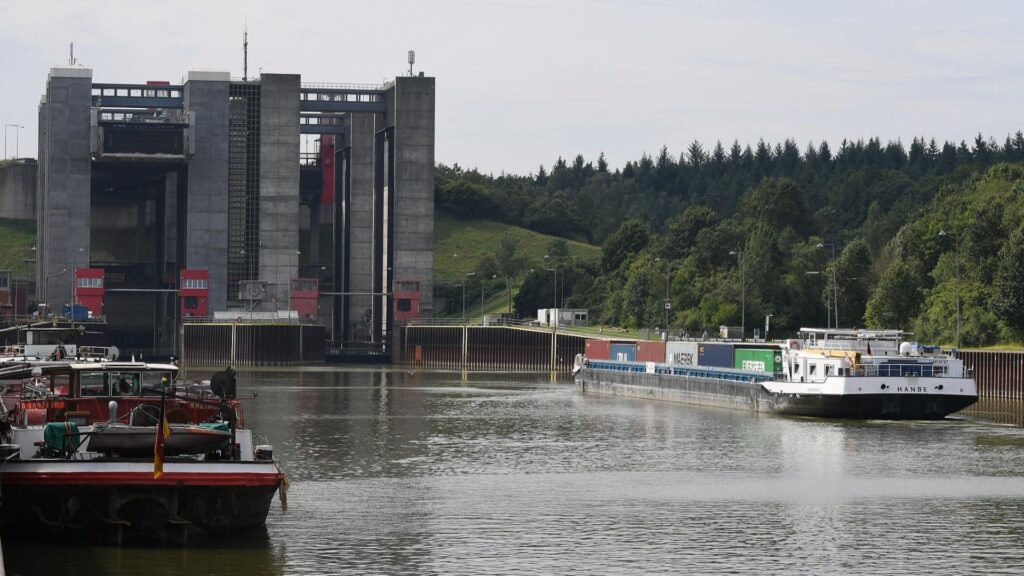
Record-low Rhine River water levels — falling to 32 cm at Kaub on September 15, 2026, the lowest since 1920 — are crippling barge traffic. Navigation restrictions took effect on September 10, 2026, forcing up to 40% load reductions and diverting 1.7 million tons of freight to roads and rails. Chemical and energy sectors report steep shipment declines: BASF cut ammonia barge deliveries by 12%, while coal deliveries dropped 31%. Rhine freight volumes fell 37% YoY in mid-September, with levels expected to stay below 50 cm through October 2026.

Supertanker Shortage Pushes Oil Freight to $1.2M/Day
Disruptions

Supertanker Shortage Pushes Oil Freight to $1.2M/Day

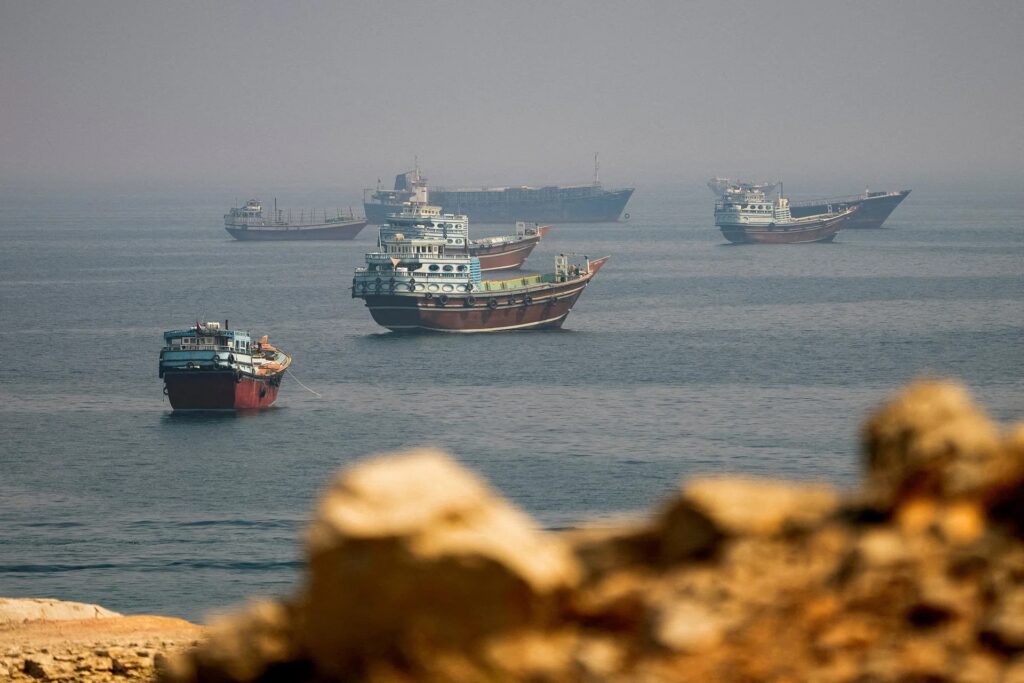
A critical shortage of supertankers has sent VLCC earnings to over US$1.2 million/day on the Persian Gulf–China route, adding US$26/barrel (US$52 million per cargo) to Houston–Asia shipments. Freight now accounts for ~25% of WTI’s value — up from a negligible share pre-conflict. European Dated Brent hit US$131 versus Brent futures at US$110, while Suezmax earnings exceeded US$300,000/day. Ship-tracking data shows U.S.–Asia flows falling as refiners pivot to shorter hauls, including a Japanese purchase of Alaskan crude. The tanker equity index reached US$70 billion this week.

Bangkokmax Charter Rates Rise 18% to $32,000/Day Amid Vessel Shortage
Disruptions

Bangkokmax Charter Rates Rise 18% to $32,000/Day Amid Vessel Shortage

Bangkokmax charter rates have surged 18% year-on-year to nearly $32,000 per day amid a severe vessel shortage, with only three new ships delivered in 2026 following minimal newbuilding orders since 2023. Resale prices range from $35m to $45m, and recent charters include CMA CGM’s $34,000/day fixture for the 1,740 TEU Elbella. Linerlytica reports the Bangkokmax orderbook now totals 252 vessels, including eight 1,900 TEU ships ordered by Hong Kong’s Moon Keung Shipping for 2028–2029 delivery. The shortage is projected to continue through the first half of 2027, with just 12 additional vessels scheduled for delivery this year.

Welcome Back!

Login to your account below

Create New Account!

Fill the forms below to register

Retrieve your password

Please enter your username or email address to reset your password.

Scan to share via WeChat

Open WeChat and scan the QR code to share

QR Code

Add New Playlist