Skip to content

Last Mile · Supply Chain

Analysis

CEP Market to Hit $975.2B by 2035 Amid Last-Mile Shift

The global courier, express and parcel (CEP) industry is projected to grow from $476.5 billion in 2025 to $975.2 billion by 2035, expanding at a 7.6% CAGR. China logged over 170 billion express deliveries in a recent year, with daily peaks above 700 million parcels. UPS holds just over 5% market share, while the top five players control less than 20% combined. Cross-border parcel services are forecast to grow far faster than domestic ones, and B2B shipping volumes are expected to rise more than four times faster than consumer parcel volumes.

Original source: Source information pending

CEP Market to Hit $975.2B by 2035 Amid Last-Mile Shift

According to globaltrademag.com, the global courier, express and parcel (CEP) industry — valued at $476.5 billion in 2025 — is projected to nearly double to $975.2 billion by 2035, expanding at a compound annual growth rate of 7.6%.

The Last Mile Is Now the Whole Game

What was once considered an afterthought in logistics has become the central competitive arena: the final stretch from distribution hub to recipient. This shift reflects how e-commerce has redefined value creation — not in moving more parcels, but in optimizing density, timing, and compliance across increasingly fragmented geographies.

China exemplifies this transformation at scale: its postal regulator recorded over 170 billion express deliveries in a single recent year, with daily peaks exceeding 700 million parcels. That volume drives cost efficiencies — sorting hubs operate near capacity, vehicles rarely run half-empty, and per-package costs decline. Global carriers like DHL, UPS, and FedEx are responding with multibillion-dollar investments in automated sorting centers and expanded hub infrastructure, recognizing that density, not just volume, determines profitability.

Speed Is a Network Problem, Not a Delivery Problem

Same-day delivery is the fastest-growing segment, expected to more than double over the next decade. Yet delivering within tight windows depends less on driver speed and more on inventory proximity, reliable cutoff times, and spare network capacity to absorb exceptions.

Carriers achieving profitable same-day service concentrate in dense urban markets, where sufficient order density justifies added handling costs. Elsewhere, deferred and consolidated delivery remains the operational backbone — growing in absolute volume even as its share of total shipments declines. This dichotomy underscores that technological upgrades alone cannot overcome geographic and demographic constraints.

Trade Borders Are Becoming a Competitive Moat

Cross-border parcel services are forecast to grow far faster than domestic ones over the coming decade, driven by rising global merchandise trade and the associated customs paperwork, tariff classifications, and clearance timelines.

Carriers capturing this growth are those with embedded customs brokerage capability, air and ocean line-haul access, and real-time shipment-level data visibility. For business shippers, this combination of capacity and regulatory compliance commands a premium — helping explain why B2B shipping volumes are projected to grow at more than four times the rate of consumer parcel volumes over the same period.

Who’s Actually Winning?

The market remains highly fragmented: UPS holds a leading share of just over 5%, and the five largest global players together control less than a fifth of the total market. Regional strength often trumps international scale — Blue Dart in India, SF Express in China, Aramex across the Middle East, and PostNL in the Netherlands all leverage deep local networks and regulatory familiarity to outperform global peers in their home markets.

Recent consolidation — including DSV’s acquisition of DB Schenker and ADQ’s majority stake in Aramex — signals that capital access and ownership structure will be as decisive as fleet size in shaping the next phase of competition.

Source: globaltrademag.com

Compiled from international media by the SCI.AI editorial team.
Ask SCI.AI Finished reading? Continue with SCI.AI. Explore the related policy, route, company and historical context. Continue asking
Munchkin appoints Kunal Thakkar as first chief supply chain officer
ESG & Regulation

Munchkin appoints Kunal Thakkar as first chief supply chain officer

Munchkin appointed Kunal Thakkar as its first chief supply chain officer in September 2026. Thakkar, a 20-year industry veteran, joined last month after serving as CEO of Seair Global and holding leadership roles at Thrasio and Walmart. He now oversees global operations, supply chain, compliance, sourcing, demand planning, order management, and program management at Munchkin, reporting to Steven Dunn, CEO of parent company Why Brands. The role reflects Munchkin’s strategic emphasis on integrated, compliant, and scalable supply chain infrastructure across the US, EU, and Southeast Asia.

CEEW Report: Only 47% of Rural LPG Users Get Doorstep Delivery
Last Mile

CEEW Report: Only 47% of Rural LPG Users Get Doorstep Delivery

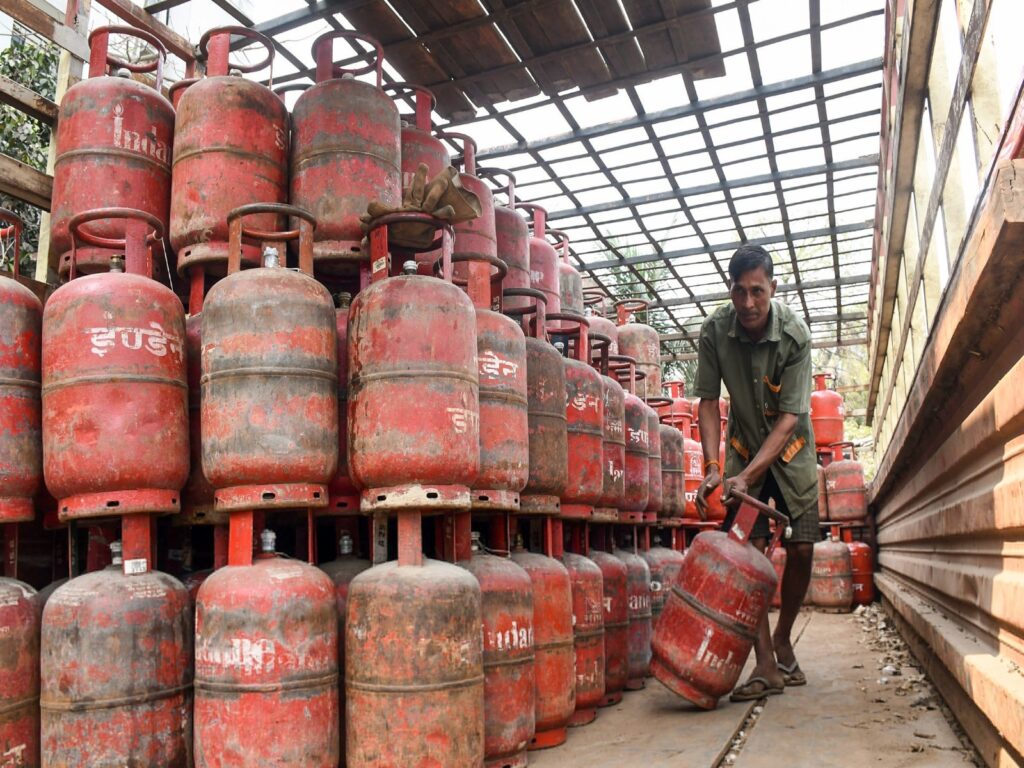
A CEEW report reveals that only 47% of rural LPG users in India receive doorstep delivery, with refill cost and last-mile logistics identified as binding constraints. While 73% of rural households used LPG in the past 90 days, just 23% use it exclusively — half still rely on firewood. Migrant users face severe barriers: 79% lack formal connections and under 4% are enrolled in PMUY despite 2021 policy reforms. Affordability is critical — 80% would switch exclusively to LPG at Rs 400/cylinder, far below the Rs 642 subsidised rate. Informal users pay Rs 71/kg (20%+ premium) or Rs 1,040 for cylinders priced at Rs 803. CEEW recommends raising the PMUY subsidy by Rs 200 per cylinder.

Logistics Managers’ Index falls to 66.6 in August
Last Mile

Logistics Managers’ Index falls to 66.6 in August

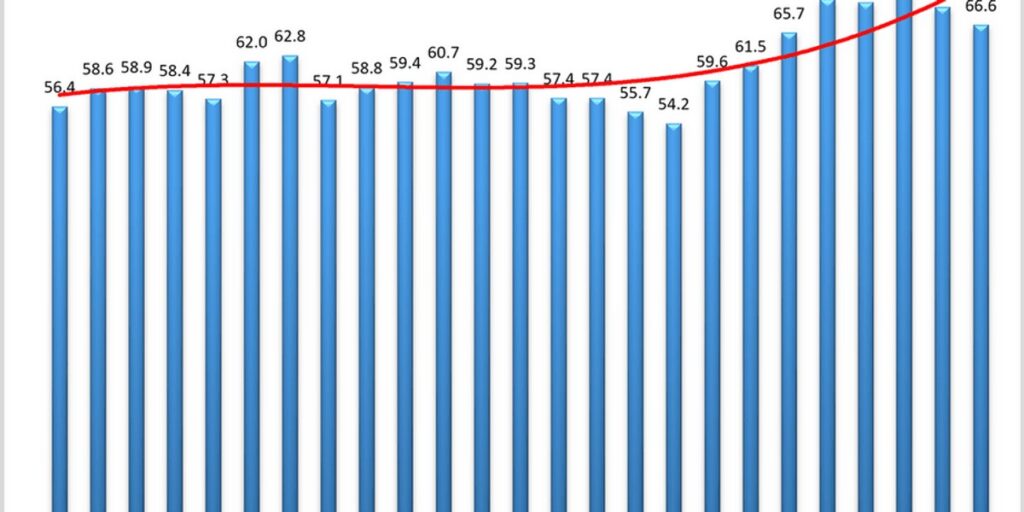
The Logistics Managers’ Index (LMI) fell to 66.6 in August 2026 — down from 68.9 in July and 71.1 in June — marking the second consecutive monthly decline. Inventory levels cooled to 52.8, with upstream firms slipping into contraction at 49.0. The LMI, a U.S.-based survey of logistics managers, remains above the 50 expansion threshold but signals slowing growth. The report was released on Sep 02, 2026. This follows GE Appliances’ $1 billion Kentucky factory expansion announced on Sep 03, 2026.

Welcome Back!

Login to your account below

Create New Account!

Fill the forms below to register

Retrieve your password

Please enter your username or email address to reset your password.

Scan to share via WeChat

Open WeChat and scan the QR code to share

QR Code

Add New Playlist