Skip to content

Last Mile · Supply Chain

Analysis

U.S. Firms Seek Greater Last-Mile Control Amid 64% AI-Adopting Shoppers

A FarEye study cited by Supply Chain Xchange finds U.S. enterprises with greater control over last-mile delivery infrastructure and data better withstand delivery cost inflation, complex fulfillment networks, and changing customer expectations. The report links this advantage to rising adoption of AI by shoppers — 64% of whom now use AI tools — as documented in a related report dated Aug 27, 2026. Released on Aug 28, 2026, the analysis focuses exclusively on U.S. operations and identifies data ownership as a critical lever for operational resilience.

Original source: Source information pending

U.S. Firms Seek Greater Last-Mile Control Amid 64% AI-Adopting Shoppers

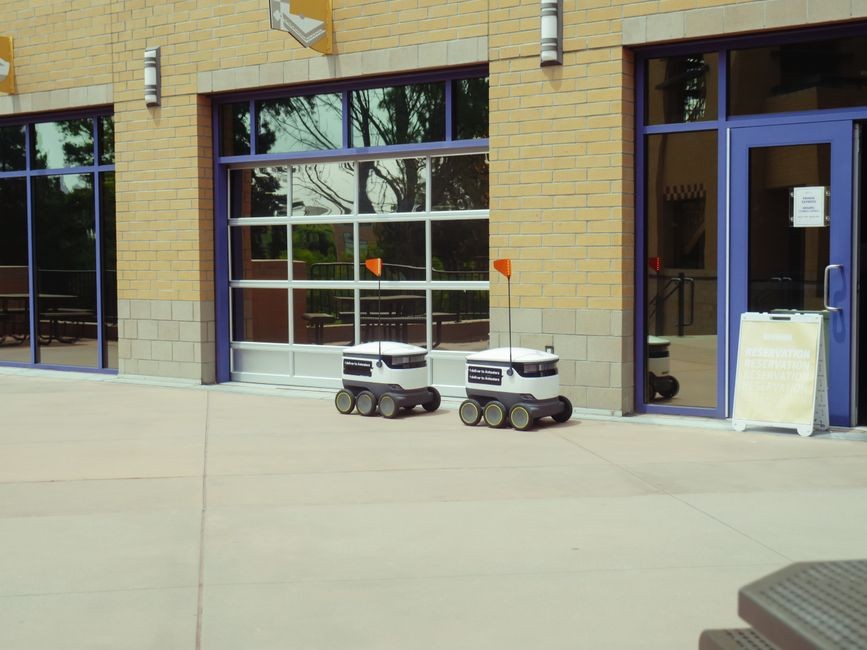
According to www.thescxchange.com, a study by FarEye — a Chicago-based delivery software provider — finds that U.S. enterprises with greater control over last-mile delivery infrastructure and data outperform peers facing delivery cost inflation, complex fulfillment networks, and shifting customer expectations.

Delivery Pressures Mount Across U.S. Operations

The research highlights three converging challenges: persistent delivery cost inflation, increasingly intricate fulfillment networks, and evolving demands for speed, flexibility, and transparency. These pressures are intensifying as 64% of shoppers now use AI tools during purchasing decisions — a behavioral shift documented in a related report published on Aug 27, 2026. Companies without direct oversight of their final delivery layer report higher operational friction and lower responsiveness to such demand changes.

Data Ownership Drives Operational Resilience

Firms retaining control over both physical last-mile assets and associated data demonstrate significantly stronger adaptability. According to the study, this control enables real-time route optimization, dynamic carrier selection, and granular performance benchmarking — capabilities increasingly essential amid volatile conditions. The analysis was conducted exclusively on U.S. enterprises and released on Aug 28, 2026, aligning with other freight-market insights also dated Aug 28, 2026.

FarEye’s Role and Strategic Context

FarEye, headquartered in Chicago, provides cloud-native delivery orchestration platforms used across retail, CPG, and logistics sectors. Its research underscores a broader industry pivot toward integrated visibility — not just across transportation modes, but down to the individual package level. As noted in the source material, companies see rising pressure to manage complexity at the final interface with customers — a challenge compounded by network fragmentation and data silos. The study does not cite specific dollar figures or percentage improvements in cost or time, but confirms that control correlates strongly with resilience.

Source: thescxchange.com

Compiled from international media by the SCI.AI editorial team.

Ask SCI.AI Finished reading? Continue with SCI.AI. Explore the related policy, route, company and historical context. Continue asking
Korean Air upgrades Incheon cargo hub, completes automation in September
Procurement

Korean Air upgrades Incheon cargo hub, completes automation in September

Korean Air is reshaping its cargo operations ahead of its 17 December merger with Asiana Airlines, prioritising expanded passenger belly capacity, freighter specialisation, and infrastructure upgrades. Automation at Incheon Airport — developed with Lödige Industries — is scheduled for completion next month, while a major cargo terminal upgrade at JFK is planned for next year. The airline targets transpacific tech cargo, including AI server racks and semiconductor equipment, and is building an AI-enabled operational ecosystem with smart tracking and API integration.

Korean Air scales cargo ops with Incheon automation, JFK upgrade, transpacific tech flow
Procurement

Korean Air scales cargo ops with Incheon automation, JFK upgrade, transpacific tech flow

Korean Air is reshaping its cargo strategy ahead of its 17 December merger completion with Asiana Airlines, leveraging expanded passenger belly capacity and its existing freighter fleet. Key infrastructure upgrades include fully automated ETVs and AGVs at Incheon — due for completion next month — and a major cargo terminal modernisation at JFK scheduled for next year. The airline targets high-value, time- and temperature-sensitive cargo such as semiconductors and pharmaceuticals, while prioritising transpacific tech flows including AI server racks, semiconductor fabrication equipment, and advanced batteries. Digital integration via AI, IoT, and API standards aims to unify fragmented supply chain systems.

Mubadala acquires Arrive Logistics majority stake, targets 16,000 daily loads
AI & Automation

Mubadala acquires Arrive Logistics majority stake, targets 16,000 daily loads

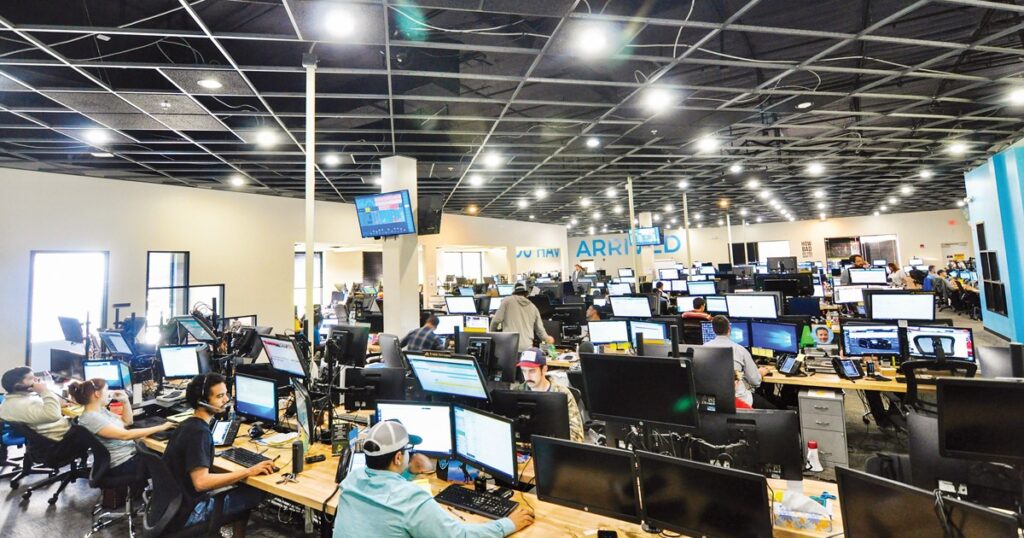
Abu Dhabi-based Mubadala Capital has acquired a majority stake in Austin, Texas-based Arrive Logistics, with the deal expected to close in the fourth quarter of 2026. Mubadala Capital, managing over $600 billion in assets, will become Arrive’s largest shareholder. Arrive currently handles more than 8,000 daily loads and ranks No. 7 among freight brokerages and No. 26 on Transport Topics’ Top 100 logistics companies in North America. Under the new ownership, Arrive aims to double its daily load volume to 16,000, expand its trailer pool, relaunch its Arrive Fresh perishables division — which serves over 3,000 cold-chain carriers — and build a dedicated sales team for small and medium-sized businesses.

Welcome Back!

Login to your account below

Create New Account!

Fill the forms below to register

Retrieve your password

Please enter your username or email address to reset your password.

Scan to share via WeChat

Open WeChat and scan the QR code to share

QR Code

Add New Playlist