Skip to content

Middle East Supply Chain

Analysis

Saudi East-West Pipeline Shuts After Drone Attack, Moves 4M–5M bpd

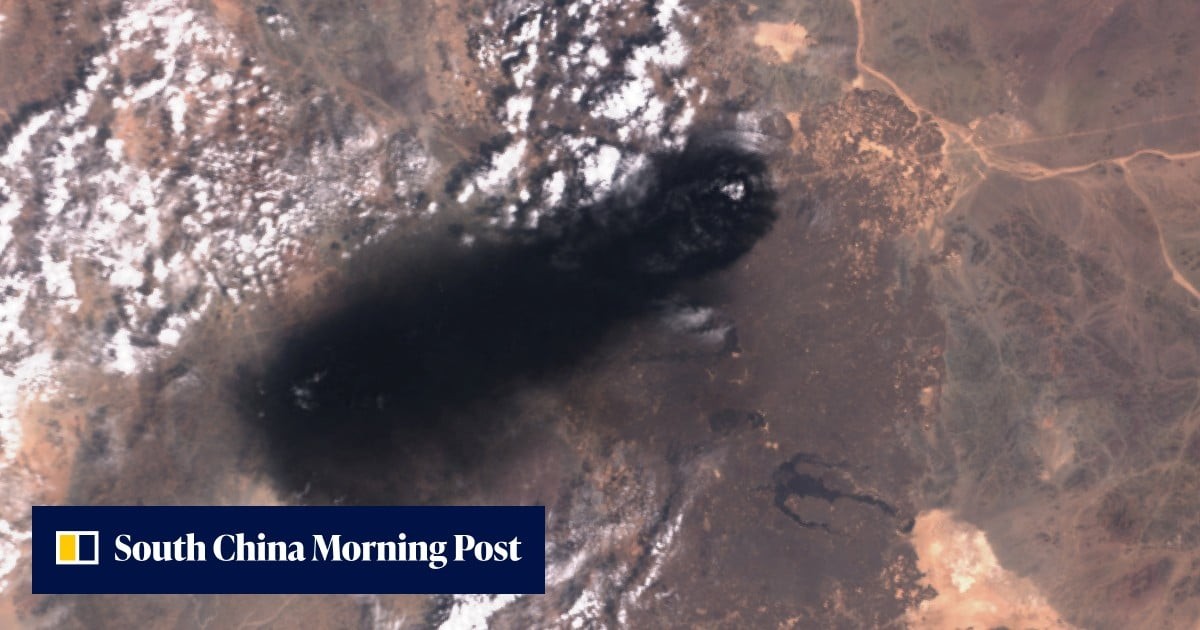
Saudi Arabia has shut down its East-West pipeline after a drone attack originating in Iraq, according to www.scmp.com. The 1,200km conduit, which moved 4 million to 5 million barrels per day — 4 to 5% of global oil supply — was closed as a precaution. The incident worsens energy supply constraints already strained by Houthi activity in the Red Sea and shipping slowdowns in the Strait of Hormuz. Oil prices have risen above US$100 per barrel. US President Donald Trump stated Iran was likely responsible for the attack.

Original source: Source information pending

Saudi East-West Pipeline Shuts After Drone Attack, Moves 4M–5M bpd

According to www.scmp.com, Saudi Arabia has shut down its East-West pipeline following an aerial drone attack, halting a critical oil conduit that transports 4 million to 5 million barrels per day — equivalent to 4 to 5 per cent of global supply.

Attack Origin and Regional Fallout

Both Baghdad and Riyadh stated the drone attack originated in Iraq, where Iranian-backed militias operate. In response, Iraq dismissed a military commander on Saturday. The 1,200km (745-mile) pipeline traverses the Arabian Peninsula and was built specifically to bypass shipping bottlenecks in the Strait of Hormuz — a chokepoint where tanker traffic has slowed to a trickle amid escalating tensions between the US and Iran.

The Saudi energy ministry confirmed the shutdown was precautionary. Ship tracking companies and analysts corroborated the pipeline’s recent throughput range of 4 million to 5 million barrels per day. The disruption compounds pressure from Houthi rebel activity in the Red Sea, tightening energy logistics on both sides of the Arabian Peninsula.

Global oil prices have surged above US$100 per barrel as a result of combined disruptions across the Strait of Hormuz and the Red Sea. US President Donald Trump said on Saturday that Iran was probably responsible for the attack.

Strategic Implications for Energy Flow

The East-West pipeline had served as a vital overland alternative to maritime routes vulnerable to regional conflict. Its closure eliminates a major redundancy for Saudi crude exports, forcing greater reliance on Gulf ports despite heightened risk in the Strait of Hormuz. With 1,200km of infrastructure now offline, short-term export flexibility has sharply declined.

Analysts note that no immediate replacement capacity exists at comparable scale. The pipeline’s pre-shutdown contribution — 4 to 5 per cent of global oil supply — underscores its systemic importance to global markets. Continued instability in Iraq and Yemen further limits near-term recovery prospects.

According to the report, the attack occurred amid a broader escalation involving Iranian-aligned forces across multiple theaters. The US$100 oil price threshold reflects not only physical supply constraints but also widening geopolitical risk premiums embedded in benchmark pricing.

Source: South China Morning Post

Compiled from international media by the SCI.AI editorial team.

Ask SCI.AI Finished reading? Continue with SCI.AI. Explore the related policy, route, company and historical context. Continue asking
Boring Co. raises $3B, hits $23B valuation with UAE deal
Middle East Supply Chain

Boring Co. raises $3B, hits $23B valuation with UAE deal

The Boring Company has reached a $23 billion valuation after raising $3 billion in a financing round led by the United Arab Emirates. The funds will support construction of over 150 kilometers of tunnels in the Middle East, including the Dubai Loop. The company also advanced its Nashville Loop — a 20-mile project — while facing setbacks in Los Angeles (abandoned in 2018), Chicago, and Washington, D.C. It earned $1 million from Tesla in 2025 for a 'Cybertunnel' at the Austin Gigafactory and continues operating its sole public system in Las Vegas.

Saudi Logistics Rents Rise Up to 6.9% Amid Port Diversification
Middle East Supply Chain

Saudi Logistics Rents Rise Up to 6.9% Amid Port Diversification

Saudi Arabia’s logistics sector is gaining momentum amid supply chain rerouting and Vision 2030–driven industrial expansion. Industrial establishments rose to 13,660 in April 2026 from 12,289 a year earlier. Occupancy in Riyadh, Jeddah, and the Dammam Metropolitan Area exceeded 90% in Q2 2026. Rental rates surged by 6.9% in the DMA, 4.8% in Jeddah, and 3.9% in Riyadh. The launch of MSC’s Middle East Express service strengthens direct Europe–Red Sea connectivity via Jeddah Islamic Port and King Abdullah Port.

UAE invests $1.2B to rewire logistics around Strait of Hormuz
Middle East Supply Chain

UAE invests $1.2B to rewire logistics around Strait of Hormuz

The UAE has committed $1.2 billion to strengthen logistics infrastructure around the Strait of Hormuz, targeting Khalifa Port, Jebel Ali Port, and Fujairah Port. Investments include berth deepening, automated cranes, 14 new warehousing zones (2.8M sqm), and the Etihad Rail Phase 2 line completion by mid-2025. Vessel calls at Fujairah rose 37% in Q1 2024, and customs clearance time dropped from 72 to under 4.5 hours. The move responds to Red Sea disruptions and aims to reduce Asia–Europe transit times by 11–14 days. This $1.2B initiative surpasses Saudi Arabia’s $890M and Oman’s $1.1B recent commitments in the region.

Welcome Back!

Login to your account below

Create New Account!

Fill the forms below to register

Retrieve your password

Please enter your username or email address to reset your password.

Scan to share via WeChat

Open WeChat and scan the QR code to share

QR Code

Add New Playlist