Skip to content

Supplier Management

Analysis

Hyundai raises North America local sourcing to 80% by 2030

Hyundai Motor Co. plans to raise local parts sourcing in North America from 60% to 80% by 2030, according to President and CEO José Muñoz. The move, announced at the 2026 CEO Investor Day, aims to improve supply stability, cut logistics costs, and reduce regulatory exposure. Hyundai also targets adding 1.27 million units to global manufacturing capacity by 2030. The company will expand local supplier networks and optimize plant utilization to achieve best-in-class cost structures. A photo documenting this effort was taken on Sept. 5, 2025, in Joliet, Illinois.

Original source: supplychaindive.com

Hyundai raises North America local sourcing to 80% by 2030

Ask SCI.AI about this story

📋 本文要点

Hyundai Motor Co. plans to raise local parts sourcing in North America from 60% to 80% by 2030, according to President and CEO José Muñoz. The move, announced at the 2026 CEO Investor Day, aims to improve supply stability, cut logistics costs, and reduce regulatory exposure. Hyundai also targets adding 1.27 million units to global manufacturing capacity by 2030. The company will expand local supplier networks and optimize plant utilization to achieve best-in-class cost structures. A photo documenting this effort was taken on Sept. 5, 2025, in Joliet, Illinois.

According to Supply Chain Dive, Hyundai Motor Co. plans to source 80% of parts for vehicles manufactured in North America from local suppliers by 2030, up from the current 60%, as announced by President and CEO José Muñoz during the company’s 2026 CEO Investor Day.

Strategic localization drive

The initiative forms part of Hyundai’s broader effort to stabilize supply chains and reduce costs amid expanding global production. The company aims to add 1.27 million units to its global manufacturing capacity by 2030, a target disclosed in its 2026 CEO Investor Day presentation. This expansion coincides with intensified localization efforts across key markets, including North America, where supply chain resilience is prioritized over centralized procurement models.

The strategy includes identifying and scaling local supplier networks to secure supply stability, reduce logistics costs, and mitigate regulatory exposure. Hyundai also intends to improve utilization at new plants and optimize manufacturing specifications — actions designed to lower fixed costs and bring major plant cost structures to the company’s best historical levels.

According to José Muñoz,

“We’ll identify and expand local supplier networks, which will secure supply stability, reduce logistics costs and mitigate regulatory exposure.” — José Muñoz, President and CEO of Hyundai Motor Co.

Timeline and regional execution

The 2030 deadline anchors Hyundai’s multi-year localization roadmap, with progress measured against the baseline of 60% local sourcing currently achieved in North America. The company confirmed the goal was formalized during its 2026 CEO Investor Day, held last month. The dealership interior photo cited in the source was taken on Sept. 5, 2025, in Joliet, Illinois — underscoring the geographic focus of this regional supply chain shift.

Hyundai’s North America localization push aligns with broader operational targets, including cost structure optimization across manufacturing facilities and tighter integration between new plant ramp-up schedules and supplier development timelines. No other regions or timelines were specified in the source material beyond the 2030 North America commitment and the 2026 investor event reference.

The article notes that Hyundai’s announcement reflects ongoing industry-wide recalibrations toward regional self-sufficiency — but only the 80%, 60%, 2030, 2026, and 1.27 million data points appear explicitly in the source and are therefore included.

Source: Supply Chain Dive

Compiled from international media by the SCI.AI editorial team.
Ask SCI.AI Finished reading? Continue with SCI.AI. Explore the related policy, route, company and historical context. Continue asking
Stay ahead of supply chain shifts

One email a week: the stories that matter and new risk events — in English, free.

Prefer RSS? Articles Risk events

India eyes China export growth as shipments rise 36.62%
Supplier Management

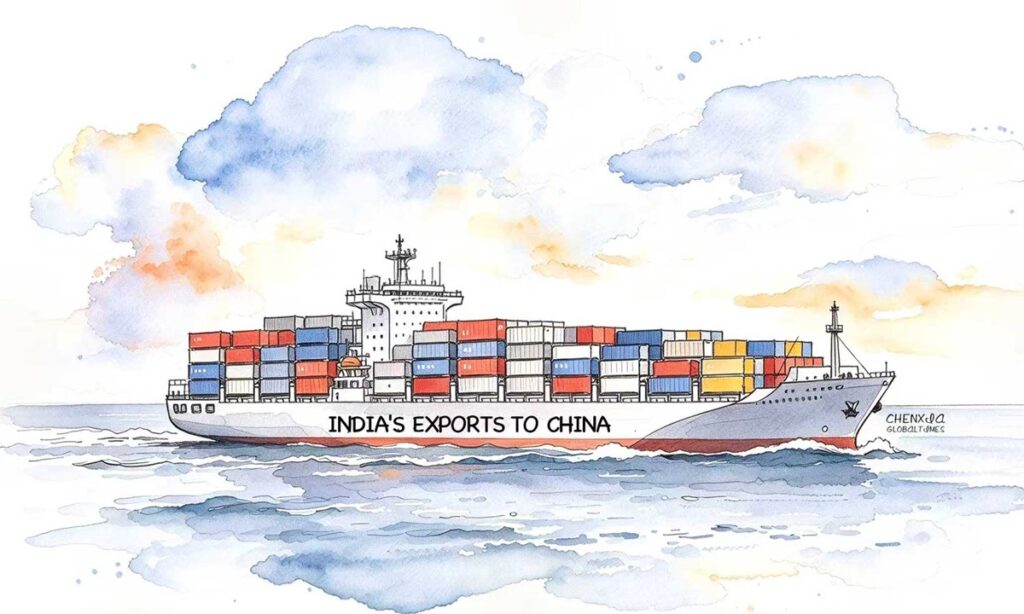
India eyes China export growth as shipments rise 36.62%

India's exports to China rose 36.62 percent year-on-year to $19.47 billion in the 2025-26 fiscal year, with growth of about 36 percent continuing in the April-September period, according to a Global Times report. The article examines how supply chain complementarity could help India meet Commerce and Industry Minister Piyush Goyal's goal of becoming a major exporter to China and ASEAN. It notes China's imports grew more than 20 percent year-on-year from March through September 2026, with monthly imports topping 2 trillion yuan ($300 billion) in September for the first time.

C.H. Robinson: 5 external forces raise supply chain costs in 2027
Supplier Management

C.H. Robinson: 5 external forces raise supply chain costs in 2027

A 2027 Freight Market Outlook Report from C.H. Robinson—released Oct 14, 2026—identifies five external forces reshaping global supply chains in 2027: transportation regulations, legal and liability changes, capacity growth constraints, extreme weather (including a strong El Niño), and geopolitical tensions. These forces are projected to increase operating costs, disrupt ports and inland networks, and redirect freight flows. The report urges shippers to monitor supply-demand imbalances in real time and adapt strategies continuously. Full findings are available on C.H. Robinson’s website.

2027 Supply Chains Reshaped by Geopolitics, Weather, and 78% Fertilizer Cost Surge
Supplier Management

2027 Supply Chains Reshaped by Geopolitics, Weather, and 78% Fertilizer Cost Surge

C.H. Robinson’s 2027 Freight Market Outlook Report identifies geopolitical conflict, climate disruptions, and regulatory shifts as primary external forces reshaping global supply chains. Input costs have surged 78% for fertilizer and 66% for pesticides since 2020, forcing operational overhauls. The report highlights how conflict in key corridors, trade realignments, and extreme weather are testing long-held logistics assumptions. Bob Carpenter, CEO of GS1 US, noted that geopolitical tension and supply chain disruptions are compelling organizations to transform strategies. The 2024 startup awards drew 400 applications from 12 countries, reflecting growing innovation pressure.

Welcome Back!

Login to your account below

Create New Account!

Fill the forms below to register

Retrieve your password

Please enter your username or email address to reset your password.

Scan to share via WeChat

Open WeChat and scan the QR code to share

QR Code

Add New Playlist