At the 11th Eastern Economic Forum in Vladivostok on September 2, 2026 marking the 35th anniversary of ASEAN-Russia relations, Vietnamese Finance Minister Ngô Văn Tuấn proposed five priority cooperation paths. Russian-ASEAN trade rose 58% over the past decade to $21 billion in 2025. Vietnam’s bilateral trade with Russia hit $4.77 billion in 2025—roughly one-quarter of the bloc’s total with Russia. Vietnam aims for 10%+ annual growth in 2026–2030, targets $514 billion GDP and $930 billion trade turnover in 2025, and welcomed 21.2 million international tourists that year.
According to vietnamplus.vn, Vietnamese Finance Minister Ngô Văn Tuấn outlined five priority cooperation directions between ASEAN and Russia during the 11th Eastern Economic Forum in Vladivostok on September 2, 2026 marking the 35th anniversary of ASEAN-Russia relations.
Russian-ASEAN Trade Growth and Strategic Framework
Russian-ASEAN trade has increased by 58% over the past decade, reaching approximately $21 billion in 2025. This growth follows the adoption of the Comprehensive Action Plan for ASEAN-Russia Partnership for 2026–2030 at the Kazan Summit — a foundational document intended to deepen strategic partnership. Minister Ngô Văn Tuấn stressed that translating broad frameworks into measurable outcomes remains urgent: “
It is crucial now to turn cooperation orientations into concrete projects, tangible trade and investment flows, and results that can be measured.
The minister highlighted Vietnam’s unique position within ASEAN-Russia ties: bilateral trade reached $4.77 billion in 2025, accounting for roughly one-quarter of total ASEAN-Russia trade. Vietnam is also the first ASEAN member to sign a Free Trade Agreement (FTA) with the Eurasian Economic Union (EAEU).
Vietnam’s Development Goals and Economic Scale
Vietnam aims to become a modern industrialized nation with high middle-income status by 2030, and a developed, high-income country by 2045. To achieve this, the government targets annual economic growth of 10% or higher during 2026–2030, while maintaining macroeconomic stability. In 2025, Vietnam’s GDP stood at approximately $514 billion, with total merchandise import-export turnover exceeding $930 billion.
The country is intensifying investments in science and technology, digital transformation, artificial intelligence (AI), high-quality human resources, private-sector development, strategic infrastructure, and business environment reforms. Vietnam now serves as a key node in regional production networks, attracting multinational corporations across electronics, advanced manufacturing, energy, logistics, and services.
Five Priority Cooperation Directions
Minister Ngô Văn Tuấn proposed five thematic pillars for ASEAN-Russia collaboration:
- Developing new supply chains and strengthening trade-investment linkages — leveraging Russia’s strengths in energy, raw materials, agriculture, industry, and science-technology alongside ASEAN’s 700-million-person market and dynamic production networks;
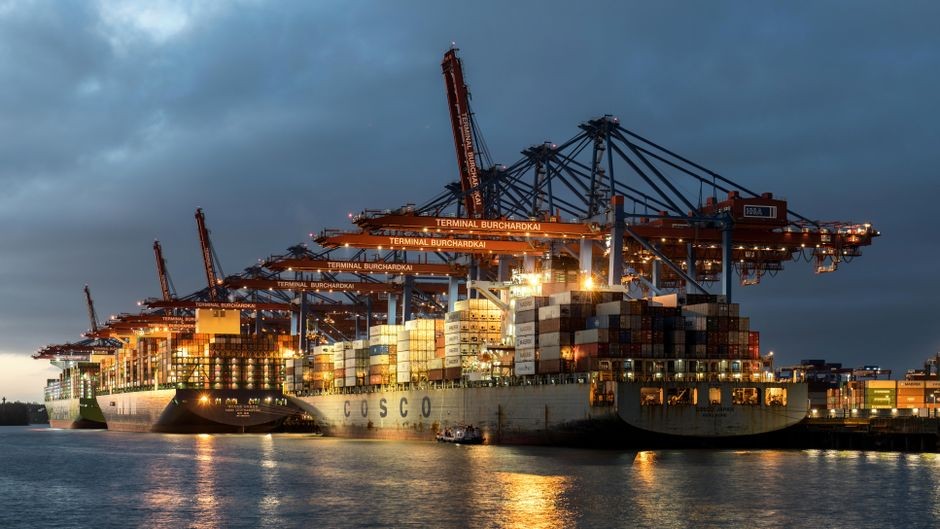
- Breaking through in transport and logistics — including sea routes linking Vladivostok (Far East) with Vietnam and Southeast Asia, integrated with Eurasian rail corridors and cold-chain infrastructure;
- Advancing science-technology, digital transformation, and AI — promoting joint R&D, tech transfer, workforce training, and commercialization in fintech, cybersecurity, smart logistics, digital health, and intelligent manufacturing;
- Expanding energy cooperation, green growth, and sustainability — aligning ASEAN’s rising energy demand and decarbonization goals with Russia’s energy and scientific capabilities;
- Broadening financial, investment, tourism, and people-to-people ties — including free trade zones linked to seaports and logistics hubs, international financial centers in Ho Chi Minh City and Da Nang, and expanded air connectivity. In 2025, Vietnam welcomed nearly 21.2 million international visitors — a foundation for deeper tourism integration.
The minister concluded by affirming Vietnam’s commitment to serving as an economic bridge between Russia and ASEAN, and between the EAEU and Southeast Asia — with the overarching vision that ASEAN-Russia relations by 2030 become more substantive, balanced, and value-generating for businesses and citizens alike.
Source: vietnamplus.vn
Compiled from international media by the SCI.AI editorial team.