Vietnam’s Finance Minister Ngô Văn Tuấn proposed a Far East–Vietnam–ASEAN logistics corridor during the Russia–ASEAN Business Dialogue in Vladivostok. Bilateral trade hit $4.77 billion in 2025—25% of total Russia–ASEAN trade—and Vietnam is the first ASEAN nation to sign an FTA with the Eurasian Economic Union. Five cooperation pillars include supply chain integration, transport-logistics infrastructure, AI/digital collaboration, green energy, and financial/tourism expansion. Vietnam welcomed 21.2 million international tourists in 2025 and is developing international financial centers in Ho Chi Minh City and Da Nang. The minister urged implementation of the Russia–ASEAN Action Plan 2026–2030 through concrete, measurable projects.
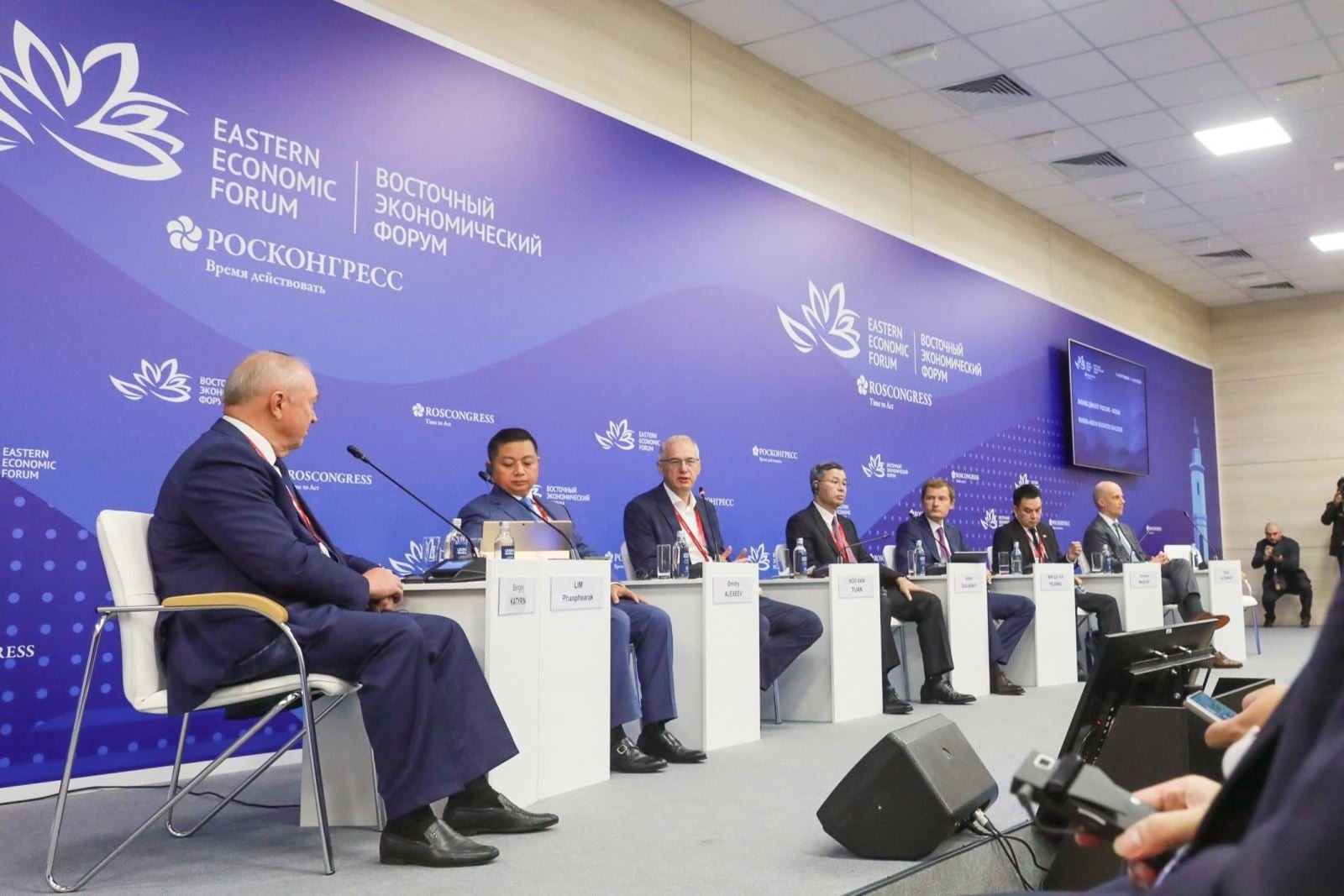
According to vietnam.vn, Vietnam’s Minister of Finance, Ngô Văn Tuấn, proposed establishing a Far East–Vietnam–ASEAN logistics corridor during the Russia–ASEAN Business Dialogue at the 11th Eastern Economic Forum in Vladivostok.
Strategic Trade and Investment Linkages
Vietnam holds a distinctive position in Russia–ASEAN relations: bilateral trade reached approximately $4.77 billion in 2025, representing roughly one-quarter of total Russia–ASEAN trade. Vietnam is also the first ASEAN member to sign a Free Trade Agreement (FTA) with the Eurasian Economic Union (EAEU). With its extensive FTA network, Vietnam aims to serve as a bridge enabling Russian enterprises to access ASEAN and broader international markets, while Russia’s Far East region offers Vietnamese and ASEAN businesses new entry points into Russian and Eurasian economic space.
Five Priority Cooperation Directions
Minister Ngô Văn Tuấn outlined five strategic cooperation directions. First, developing new supply chains and deepening trade–investment linkages—shifting from transactional trade to joint production and value-chain participation. Second, achieving breakthroughs in transport and logistics infrastructure, including maritime connectivity between Vladivostok and Vietnam/Southeast Asia, integrated with trans-Eurasian rail corridors.
Third, advancing science–technology, digital transformation, and artificial intelligence (AI) as core drivers: Vietnam is promoting AI, big data, cloud computing, semiconductors, automation, digital finance, and smart logistics; Russia contributes strong scientific foundations and high-quality human capital; ASEAN represents one of the world’s fastest-growing digital markets.
“Vietnam proposes that all sides promote cooperation programs on AI, cybersecurity, fintech, digital health, digital education, data centers, and smart manufacturing—aiming for joint research, technology transfer, workforce training, and product commercialization.” — Ngô Văn Tuấn, Minister of Finance of Vietnam
Green Energy, Finance, and People-to-People Ties
The fourth priority focuses on energy cooperation, green growth, and sustainability. Vietnam is accelerating clean and renewable energy—including offshore wind—and modernizing power infrastructure alongside circular and green economy initiatives. Russia’s energy and science–technology strengths could become a key pillar of future Russia–ASEAN collaboration. Fifth, expanding financial, investment, tourism, and people-to-people exchanges: Vietnam is developing free trade zones linked to seaports, logistics hubs, industry, and services, and building international financial centers in Ho Chi Minh City and Da Nang to attract global financial institutions and investment funds.
Vietnam welcomed nearly 21.2 million international visitors in 2025, laying favorable groundwork for enhanced tourism connectivity across Russia, Vietnam, and ASEAN. Minister Ngô Văn Tuấn emphasized the need to translate the Russia–ASEAN Action Plan 2026–2030 into concrete, addressable, partner-identified, and measurable projects.
“Vietnam always views Russia as an important partner and ASEAN as a strategic cooperation space. Vietnam stands ready to further leverage its role as an economic bridge between Russia and ASEAN—and between the EAEU and Southeast Asia—to jointly build new cooperation drivers for regional peace, stability, prosperity, and sustainable development.” — Ngô Văn Tuấn, Minister of Finance of Vietnam
Source: vietnam.vn
Compiled from international media by the SCI.AI editorial team.